
From Painkiller to Meat Tenderizer? Why Some People Are Adding Panadol to Meat
Share

Panadol for a headache or for meat?
Reports alleging that some food vendors in Nairobi are adding paracetamol to meat to speed up cooking have raised questions over why a common painkiller would find its way into a cooking pot in the first place.
Paracetamol, also known as acetaminophen, is a medicine used to relieve pain and reduce fever. It is not a food ingredient or an approved meat-tenderizing product.
Yet the practice of using the tablets to soften tough meat has been documented in several African countries, including Kenya, Uganda, Ghana and Nigeria.
A 2022 review published in Drug Metabolism and Bioanalysis Letters found that reducing cooking time and fuel costs were among the main reasons cited for the practice.
Why Would Anyone Put Panadol in Meat?
The idea appears to be particularly associated with tougher cuts that can take longer to cook, including tripe, cow hoof and hard beef.
For vendors dealing with a busy lunch or evening rush, shortening the time a pot spends over charcoal, gas or firewood could mean lower fuel consumption and faster service.
Research examining the practice found that the cost of cooking fuel and lengthy cooking times were key factors behind the reported use of paracetamol as a meat tenderiser.
However, an important distinction exists between a practice that people believe works and one that scientists have established as safe and effective.
A 2023 review of paracetamol use in meat tenderisation noted that few scientific studies have directly examined the practice.
Also Read: Ministry of Health Issues Advisory as World Marks Oral Health Day
Researchers also said the exact mechanism through which paracetamol might contribute to meat tenderness has not been experimentally established, meaning the reported practice should not be confused with a recognized cooking method.
There is also a chemical concern. Research indicates that paracetamol can become unstable under moist, heated conditions and degrade into compounds including 4-aminophenol.
The compound has been associated with kidney toxicity, while other degradation products have raised concerns about liver and kidney effects.
However, researchers have also acknowledged a major gap: there has not been an experimental human study establishing exactly what happens when someone eats meat treated with paracetamol.
Much of the concern is therefore based on the known chemistry of the drug, its degradation products and evidence from other toxicological research.
What to Use Instead of Panadol
There is no need to turn a painkiller into a cooking ingredient to soften tough meat.
Natural tenderising methods include ingredients that contain enzymes that break down proteins in meat. Papaya contains papain, while pineapple contains bromelain. Both enzymes have been studied for their meat-tenderising properties.
Pressure cooking is another established method for reducing cooking time while softening tougher cuts of meat.
For food businesses, the wider issue also falls under Kenya’s food-safety framework.
The Ministry of Health has a Public Health Checklist for Food Hygiene Licensing, which sets out the requirements that establishments must fulfil before receiving a food-hygiene licence.
Also Read: Burial Meal Turns Sour as 100 Mourners Fall Ill
The checklist covers the condition of premises, surrounding areas and food-contact surfaces, among other hygiene requirements, stating that food safety depends on measures put in place to eliminate hazards throughout the food-production process.
Paracetamol therefore belongs in the medicine cabinet, not the cooking pot.
Consumers should be cautious about food prepared using medicines for purposes they were not designed for, while food businesses should stick to established and safe methods of preparing and tenderizing meat.
Follow our WhatsApp channel for more updates
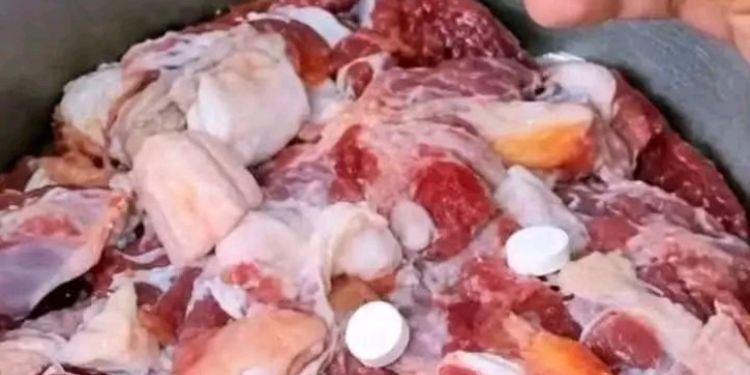
Photo of paracetamol being added in meat. Photo/ Omwamba X