
How Can Football End Stadium Rowdiness? Fans Reveal Their Solutions
Share


Football is meant to bring people together, but incidents of fan violence, disorder, rowdiness and confrontation can quickly turn a match into a security concern.
From what fans carry into stadiums to how supporters react to defeat, several factors can contribute to rowdiness during football matches.
Football fans and club members who spoke on the issue have suggested a range of measures, including stricter stadium screening, named tickets, fan education, fair officiating and tougher action against supporters who repeatedly cause trouble.
Stricter Screening at Stadium Entrances Minimise Rowdiness
Speaking on ways to reduce violence, football fan Joe Joseph said authorities should control what supporters carry into stadiums. He said some fans enter stadiums with illegal drugs and argued that such items should be prohibited.
He also called for stricter checks at stadium entrances to prevent fans from carrying items that could cause harm.
“[Illegal drugs] should be prohibited,” Joseph said, adding that authorities should limit what fans are allowed to carry into stadiums.
Adonijah Lelei, a football coach at Nandi FC, also supported tighter security at stadium entrances. Lelei said fans should undergo screening before entering stadiums to ensure they do not carry weapons.
Abe Graham, a Feyenoord football club member, also backed frisking and screening as part of efforts to improve safety inside stadiums.
Named Tickets Could Improve Accountability
Graham also proposed putting supporters’ names on their tickets. He explained that this could make it easier to identify fans involved in incidents inside stadiums.
According to him, if supporters use tickets registered in their names, authorities can establish who attended a particular match when an incident occurs.
He, however, noted that accountability becomes more difficult when fans use or steal tickets belonging to other people.
Antonis Kont, an AEK Athens football member, pointed to a similar system in England and Greece.
“One thing that was done successfully in England and now it’s also applied with some progress here is zero anonymity in stadium entrance,” Kont said.
He explained that in the system he referred to, fans booking tickets have to log in to a public sector governance website to verify their identity.
Kont also highlighted the use of cameras around stadiums as another security measure.
“And cameras in every corner of the stadium,” he said.
Fans Should Learn to Accept Defeat
Joseph’s proposals went beyond security measures. He called for supporters to develop emotional intelligence and accept defeat without turning to violence.
He said losing a match should not become a reason for fans to attack other supporters or cause chaos. He also urged fans to reject racism, noting that football’s global policies promote a stance against racism.
“People should not be racist,” Joseph said, arguing that discouraging racism could help reduce tensions during matches.
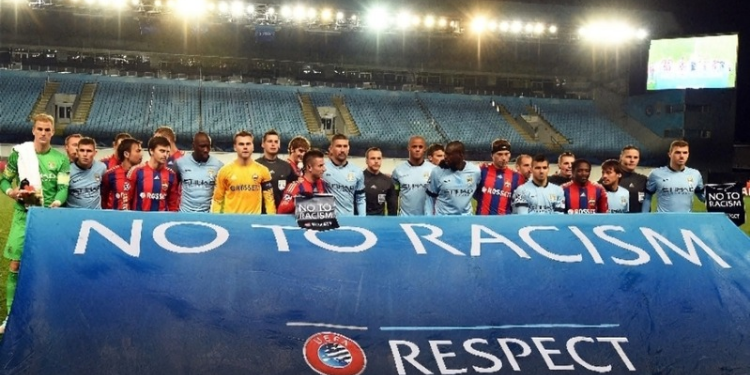
Photo of Football banner written ‘SAY NO TO RACISM’
PHOTO/AFP
Also Read: Why Brighton Wore a Strange All-Blue Kit in 3-0 Arsenal Win
Fair Officiating and Player Conduct
Joseph also identified players and match officials as important in preventing unnecessary tension. He said referees should remain neutral when officiating matches because controversial decisions can contribute to anger among supporters.
“The officials should always be neutral when officiating,” Joseph said.
He also urged players to avoid provoking rival supporters. According to him, players should be careful about their conduct during matches because actions that antagonise opposing fans can contribute to chaos in the stands.

Photo of referee Peter and other officials Waweru officiating a past match
PHOTO/Teya
FKF Sensitisation and National Unity
Speaking to Elisha Omondi, a football fan, he explained that supporters also need education on responsible behaviour.
Omondi called for sensitisation programmes by Football Kenya Federation (FKF) to educate fans on how to conduct themselves during matches.
He further stated that supporters should avoid backing teams along ethnic lines and instead use football to promote national unity.
Omondi pointed to Kenyan clubs with strong regional and community identities, saying supporters should feel free to support teams outside their own communities.
He gave the example of supporters from different communities supporting clubs such as Gor Mahia, AFC Leopards and Murang’a FC.
For Omondi, greater diversity among supporters could help football bring people together rather than deepen divisions.
Also Read:Explained: How to End Match-Fixing in Kenyan Football
Ticket Prices Could Reduce Entrance Chaos
Joseph also raised the issue of ticket prices. He said stadiums should have standard ticket prices to prevent commotion at entrances.
Lelei similarly called for federations to reduce ticket prices while also encouraging fans to maintain good behaviour. The two linked better access and orderly entry to efforts to create a calmer match-day environment.
Tougher Punishment for Repeat Offenders
Graham proposed stronger disciplinary action against supporters who repeatedly engage in violence.
He said violence should first attract a warning, followed by a second warning if the behaviour continues.
If a supporter still refuses to change, Graham suggested a suspension of about one year.
“Violence should be banned,” Graham said, explaining that the possibility of being suspended could discourage supporters from causing trouble.
He also pointed to England as an example, saying football fans who misbehaved could be banned from attending matches.
According to Graham, seeing other supporters face bans could make fans think twice before committing offences.
Building a Better Stadium Culture
Beyond punishment, Graham said football authorities and clubs should work towards creating a good culture inside stadiums.
He argued that supporters need to understand that attending a football match should not involve violence or disorder.
Kont also highlighted restrictions on visiting supporters as another approach that has been used in some football settings.
He said AEK Athens and other teams in his setting have had a restriction preventing visiting fans from attending certain matches.
“This happens for more than 20 years,” Kont said, referring to the restriction.
He gave the example of teams from the same city being unable to host each other’s supporters, meaning only home fans attend such matches.
However, Kont made clear that he did not support the restriction.
Follow our WhatsApp channel for instant news updates
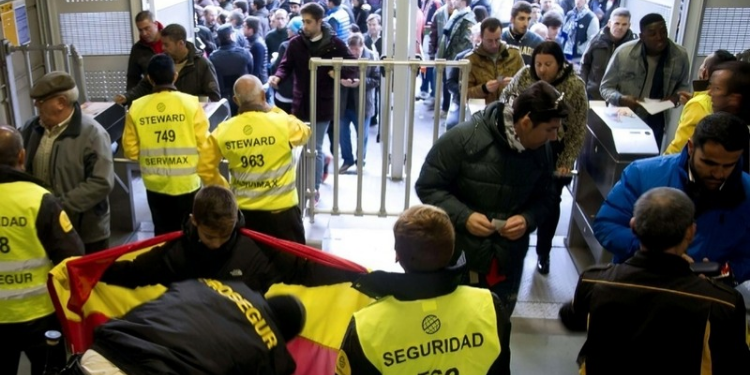
Photo of Football Stewards frisking fans before entering stadium
PHOTO/File