
Explainer: What It Takes to Become an MCA in Kenya and Their Roles
Share

Becoming a Member of County Assembly (MCA) in Kenya is a process governed by the Constitution and election laws, with aspirants required to meet specific qualifications before contesting for the position.
MCAs play a significant role in county governance, acting as a direct link between residents and the county government, and shaping policies that influence development at the grassroots level.
According to the Independent Electoral and Boundaries Commission (IEBC), anyone seeking to vie for the position must meet the minimum eligibility criteria that guide all county representative positions.
These requirements ensure that candidates understand public affairs, can represent their wards effectively, and are accountable to the electorate.
While the role is political, the office of the MCA is deeply administrative, involving legislation, oversight, and representation.
Their work directly affects local governance, service delivery, and budgeting, making the position highly influential within the devolved units.
Qualification Requirements
To qualify as an MCA, an aspirant must be a Kenyan citizen and a registered voter.
They must also meet the ethical and integrity standards set under Chapter Six of the Constitution.
The Elections Act further requires candidates to be of sound mind and free from bankruptcy.
Unlike positions such as Member of Parliament or Governor, an MCA candidate does not need a university degree.
The law requires only that the aspirant be able to read and write in English or Kiswahili, making the entry level more accessible to grassroots leaders.
Candidates must also not have been convicted of an offense under election laws within the previous five years.
They must either be nominated by a political party or run as independent candidates, provided they meet the registration timelines set by IEBC.
Also read: How to Become an Advocate in Kenya
Nomination and Campaign Process
The journey to the ballot begins with party primaries for those running on a political party ticket.
Parties submit their lists of nominees to IEBC before the official clearance stage, where the electoral body verifies compliance with all legal requirements.
Independent candidates must collect signatures from a specified number of voters in their ward, detailing their support for the candidate.
These signatures must accompany the nomination papers filed with IEBC.
Campaigns then follow, where aspirants present their agenda to the public, engage in debates and outline development plans.
IEBC enforces campaign finance rules and monitors compliance to ensure fairness.
Also Read: How To Become A Polling Station Agent For Maraga Across Kenya
Key Roles of an MCA
1. Legislation at the County Level
MCAs debate and pass laws that govern counties.
These include regulations on trade, health services, transport, development control and local taxation.
They sit in committees that examine bills and propose amendments before laws are adopted.
2. Oversight of the County Executive
MCAs provide checks and balances on governors and county executives.
They scrutinize budgets, monitor implementation of development projects and can summon county officials to answer questions.
In extreme cases, they can initiate impeachment proceedings against governors.
3. Representation of Ward Residents
Every MCA represents a specific ward and is responsible for articulating residents’ needs in the County Assembly.
They push for equitable resource allocation and follow up on issues such as infrastructure, healthcare, agriculture and education at the ward level.
4. Approval of Key Appointments
County Assemblies vet and approve appointments to executive positions, including County Executive Committee Members and chief officers, ensuring that qualified individuals hold crucial offices.
Why the MCA Role Matters
The position of MCA remains central to Kenya’s devolved system.
Their decisions shape development priorities and influence how county resources are allocated.
With counties controlling billions of shillings annually, the performance and accountability of MCAs directly affect service delivery at the grassroots.
Follow our WhatsApp Channel and WhatsApp Community for instant news updates
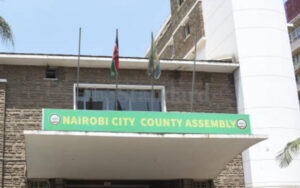
Nairobi City County Assembly Building. PHOTO/ Standard.