Share
The United States is reassessing its relationship with Tanzania, citing growing alarm over government repression, threats to American interests, and escalating violence around the country’s October elections.
In a statement on November 4 by the State Department, Principal Deputy Spokesperson Thomas “Tommy” Pigott said recent actions by the Tanzanian government have “raised grave concerns about the direction of our bilateral relationship and the reliability of the Tanzanian Government as a partner.”
The United States and Tanzania have long maintained a close partnership rooted in regional security cooperation and development.
But Washington now says that the foundation is being shaken by what it describes as a pattern of rights violations and instability.
US Goes After Tanzania
According to the statement, the review was triggered by a combination of factors:
- The government’s repression of religious freedom and free speech
- Persistent barriers facing American investors
- Disturbing violence against civilians before and after the October 29 elections.
U.S. says these developments have not only endangered Tanzanians but also put American tourists, residents, and business interests at risk.
Also Read: Tanzania Activist Writes to Donald Trump
“The Government of Tanzania’s ongoing repression of religious freedom and free speech … and disturbing violence against civilians … required this reconsideration of our ties,” the statement said.
“These actions have put American citizens, tourists, and U.S. interests in Tanzania at risk.”
Tanzania’s Relationship with the US
Relations between the two countries have traditionally focused on counterterrorism, conservation, health partnerships, and trade.
In the days surrounding the election, reports of intimidation, restrictions on political expression, and clashes involving security forces heightened international scrutiny.
Also Read: Trump’s Govt Swing to Action After Warning to Third World Countries
Rights groups later issued warnings about shrinking civic space in the country.
Pigott stated that the United States “cannot overlook actions that jeopardize the safety of our citizens or the security and stability of the region,” adding that the future of the diplomatic relationship will hinge on the Tanzanian government’s conduct going forward.
While the statement did not outline specific consequences, a comprehensive review could lead to adjustments in security cooperation, development assistance, or diplomatic engagement.
U.S. officials often use such reviews to signal readiness to impose targeted measures if reforms are not pursued.
Follow our WhatsApp Channel and WhatsApp Community for instant news updates
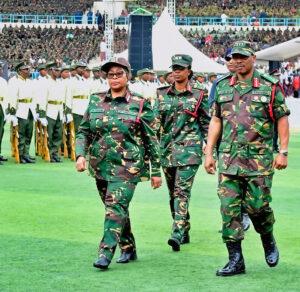
Samia Suluhu Hassan, the President of Tanzania and Commander-in-Chief of the Armed Forces, in a Military Uniform Together with other Generals. PHOTO/ Courtesy
You Might also Like