Share
In recent years, many countries, especially across Africa , have experienced political tensions in the form of military coups or coup attempts.
From the 2020s onward, a surging trend of instability has re‑emerged on the continent, with several nations seeing democratically elected governments toppled by military forces or facing serious coup threats.
The origins of this recent wave date back to August 2020, when the first in a string of coups struck Mali.
At the time, military officers overthrew the then-President Ibrahim Boubacar Keïta, triggering a chain reaction of instability that would spread across West and parts of Central and Southern Africa.
In 2021, the trend intensified.
Guinea saw its president removed by force, while in Sudan, military forces ousted the transitional civilian leadership following a period of turmoil.
Then in 2022, Burkina Faso went through two successive coups within months, first deposing President Roch Kaboré, and later toppling the interim military regime itself under Captain Ibrahim Traoré.
By 2023, countries such as Niger and Gabon had also joined the list.
On July 26, 2023, Niger’s presidential guard detained President Mohamed Bazoum and declared a new military junta under General Abdourahamane Tchiani.
In August 2023, Gabon’s military overthrew long‑time ruler Ali Bongo shortly after disputed election results, placing General Brice Oligui Nguema in power.
Also Read: Benin Soldiers Seize Control, Remove President From Power
Coup Wave Continues: 2024–2025
The instability did not subside.
In October 2025, amid nationwide protests in Madagascar, an elite military contingent (CAPSAT) overthrew President Andry Rajoelina, installing a new interim government under Colonel Michael Randrianirina.
Then, in November 2025, Guinea-Bissau experienced another coup, the ninth in its history, when military officers seized power shortly after contested general elections.
The Latest Shock: Coup Attempt in Benin
On December 7, 2025, Benin, long regarded as one of the more stable democracies in West Africa, made headlines as a group of soldiers, identifying themselves as the Military Committee for Refoundation, appeared on state television claiming to have seized power, dissolved government institutions and suspended the constitution.
However, by late afternoon, government loyalist forces, backed by security operations, had regained control.
The country’s President Talon and Interior Minister declared the coup attempt foiled, and at least 14 suspected plotters were arrested.
Regional bodies, including ECOWAS, along with the African Union, condemned the attempted takeover and pledged support to restore constitutional order.
Also Read: KDF Introduces Data Science and AI Course to Boost Military Skills
What’s Driving the Surge?
Tracking coup patterns point to several intertwined factors fueling the recent surge.
One major driver is deteriorating security, notably the spread of jihadist violence and insurgency across the Sahel region, which weakens governments and undermines public trust.
Economic hardship, often resulted by global shocks like rising energy or food prices, plays a role too, as populations grow frustrated with governance failures.
Also, the weakening of democratic institutions and erosion of public confidence in elected governments have created fertile ground for coups.
Follow our WhatsApp Channel and WhatsApp Community for instant news updates
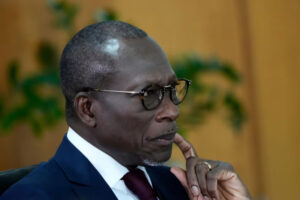
Benin President Patrice Talon. PHOTO/ CNN
You Might also Like