U.S. Set to Demand Five Years of Social Media History from All Visitors
Share
Visitors eligible to enter the United States might soon be asked to submit much more personal data, such as information on their social media accounts, emails and family background.
According to a notice published on December 10 in the Federal Register, US Customs and Border Protection (CBP) is proposing to collect up to five years of social media data from travellers from certain visa-waiver countries.
The requirement would be imposed on travellers using the Electronic System of Travel Authorization (ESTA) under the Visa Waiver Programme, which allows citizens of 42 countries, including the United Kingdom, Germany, Qatar, Greece, Malta, New Zealand, Australia, Japan, Israel and South Korea, to travel to the US for tourism or business for up to 90 days.
Currently, the ESTA automatically screens applicants and grants travel approval without requiring an in-person interview at a US embassy or consulate, unlike standard visa applications.
New Rules to Include Email History
As of now, ESTA applicants must submit a more limited set of information, such as the names of their parents, their current email address, and information about their criminal history.
In 2016, a question requiring travellers to provide their social media details was introduced to the ESTA application, but remained optional.
Also Read: Trump Scores Another Victory as DRC, Rwanda Sign Peace Deal
The new notice also states that the CBP plans to request additional personal information from the visitors, including telephone numbers used in the last five years, as well as email addresses used in the last 10 years.
Authorities Seek High-Value Data Fields
Law enforcement agencies also reported that they would include what they term as “high-value data fields” in the ESTA application when feasible.
These would include metadata from electronically submitted photographs, extensive personal information about applicants’ family members, such as their places of birth and telephone numbers used over the past five years, as well as biometric data, including fingerprints, DNA and iris data.
The announcement did not specify what the government sought in the social media accounts of the visitors or why it was demanding more comprehensive information.
Also Read: Trump’s Govt Swing to Action After Warning to Third World Countries
However, the CBP claimed that it was acting in accordance with an executive order that was signed in January by US President Donald Trump, requesting an increase in the amount of screening of individuals entering the US in order to avert the admission of potential threats to national security.
Policy Continuity From Trump to Biden
Visitors who do not belong to the Visa Waiver Program system are already required to submit their social media details, a working policy that can be traced to the first Trump administration.
The policy remained during US President Joe Biden’s administration.
The notice in the Federal Register states that the public has 60 days to submit comments on the proposed changes before they are finalised.
Follow our WhatsApp Channel and WhatsApp Community for instant news updates
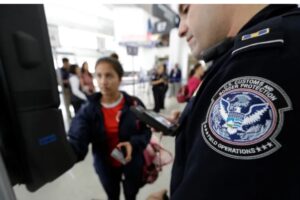
US Customs and Border Protection at a facial recognition centre
PHOTO/File/David J Philip
You Might also Like