
Share

A Christmas meal at the prestigious Kisumu Yacht Club has sparked a heated online debate regarding tax compliance after a customer took to social media to highlight the lack of Electronic Tax Register (ETR) receipts.
The controversy started when a customer posted a picture of their bill on X while enjoying the holiday season at the club’s “Beach Patrol” catering unit.
According to the customer, he received a handwritten “Cash Sale” slip rather than a typical, KRA-compliant fiscal receipt.
“I was at yacht club kisumu for #MerryChristmas lunch. I realized they don’t issue ETR receipts and it raised suspicion over possible tax evasion @KRACare, an X user posted, sparking a wave of reactions ranging from support for civic duty to accusations of “snitching” during the holiday period.
KRA’s Stance on ETR
The Kenya Revenue Authority has been aggressive in its rollout of the Tax Invoice Management System (TIMS) and the more recent eTIMS, which requires businesses to produce electronic tax invoices in real-time.
Also Read: KRA Releases List of Reportable Jurisdictions Under New CRS Rules
Handwritten receipts, while common in small informal businesses, are often scrutinized when issued by established high-traffic hospitality.
According to KRA, E-invoicing is mandatory for VAT-registered taxpayers who must adopt a compliant Electronic Tax Register (ETR) to transmit tax invoice data. To confirm validity, a valid electronic tax invoice must include key features such as a buyer PIN, control unit serial, invoice numbers, and a QR code.
Failure to comply with e-invoicing regulations could cause fines, imprisonment, and other legal consequences.
E-invoicing is not mandatory for all taxpayers in Kenya. Only VAT (value-added tax) registered taxpayers are legally required to use a tax register according to the VAT (ETI) Regulations (2020) and the VAT Act (2013).
Even if a business’s billing system is fully automated, it must still adopt a compliant Electronic Tax Register (ETR) to issue tax invoices.
Also Read: KRA Issues New Directive to All Fuel Stations
Use of the Register
The register is used to ensure that each sale is recorded at the point of sale. An invoice is recorded with respect to each sale and thereafter, the invoice generated is transmitted to the purchaser and the invoice details are transmitted to KRA daily.
Accordingly, these Regulations places the following obligations on the part of a VAT registered taxpayer: ensure that the register is available at the point of sale; facilitate the inspection of the register by the registered person; ensure that the register is properly maintained through regular servicing; keep and maintain a register every time a register is serviced including record of persons who serviced; and comply with any other requirements as directed by the Commissioner.
The Taxpayer is also required to ensure continuity of operations of the register if there is an interruption of the power supply.
Follow our WhatsApp Channel and WhatsApp Community for instant news updates
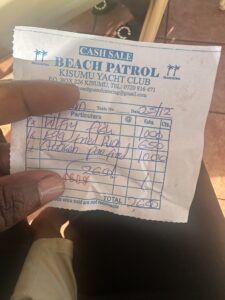
Cash sale receipt without ETR issued by a customer in Kisumu county