NCCK Rejects Prophet Owuor’s Miracle Healing Claims
Share
The National Council of Churches of Kenya (NCCK) has distanced itself from controversial miracle healing claims by preacher David Owuor, warning Kenyans against accepting assertions of supernatural cures that lack medical verification.
The umbrella church body, through its chair, Rev. Elias Otieno, said “no single preacher possesses divine authority to heal” and cautioned that “such claims risk misleading vulnerable believers.”
NCCK emphasized that healing, whether spiritual or physical, remains the sole prerogative of God and not individual pastors.
The council urged religious leaders to concentrate on preaching and pastoral care rather than portraying themselves as exclusive channels of divine cures, noting that, “faith should not be used to replace or undermine established medical treatment.”
The warning follows a recent high-profile crusade where Owuor claimed to have cured serious medical conditions, including HIV and cerebral disorders.
These claims have sparked national debate, drawn the attention of the Ministry of Health, and alarmed medical professionals and church regulators who fear the spread of misinformation and potential harm to patients.
Faith and Medicine Must Go Together
Speaking to the media, NCCK National Chair Rev. Elias Otieno emphasized the need to strike a balance between faith and science, as well as responsible healthcare.
“We believe in faith healing, but it is God who heals, not pastors. Nobody should be denied access to established medical treatments for their health. Those claiming otherwise are acting irresponsibly,” Rev. Otieno said.
He added that, “while prayer and faith remain central to Christian belief, they should complement, not replace medical diagnosis and treatment.”
According to NCCK, discouraging believers from seeking professional healthcare exposes them to serious health risks and violates ethical responsibility.
Also Read: Govt Addresses Prophetic Healings in Nakuru
Regulatory Gaps Exposed
Church leaders also noted that the controversy surrounding Owuor’s claims has exposed gaps in regulatory oversight across Kenya’s religious landscape.
Rev. Otieno observed that many independent churches operate outside established structures, creating room for unchecked practices and doctrinal inconsistencies.
“Some churches operate independently and are not under any regulatory umbrella. If one pastor practices one thing and another does something different, it creates disunity and weak oversight,” he explained.
NCCK argued that “the absence of accountability mechanisms makes it difficult to protect congregants from exploitation and misleading teachings,” particularly those involving health and medical claims.
Also Read: Duale Reveals Which Kenyan Health Data Will Be Shared with the U.S. and Why
Call for Structured Regulation
The council reiterated its support for regulating religious institutions, insisting that any proposed framework must involve broad consultation with faith groups and the public.
“When the proposed bill is fully understood through consultation and public participation, it will create a common framework for regulating religious institutions. Misinterpretations that it will limit preaching are incorrect,” Rev. Otieno added.
Meanwhile, Health Cabinet Secretary Aden Duale has directed medical practitioners linked to Owuor’s ministry to “substantiate the alleged cures or risk deregistration.”
Although investigations into the claims are yet to commence, authorities have signaled firm action against unverified medical assertions.
The Kenya Medical Practitioners and Dentists Council, through its Secretary General, Davji Atellah, has separately advised patients that “do not discontinue prescribed medication without consulting qualified doctors.”
Despite mounting scrutiny, Owuor has maintained that “my crusades have yielded tangible results,” insisting that “dozens of individuals have been healed of HIV and AIDS through my ministry.”
Follow our WhatsApp Channel and WhatsApp Community for instant news updates
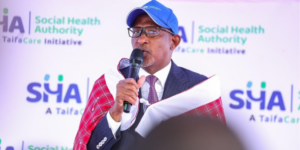
Health CS Aden Duale in a Past Ministry of Health Event. PHOTO/ Ministry of Health.
You Might also Like