
Truth Behind the Smoke Rising Above Mt. Longonot
Share

The Kenya Wildlife Service (KWS) has cleared the air regarding reports of a volcanic eruption at Mt. Longonot National Park.
Following a wave of panic fueled by social media videos showing smoke billowing from the mountain, that has been circulating, the state corporation has confirmed that the “eruption” was, in fact, a bushfire and not an eruption as mentioned by Kenyans.
The clarification comes after residents and travelers along the Mai Mahiu-Naivasha highway raised alarms over visible smoke on the mountain’s southern slopes on Thursday January 22, 2026.
KWS confirmed the incident was a bushfire likely sparked by a discarded cigarette or intentional clearing rather than a volcanic eruption.
Also Read: KWS Officer Opens Fire on Police, Kills One Officer Before Shooting Himself
“This is not the first time we have received such misinformation. The last time such an incident occurred was in 2022,” KWS told Kenyans.co.ke.
According to KWS, Mount Longonot is prone to seasonal bushfires, as dry conditions leave the land’s vegetation extremely vulnerable to ignition and therefore cause such incidents.
Mt. Longonot, formed by the Great Rift Valley’s immense subterranean heat, is a dormant volcano and popular tourist site which was formed approximately 400,000 years ago through successive eruptions of trachyte lava and ash.
However, human activity poses a risk; in September 2021, a fire started by hikers devastated a large portion of the mountain’s vegetation.
Longonot eruption more than 150 years ago
On March 21, 2009, a bushfire ignited on the slopes of Mount Longonot, rapidly spreading to the crater and destroying over 4,600 hectares of bushland.
At least ten people were charged with arson in connection with the fire, which was started by human activity and fueled by dry conditions during a nationwide drought.
Kenyan security forces were sent to help with containment efforts after it raged for several days, with flames reaching the summit by March 22 and continuing into March 23.
Also Read: Fresh Details Emerge on Marakwet East Landslide Disaster
During dry seasons, bushfires have repeatedly occurred on Mount Longonot.
These include several instances in the 2010s and more recent occurrences in 2021 and 2022 that destroyed tens of acres of vegetation, as well as a fire in January 2023 that was thought to have been started by charcoal burners and destroyed tens of acres of pasture, forcing wildlife to escape.
These fires, often originating from outside the park boundaries, have impacted grasslands essential for wildlife grazing and migration patterns.
Droughts in the region exacerbate fire risks by drying out vegetation, as seen in the 2009 event and ongoing arid conditions that make containment more challenging.
Follow our WhatsApp Channel for Instant News Updates
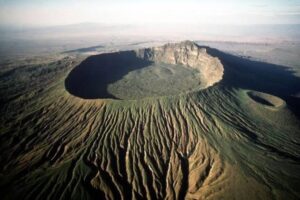
Mt. Longonot