Travel to the U.S. Just Got Pricier for Ugandans
Share
U.S Embassy Uganda has announced that beginning January 21, 2026, Ugandan citizens applying for certain United States visitor visas will be required to post a financial bond as a condition of entry.
The new measure, part of an expanded U.S. Department of State pilot program, aims to curb visa overstay rates by providing a financial incentive for travelers to return home on time.
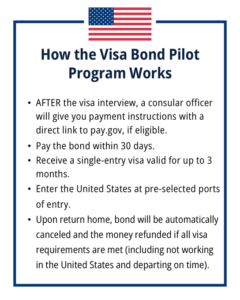
How the Visa Bond Works
The Embassy stated that under the new guidelines, applicants found eligible for a B1/B2 (business or tourist) visa may be directed by a consular officer to pay a refundable bond
“Effective January 21, 2026, Uganda joined the visa bond pilot program. Visa applicants who are otherwise found eligible for a business/tourist (B1/B2) visa for travel to the United States will be required to post a bond before the visa can be issued,” U.S Embassy in Uganda said on a post.
Also Read: Electoral Commission of Uganda Moves to Cancel Elections
According to the guidelines, any citizen or national traveling on a passport issued by one of these countries, who is found otherwise eligible for a B1/B2 visa, must post a bond for $5,000, $10,000, or $15,000.
This amount is determined at the time of the visa interview.
The bond must be paid through the official U.S. Treasury website (Pay.gov) only after a consular officer provides specific instructions during the visa interview.
They have warned that any payments made to third-party sites or before official instruction will not be refunded.
“They must not use any third-party website for posting the bond. The U.S. Government is not responsible for any money paid outside of its systems. A bond does not guarantee visa issuance. If someone pays fees without a consular officer’s direction, the fees will not be returned,” the U.S. Embassy in Uganda said on a post.
Impact on Travelers
Uganda joins a list of over 30 countries, including several other African nations like Nigeria and Tanzania, subject to the pilot program.
While the U.S. government maintains that the program supports “legitimate travel,” local travel experts expressed concerns that the high upfront costs may act as a significant barrier for small business owners and families planning short-term visits.
Also Read: Russia, China in Panic as Trump Makes U-Turn on Greenland and Targets Entire Arctic
The Department of State has identified nationals from these countries as needing visa bonds. The implementation dates are in parentheses:
- Algeria (January 21, 2026)
- Angola (January 21, 2026)
- Antigua and Barbuda (January 21, 2026)
- Bangladesh (January 21, 2026)
- Benin (January 21, 2026)
- Bhutan (January 1, 2026)
- Botswana (January 1, 2026)
- Burundi (January 21, 2026)
- Cabo Verde (January 21, 2026)
- Central African Republic (January 1, 2026)
- Cote d’Ivoire (January 21, 2026)
- Cuba (January 21, 2026)
- Djibouti (January 21, 2026)
- Dominica (January 21, 2026)
- Fiji (January 21, 2026)
- Gabon (January 21, 2026)
- The Gambia (October 11, 2025)
- Guinea (January 1, 2026)
- Guinea Bissau (January 1, 2026)
- Kyrgyzstan (January 21, 2026)
- Malawi (August 20, 2025)
- Mauritania (October 23, 2025)
- Namibia (January 1, 2026)
- Nepal (January 21, 2026)
- Nigeria (January 21, 2026)
- Sao Tome and Principe (October 23, 2025)
- Senegal (January 21, 2026)
- Tajikistan (January 21, 2026)
- Tanzania (October 23, 2025)
- Togo (January 21, 2026)
- Tonga (January 21, 2026)
- Turkmenistan (January 1, 2026)
- Tuvalu (January 21, 2026)
- Uganda (January 21, 2026)
- Vanuatu (January 21, 2026)
- Venezuela (January 21, 2026)
- Zambia (August 20, 2025)
- Zimbabwe (January 21, 2026)
Follow our WhatsApp Channel for Instant News Updates
How the Visa Bond Pilot Program Works
You Might also Like