Share
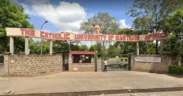
By Gazette Notice Number 116 of September 9, 2011, Garissa University, formerly known as Garissa University College, was created by an Act of Parliament as a constituent college of Moi University.
On October 7, 2013, the University College admitted its first cohort of 480 government-sponsored students; in September 2014, it admitted a second cohort of 352 students. One of the worst terror attacks in the nation occurred at Garissa University College in April 2015, killing 148 people.
As a result, the institution was shut down indefinitely. Just a small portion of the approximately 900 admitted students returned to class when instruction and learning activities resumed in January 2016.
Garissa University became a fully committed public university on October 23, 2017, making it the first of its kind in Northern.
On 23rd October, 2017, Garissa University became a fully-pledged public university and the first of its kind in Northern Kenya with employees and students from all parts of the Country. Since then, the university has experienced steady growth in student population.
Also Read: TSC Issues Notice Following Killing of Teacher by Suspected Terrorists
Currently, the institution has a total of 5242 students enrolled for postgraduate, undergraduate, diploma, and certificate courses. The university has had four graduation ceremonies for the conferment of various degrees and the award of diplomas and certificates.
The university is not unique because of its location far from the socio-political and economic centers of the country, but also because of many emerging policies, challenges, cross-border conflicts, and critical institutional changes, including devolution. The university inherited modest facilities from the then Garissa Teachers Training College, which in most case,s was not fit forthe purposes of hosting fast growth and development.
ACADEMIC PROGRAMMES
Academic programmes are offered in three Schools and the Institute for Peace & Security Studies. The university has a total of 49 programmes, with 29 of them presently on offer while 20 are in the approval stages.
| # | School | Programs on Offer | New Programs |
| 1. | Education, Arts & Social Sciences |
|
|
| 2. | Business & Economics |
|
Also Read: Meru University: Courses Offered, Fees, Location and Campuses
| 3. | Pure & Applied Sciences |
|
|
| 4. | Institute of Peace & Security Studies |
|
|
Library
The Library was founded in 1996 as a component of Garissa Teachers College, which subsequently changed its name to Garissa University. Since then, it has kept expanding its collection, mostly through donations, purchases, and exclusive publications.
A committee was formed in September 2013 with the goal of reorganizing and elevating the library to university status. The need to hire more professionals was one of the suggestions. Currently, the library employs 16 people, serves 2,500 patrons, and has more than 12,000 print books from domestic and foreign publishers and vendors.
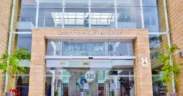
The University is in the process of constructing an ultra modern library to serve the growing needs and diversity of users. This is envisaged to be a model library of its kind in the entire North Eastern Region with capacity to accommodate 3,000 users, a million print books and journals, five hundred computers and unlimited number of electronic books and journals.
Also Read: Maseno University: Courses Offered, Fees, Location and Campuses
Fees Payments
Fees vary depending on the program level (Degree vs. Diploma) and sponsorship status (Government-sponsored/KUCCPS vs. Self-sponsored).
The costs have been restructured and now differ per student based on their eligibility under the newly introduced scholarship and funding framework.
Follow our WhatsApp channel for Instant News Updates
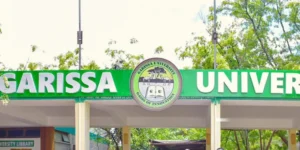
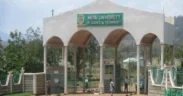
Garissa University. PHOTO/Garissa University
You Might also Like