Today in History: How Robert Ouko Was Allegedly Tortured and Murdered
Share
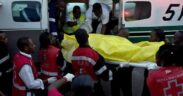
On February 13, 1990, the mutilated and partly burnt body of Kenya’s Foreign Affairs Minister, Robert Ouko, was found at the foot of Got Alila Hill near his Koru home in Kisumu.
Ouko had disappeared two days earlier, on February 11, triggering a government search led by Police Commissioner Philip Kilonzo.
A local herdsboy first spotted the charred remains on February 13 but did not immediately alert authorities.
The body was officially documented on February 16 during a search led by Emmanuel Mwachiti Chiti, the then OCPD for Kisumu.
President Moi Confirms Robert Ouko is Dead
That same day, President Daniel Arap Moi addressed the nation, expressing sorrow and confirming that Ouko’s partly burnt body had been discovered about six kilometres from his home.
He assured Kenyans that thorough investigations would be conducted and those responsible would be brought to justice.
More than 30 years later, Ouko’s murder remains one of Kenya’s most controversial political killings, with many theories surrounding it.
Among the most serious claims are those made by former Special Branch officer James Khwatenge, who served during Moi’s administration.
Also Read: Today in History: Raila Odinga Sworn In as ‘People’s President’
Appearing before the Gor Sunguh Parliamentary Select Committee formed after President Mwai Kibaki took office in 2002 to probe Ouko’s murder, Khwatenge alleged that a senior government official within Moi’s inner circle was responsible for the killing.
He has since stood by those claims over the years, including in a January 2026 podcast interview.
According to Khwatenge, two police inspectors attached to State House at the time later confided in him separately that they had witnessed Ouko being shot at State House, Nakuru.
He claimed that the two officers told him Ouko had been bundled into a car from his Koru home and transported to Nakuru.
At State House, Khwatenge alleged, Ouko was grilled over accusations that he was undermining President Moi’s leadership.
The State House Confrontation
The former Special Branch Officer narrated that during the interrogation at State House, Ouko was accused of elevating himself politically and diplomatically at Moi’s expense. Ouko, on his part, firmly denied undermining the President.
According to Khwatenge’s account, tensions escalated during the confrontation. He alleged that Biwott became irritated as Ouko maintained his innocence. It was at that moment, he claimed, that Biwott allegedly pulled out a gun and shot Ouko in the head.
The former Special Branch officer further alleged that the shooting occurred in the presence of President Moi.
Before Ouko’s murder, Khwatenge alleged that there was a rivalry between Ouko and Biwott, which he traced back to a diplomatic trip to the United States.
These claims, however, remain unproven in a court of law and have long been contested.
Biwott Wins Defamatory Cases
John Anguka, who had been accused alongside Hezekiah Oyugi but later acquitted, went into exile in London and published Absolute Power: The Ouko Murder Mystery in 1998.
In the book, Anguka accused powerful figures, including Nicholas Biwott and Hezekiah Oyugi involvement in Ouko’s killing.
The publication reignited public debate but did not lead to a known libel or defamation case from Biwott directly against Anguka.
Before his death, Biwott consistently denied any involvement in Ouko’s murder.
He was highly litigious over allegations and won several high-profile defamation suits against other sources.
Also Read: Today in History: How General Opande Missed the Chance to Become Kenya’s Chief of Defence Forces
In 2000, he successfully sued British authors Dr. Iain West and Chester Stern, and the publishers of Dr. Iain West’s Casebook, which had implicated him.
He was awarded a record Ksh 30 million in damages, the largest libel award in Kenya at the time. Kenyan distributors were also ordered to pay damages and apologize.
Biwott also filed suits against former US Ambassador Smith Hempstone over his memoir, The Rogue Ambassador, as well as several local media outlets, for publications linking him to the murder.
Over the years, numerous investigations have sought to reveal the truth behind Ouko’s death. Yet no one has ever been convicted.
Follow our WhatsApp channel for instant news updates
The image shows the Court Hammer, mostly used by judges to signal a decision. PHOTO/file
You Might also Like