Parliament Rejects TikTok Ban, Opts for Tough New Rules to Regulate Platform
Share
Kenyan lawmakers have rejected a motion to ban TikTok and instead adopted broad regulatory policies to ensure greater oversight of the rapidly growing social media platform while protecting the constitutional freedoms and economic interests of Kenyans.
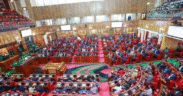
During a heated parliamentary debate on Tuesday, February 17, 2026, Members of Parliament discussed a petition calling for a complete ban on the social media platform due to concerns that it exposes children to offensive content and undermines cultural and religious values.
The petition, which was filed on August 15, 2023, by Bob Ndolo, the Executive Officer of Bridget Connect Consultancy, called on the lawmakers to take firm action against the social media platform.
Ndolo said that the social media platform exposes children to sexual materials, violence, hate speech, profane language, and other forms of offensive behavior, and that it is a threat to social norms and moral standards.
However, after several weeks of public participation and stakeholder engagement, a parliamentary committee determined that a ban on the platform would be legally and economically impractical.
Rights Versus Regulation
The Public Petitions Committee maintained that blocking the platform outright would infringe on constitutionally guaranteed freedoms.
“The total ban of TikTok is not tenable,” Committee Chair and Ruyenjes MP Karemba Muchangi said, noting that social media platforms have become central to communication, innovation, and youth entrepreneurship.
Echoing that position, Ruaraka MP Tom Joseph Kajwang underscored Parliament’s oversight mandate.
“The question of TikTok is an important discussion which we must have,” he said, stressing that the Constitution obligates lawmakers to interrogate digital governance issues affecting citizens.
The committee report further states, “A total ban of TikTok is not tenable because it infringes upon fundamental rights and freedoms in the country.”
It adds: “Further, a ban on the social media platform would stifle social and economic growth and the benefits of internet connectivity as the nation seeks to enhance its digital economy.”
Still, lawmakers acknowledged mounting concerns over mental health, excessive screen time, data privacy violations and social isolation among teenagers.
Kajwang’ cited these challenges as justification for firm regulation rather than laissez-faire tolerance.
Also Read: MPs Win Big as Court of Appeal Issues Verdict on NG-CDF
Four-Month Compliance Timeline
Rather than a prohibition, the Parliament is moving forward with a multi-agency regulatory approach that may greatly impact the future of social media regulation in Kenya.
The Ministry of Interior and National Administration and the Ministry of Information, Communication, and the Digital Economy have been tasked with working together to improve user protection and cybersecurity.
In four months, the ministries must return with information regarding the following: “the mechanisms for enhancement of age-verification on the social media platforms, the localisation of Kenyan user data to be retained within the country, such as the setting up of local infrastructure for data security by the platforms.”
Digital literacy initiatives will also be implemented to inform users of data privacy, processing, storage, and community guidelines on social media platforms.
The Office of the Data Protection Commissioner has been charged with conducting an audit of compliance with the Data Protection Act, 2019, including the efficacy of age-verification mechanisms and content filters.
Members of Parliament are seeking the development of Kenya-specific supplementary privacy terms.
Also Read: Crisis in Grade 10 Transition as MPs Slam CS Ogamba Over Gaps
Content Moderation and AI Review
Content moderation was one of the issues highlighted in the report by the committee.
The lawmakers have urged the need for an audit of the artificial intelligence tools employed in content moderation, with a focus on training the algorithms in local languages and dialects to eliminate blind spots in content moderation.
The report also suggests the need to employ more human moderators who understand the Kenyan socio-cultural setting and provide them with psychosocial support because of the traumatic nature of content moderation.
TikTok recently reported that it had deleted over 580,000 videos in Kenya between July and September 2025 for violating the Community Guidelines, which was cited by the lawmakers as proof that the content moderation tools were working.
Economic Stakes and Monetization of Creators
Apart from the safety aspect, Parliament emphasized the economic aspect of social media.
The committee urged TikTok and other platforms without local monetisation policies to introduce mechanisms allowing Kenyan creators to earn directly from their content.
To entrench regulatory authority, the Departmental Committee on Communication, Information and Innovation will propose amendments to the Kenya Information and Communications Act (CAP 411A) to empower the Communications Authority of Kenya to formally regulate social media platforms.
“The Committee recommends that social media platforms, including TikTok, be regulated and periodic compliance reviews by the relevant state agencies be institutionalised,” the resolution reads.
However, not all lawmakers are fully convinced. Kirinyaga Woman MP Jane Maina raised caution during the debate, saying: “I have read this report extensively and my law lecturer taught me to always look for the devil in the details. And I do ask myself, why now? What is the rationale behind it? How extensive will these regulations be? Will they be used to stifle dissent, to stifle key fundamental rights and freedoms guaranteed by the Constitution?”
Follow our WhatsApp channel for instant news updates
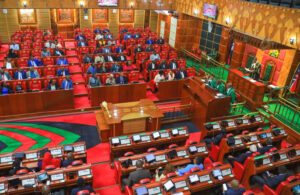
A photo of MPs attending the previous session in National Assembly PHOTO/Parliament
You Might also Like