
Rice Farming at Risk as Mwea Farmers Sound Alarm Over Drought and Poor Roads
Share

Rice farmers in the Mwea Irrigation Scheme have warned that persistent drought and deteriorating road networks are pushing rice production to the brink, threatening incomes in one of Kenya’s key grain-producing regions.
Growers from multiple sections of the expansive scheme say shrinking water levels and infrastructure neglect have converged to create a severe operational crisis.
According to the farmers, low water levels in Thiba Dam and dry weather have affected the planting and harvesting cycles, especially in Mwea East and parts of Mwea West.
Low water supply in irrigation channels has made others reduce the acreage under cultivation, while others have irregular crop maturity.
Lucy Waithera, a farmer based in the Thiba section, appealed to elected water users’ representatives to intensify advocacy for farmers and address neglected internal access roads.
“We spend a lot of time and money transporting rice to the main roads because the roads within the farms are in poor condition. We want leaders who will fight for reliable water supply and better infrastructure,” she said.
Mounting Pressure Over Water Access and Accountability
Elizabeth Kanabiu criticized leaders for discussing rice deficits and imports in Nairobi without consulting producers on the ground.
She also raised concerns about how the irrigation charges are being handled, saying that the money is paid digitally.
“We pay for water through eCitizen, but we do not see improvements in our roads or irrigation systems. Leaders should visit us and understand the reality on the ground,” she said.
Peter Mwangi urged policymakers to personally inspect Thiba Dam to grasp the scale of depletion affecting irrigation schedules.
“The dam’s water levels have gone down significantly, and rationing is affecting our farms,” he said.
In response to recurring shortages, farmers in Mwea East are proposing the construction of an additional dam to cushion the region from seasonal variability.
Joseph Nyaga observed that while Thiba Dam primarily supports Mwea West, farmers in Mwea East depend largely on River Nyamindi.
“That is why areas relying on River Nyamindi continue to face shortages despite the presence of water in other sections,” he said.
Also Read: Over 250 Workers Left Jobless as Poor Roads Force Closure of Tea Factory
Government Intervention
Mwea MP Mary Maingi has, however, confirmed that the government plans to construct the proposed Nyamindi Dam to ensure irrigation reliability in both sub-counties.
On the other hand, the National Irrigation Authority (NIA) has started rationing water due to high demand exceeding the supply.
Farmers are now calling for desilting of canals, feeder roads, and irrigation distribution systems to cut post-harvest losses and transportation costs.
Also Read: PWD Sorghum Farmers Receive Ksh500,000 in Senator Keg’s Promotion Campaign
The issues were raised as over 16,000 rice farmers cast their votes in the election of water users’ representatives in the irrigation scheme, with executive officials to be elected on Monday.
Farmers believe that the change in leadership offers a chance to revamp the governance structure and ensure transparent management of irrigation resources and representation of farmers at the policy level.
Follow our WhatsApp channel for instant news updates
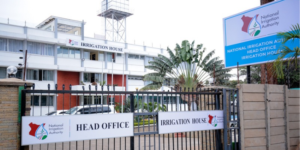
National Irrigation Authority Head Office in Nairobi. PHOTO/ File