Can Gachagua Run for President in 2027 After Impeachment?
Share
Former Deputy President Rigathi Gachagua, who was impeached in 2024, has continued to declare his intention to vie for the presidency in the 2027 General Election.
However, the interpretation of the constitution in Kenya has raised fundamental questions about his eligibility to vie for the presidency.
Gachagua was removed from the office of Deputy President through an impeachment process that began in the National Assembly and was upheld by the Senate in October 2024, making him the first sitting deputy president to be impeached under the 2010 Constitution.
The Constitution of Kenya sets out clear qualifications and disqualifications for presidential candidates.
Under Article 137, you may be qualified to vie for the presidency if you are a citizen by birth, qualified to serve as an MP, nominated by a political party or independent candidates who got nominations from at least 2000 voters/majority of the counties.
Impeachment and Public Office Eligibility
Under Kenya’s Constitution, impeachment is a mechanism for removing high state officers, including the Deputy President, for gross violation of the Constitution, criminal conduct, or gross misconduct.
Once impeached and removed, the person ceases to hold that office immediately.
A contested issue in Kenyan law, and central to Gachagua’s case, is whether impeachment automatically disqualifies someone from contesting future public office.
Nairobi Senator Edwin Sifuna has publicly insisted that “the Constitution says once you are impeached, you cannot run.”
However, constitutional experts and some public commentators note that there is no explicit provision in the Constitution that permanently bars an impeached person from running again.
Instead, the law disqualifies a person from nomination if they owe allegiance to a foreign state or are still a public officer at the time of nomination.
Also Read: Police Issues Update as Gachagua Threatens to Storm IG Kanja’s Offices
Legal Remedies and Court Challenges
Gachagua’s legal team has challenged the impeachment in court, arguing procedural flaws and contesting the evidence used to remove him.
His supporters contend that while appeals are ongoing, his political rights remain intact.
Democracy for Citizens Party leader Cleophas Malala has said Gachagua, “still enjoys the rights to vie for any office,” until all legal remedies are exhausted and a final court ruling is made.
The dispute over the constitutionality of the impeachment process is ongoing.
Should the Supreme Court determine that the impeachment was a valid one, this could create case law establishing that Gachagua is not eligible to hold elected office, including the presidency.
Conversely, the Supreme Court could rule that certain aspects of the impeachment were not legal; therefore, he would still be able to run for office.
Also Read: Ruto’s Party Responds After Court Declared Merger With ANC Unconstitutional
Impeachment and pension entitlements
The rules set out in the constitution and laws regulating pension entitlements confirm that any deputy president impeached may be disqualified from receiving certain pension entitlements unless they have served more than half their term as deputy president.
To date, Gachagua has served less than two and a half years of five (5).
This could lead him to lose most entitlements to receive a pension and other privileges that have generally been available to persons in this position.
Follow our WhatsApp channel for instant news updates
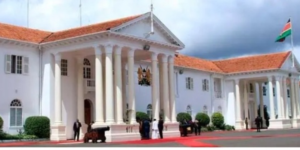
State House file image. PHOTO/pixels