
Today in History: When Uganda’s Shortest-Serving “President” Ruled for Three Days
Share

On July 27, 1985, soldiers from the Uganda National Liberation Army (UNLA) overthrew President Milton Obote in a bloodless military coup.
After the takeover, a dusk-to-dawn curfew was imposed, and all flights in and out of the country were halted.
Obote fled Uganda, reportedly taking millions from the central bank.
Several of his ministers were arrested, and looting broke out in parts of Kampala as thousands of residents filled the streets.
While some areas of the capital stayed calm, unruly troops ransacked parts of the city. Shops were looted for days, shelves stripped bare, and businesses linked to Obote supporters were set on fire. The streets remained largely empty, patrolled by a heavy military presence.
At the military council headquarters, leaders worked quickly to form an interim government and unite rival factions. Brigadier Bazilio Olara-Okello, who led the coup, promised a fresh start for the nation.
“We want unity, because for so long we have suffered. We appeal to all Ugandans to forget the past and work toward peace,” he said.
Walter Ochora, Uganda’s “three-day President”
At the heart of the coup announcement was Colonel Walter Ochora. Around 11:30 a.m., he entered the Radio Uganda studios and declared the military takeover.
“Special announcement. We are announcing a total military coup in Uganda today, the 27th of July, 1985,” he said.
Ochora spoke on behalf of Brigadier Olara‑Okello, whose soldiers had rebelled in northern Uganda.
Since he was the first to announce the overthrow, some jokingly called him Uganda’s “three-day president.” He reportedly laughed at the title himself later in life.
Also Read: Today in History: How Robert Ouko Was Allegedly Tortured and Murdered
Uganda’s Chief of Defence Forces, Muhoozi Kainerugaba, recalled Ochora’s story in 2020:
“My late friend Colonel Walter Ochora used to tell us how he was President of Uganda for three days. We would all laugh,” he said.
Following the coup, General Tito Okello was officially sworn in on July 29, 1985, as Uganda’s eighth president and Chairman of the Military Council.
His rule, however, lasted only about six months.
On January 26, 1986, he was overthrown by the National Resistance Army (NRA), led by Yoweri Museveni, who has remained in power since.
Also Read: Today in History: Raila Odinga Sworn In as ‘People’s President’
Ochora’s Later Life and Legacy
After Kampala fell to the NRA, Ochora fled with retreating UNLA forces.
He later joined the Uganda People’s Democratic Army (UPDA), a rebel group of former UNLA soldiers opposing the new government.
In 1988, he helped negotiate a peace deal between the UPDA and Museveni’s government, which led to the integration of many rebels into the national army.
Ochora became a loyal supporter of the government, serving two terms as the political head of Gulu District and later as Resident District Commissioner (RDC).
He also rose to the rank of Colonel in the Ugandan army.
Colonel Walter Ochora passed away on March 3, 2011, at age 54 at International Hospital Kampala, shortly after being admitted for emergency treatment.
Follow our WhatsApp channel for instant news updates
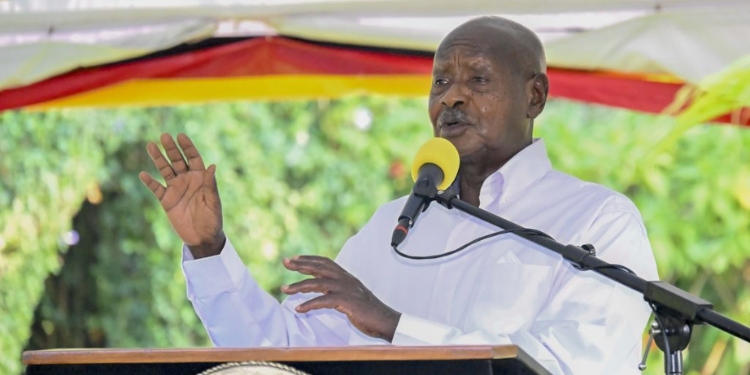
Photo of Uganda President Yoweri Museveni. PHOTO/State House Uganda