Kenya’s History of Police Brutality and Extrajudicial Killings Years Before Ruto
Share
Kenya has witnessed a long history of police brutality and extrajudicial killings across successive regimes, with some of the most notable cases, including the death of Baby Samantha Pendo.
Critics argue that while some leaders in Kenya’s current political space portray themselves as defenders of citizens’ rights and accuse their opponents of failing to address police excesses, abuses by security agencies were also witnessed during administrations in which they served. These incidents have left many families grieving, without justice or compensation.
Under President William Ruto’s administration, the 10-Point Agenda agreed upon with former Prime Minister Raila Odinga on March 7, 2025, included commitments to address police killings, corruption, and compensation for victims of state violence.
In August 2025, President Ruto issued a Presidential Proclamation establishing a framework for compensating victims of police brutality and protest-related violence dating back to 2017. However, the initiative faced legal hurdles when the High Court ruled in December 2025 that the President had exceeded his authority, noting that such mandates fall under the Kenya National Commission on Human Rights (KNCHR).
Prior to Ruto’s administration, police excesses and extrajudicial killings were documented under previous governments, many of which faced both local and international condemnation.
Cases of Police Brutality Reported During Uhuru Kenyatta’s Administration
During President Uhuru Kenyatta’s tenure, several high-profile cases of police brutality, enforced disappearances, and suspected extrajudicial killings were reported.
Killing of Baby Samantha Pendo (2017)
One of the most disturbing cases was the killing of six-month-old Baby Samantha Pendo in Kisumu’s Nyalenda slum during the 2017 post-election protests.
Armed police officers, mostly from the General Service Unit (GSU), raided her parents’ home during a night operation dubbed “Operation Post Election Mipango.”
Also Read: Police Officer Convicted in IPOA-Probed Grievous Harm and Assault Case
Officers broke down the door, fired teargas inside the house, and beat her parents. Baby Pendo suffered severe head injuries, including a fractured skull, confirmed by post-mortem examination.
She was rushed to Aga Khan Hospital, Kisumu and admitted to the ICU but died on August 15, 2017, five days after the attack. Her death sparked nationwide outrage.
To date, no police officer has been successfully prosecuted, with court proceedings dragging on for more than eight years.
Stephanie Moraa Nyarangi (2017)
Nine-year-old Stephanie Moraa was shot dead on August 12, 2017, while standing on the balcony of her family’s apartment in Mathare, Nairobi.
Police officers conducting clearance operations opened fire, and a bullet struck her while she watched events unfold below. She died on the same day.
The Independent Policing Oversight Authority (IPOA) recommended a public inquest, but no officer was charged or prosecuted.
Stabhay Mokaya (2017)
Nine-year-old Stabhay Mokaya was killed by a stray bullet on August 12, 2017, during protests in Mathare, Nairobi.
His father said security forces fired into the informal settlement, and the child, who had no involvement in the protests, was fatally struck.
His case remains unsolved, with no prosecutions.
Evans Owino (2017)
Evans Owino, a 23-year-old college student, was shot dead in October 2017 along Landhies Road in Nairobi while welcoming opposition supporters.
Witnesses reported that police opened fire on the crowd, shooting Owino in the back. His killing occurred during the repeat presidential election period.
His death remains unsolved, and no investigation has resulted in prosecution.
Post-Election Crackdown Killings (2017)
Human rights organizations, including Human Rights Watch and KNCHR, documented at least 23 civilians killed by police in Nairobi’s informal settlements during the repeat presidential election period.
Victims included women and children shot inside their homes in areas such as Kibera, Mathare, Kawangware, and Dandora.
No police officers were prosecuted.
Killing of Benson Njiru and Emmanuel Mutura Widely Known as Kianjokoma Brothers (2021)
Benson Njiru, 22, and Emmanuel Mutura, 19, were brothers from Kianjokoma in Embu County. Benson was an engineering student, while Emmanuel was studying law.
In August 2021, the two were arrested by police for allegedly violating COVID-19 curfew rules. The following day, their bodies were discovered in a mortuary, showing signs of severe blunt force trauma, raising allegations of torture and extrajudicial execution.
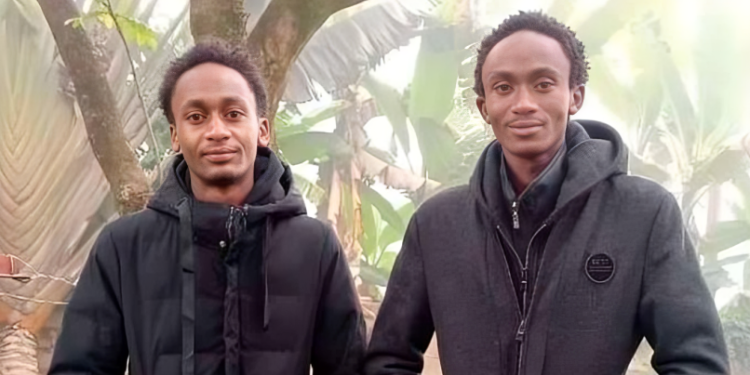
Photo of Benson Njiru and Emmanuel Mutura. PHOTO/Courtesy
Police claimed the brothers had jumped from a moving police vehicle, but human rights observers and their family disputed this account.
The killing drew widespread condemnation, with Kenyans calling for accountability. To date, no prosecutions have been made, with the case still ongoing in court.
Disappearance of Bogonko Bosire (2013)
Bogonko Bosire was a prominent Kenyan blogger and former AFP journalist, widely regarded as one of the country’s most influential and fearless investigative reporters. He operated Jackal News, a platform known for exposing sensitive political information and corruption, including matters linked to the International Criminal Court (ICC) and political intelligence surrounding the Jubilee administration.
In September 2013, just a year into President Uhuru Kenyatta’s term, Bosire disappeared under suspicious circumstances. In the days leading to his disappearance, he had confided in a Kenyan senator that he was being trailed by two armed men, who were also reportedly seen outside his South B residence.
He had recently posted on Twitter, allegedly revealing the identity of ICC Witness 536, which was considered highly sensitive information. After this tweet, his account went silent for months, only later showing posts claiming he had been “eliminated after becoming a loose mouth.”
Despite his prominence and the public nature of his investigations, he has never been found, and his case remains one of the most notorious unresolved disappearances.
Killing of MP George Muchai (2015)
George Muchai was a sitting Member of Parliament for Kabete under the Jubilee Party. He was known for his anti-corruption stance and had reportedly raised concerns about threats to his life before his assassination. Legislators who visited his home revealed that Muchai had recorded a statement with the police regarding the dangers he faced.
On the early morning of February 7, 2015, at around 3:40 am, Muchai was gunned down at the Kenyatta Avenue–Uhuru Highway Roundabout in Nairobi, alongside his driver, Stephen Ituu Wambugu, and two police bodyguards, Constables Samuel Kimathi and Samuel Lekakeny. Muchai had just left a hotel in Westlands and was heading home when attackers blocked his car and shot him at point-blank range.
President Uhuru Kenyatta publicly stated that Muchai’s killing was linked to his war on corruption, though the murder sparked widespread speculation about the involvement of powerful individuals. After a decade of court proceedings, four of the seven accused were found to have a case to answer in 2025, but no convictions have yet been secured.
Killing of Jacob Juma (2016)
Jacob Juma was a prominent Kenyan entrepreneur and billionaire known for his fearless criticism of government corruption during the Jubilee administration. On May 6, 2016, at around 9:30 p.m., he was assassinated on Ngong Road, Nairobi. Gunmen on a motorcycle fired at his Mercedes-Benz, hitting the vehicle with at least 10 bullets. He died instantly at the scene, and none of his belongings were stolen, suggesting the killing was targeted and deliberate.
Prior to his death, Juma had publicly warned on social media that his outspoken anti-corruption stance put him at risk, even naming senior officials he believed were plotting against him.
His case remains unsolved; no arrests or prosecutions have been made.
Killing of Willie Kimani, Josephat Mwenda, and Joseph Muiruri (2016)
On June 23, 2016, human rights lawyer Willie Kimani, his client Josephat Mwenda, and their driver Joseph Muiruri went missing while traveling home after filing a complaint against an Administration Police officer who had previously shot Mwenda.
Their bodies were later recovered from the Ol-Donyo Sabuk River in Machakos County, 73 km northeast of Nairobi. All three showed signs of severe torture, including chopped-off fingers, gouged eyes, and arms tied behind their backs, indicating an extrajudicial execution.
Killing of Chris Msando and Carol Ngumbu (2017)
Chris Msando was the Head of Information and Communications Technology at the IEBC, responsible for the electronic transmission of the 2017 election results. Carol Ngumbu, 21, was a KMTC student from Gachie, Kiambu.
A few days before the 2017 general elections, Msando went missing over the weekend. His body, along with that of Carol Ngumbu, was later recovered in a forest in Kiambu, outside Nairobi. Both were naked and appeared to have been tortured, suggesting a brutal and premeditated killing.
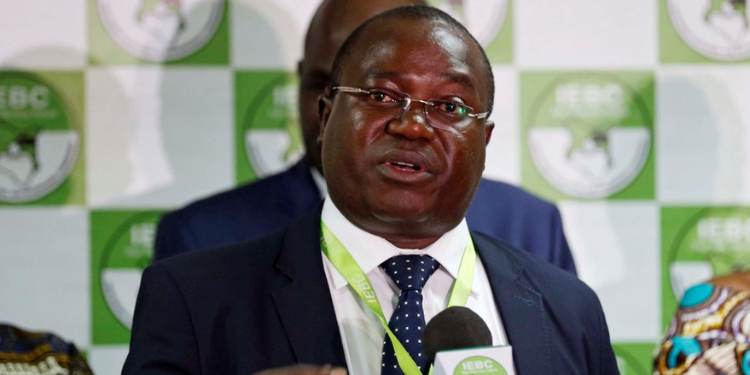
Photo of the late IEBC ICT Boss Chris Msando. PHOTO/BBC
IEBC Chairperson Wafula Chebukati confirmed that Msando was tortured and murdered, while the opposition led by NASA, including Raila Odinga, claimed that Msando had sealed loopholes that could have been used to manipulate vote tallies. Former IEBC commissioner Roselyn Akombe alleged that Msando was led to his death by some of his own colleagues at IEBC. Their deaths remain unresolved.
Mwenda Mbijiwe Disappearance (2021)
Mwenda Mbijiwe, a Kenyan security analyst, former Kenya Air Force officer, and consultant, disappeared on June 12, 2021, while driving from Nairobi toward his home in Meru County along Thika Superhighway near Roysambu area.
His family alleges he was abducted by state agents or police officers in civilian clothing. His car was later found abandoned near Nyeri, but he has not been seen since, and his whereabouts remain unknown.
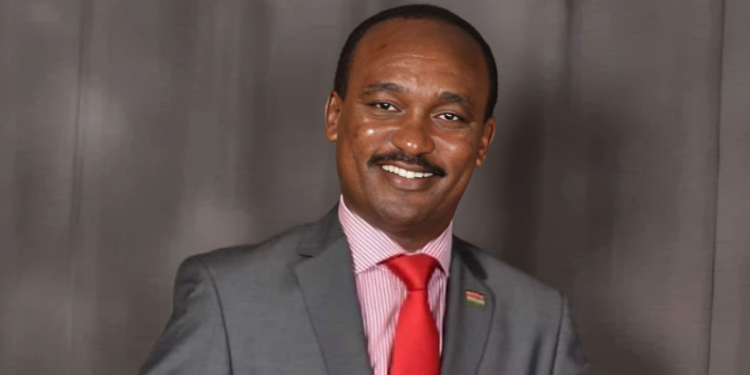
Security analyst Mwenda Mbijiwe. PHOTO/Mbijiwe
His mother, Jane Gatwiri, in January 2026, testified emotionally in court, insisting he is alive and held by the government, while accusing authorities, including DCI, of failing to investigate properly.
Ongoing High Court proceedings have summoned top officials like the Inspector General of Police, DCI Director, and others to explain his fate—alive or dead—but no resolution has been reached. The family continues to seek answers amid claims of a cover-up.
Ethiopian Businessman Samson Teklemichael and River Yala Bodies (2021–2022)
In November 2021, Ethiopian businessman Samson Teklemichael was abducted in Nairobi in broad daylight by armed men. CCTV footage showed him being forced into a vehicle by the armed men with the help of a traffic police officer, but he has never been found, and his fate remains unknown.
Separately, between July 2021 and January 2022, over 40 bodies were discovered, including at least 31 in the River Yala, which flows through Gem Constituency. Amnesty International reported that all recovered bodies showed signs of physical torture and drowning, suggesting extrajudicial killings.
These incidents highlight a pattern of abductions, torture, and unlawful killings in Kenya during this period.
The Cases remain unsolved; most victims are unidentified, and no prosecutions have been completed.
Killing of Indian Nationals and Driver (2022)
In July 2022, two Indian nationals, Zulfiqar Ahmad Khan (former COO of Bollywood production company Balaji Telefilms) and Mohamed Zaid Sami Kidwai (ICT expert), along with their Kenyan driver Nicodemus Mwania, were brutally murdered in Kenya.
The three men had arrived in the country for a short stay to work on William Ruto’s presidential campaign ICT team ahead of the August 9, 2022, elections. After leaving a popular club in Westlands around 1 a.m., CCTV footage captured them entering a Toyota sedan, after which they went missing.
Their bodies were later discovered in Aberdare Forest, showing evidence of targeted killing. Investigations revealed the murders were likely a politically linked, premeditated abduction, and nine police officers from an elite unit were arrested in connection. Following the incident, President William Ruto disbanded the Special Services Unit, citing their involvement.
Police Brutality During the Mwai Kibaki Era
Dr. Crispin Odhiambo Mbai — September 14, 2003
President Mwai Kibaki’s government, which had not yet attained one year in office and had just managed to kick out the KANU regime that had ruled for 24 years, a period plagued by dictatorship and extrajudicial killings, witnessed its first major political killing.
University of Nairobi don and Chair of the Devolution Committee at the Bomas Constitutional Conference, Dr. Crispin Odhiambo Mbai, became the first high-profile political assassination in Kibaki’s administration.
Three gunmen stormed his house along Ngong Road at around 3 PM and shot him three times. He later died at Nairobi Hospital. The attackers took nothing. Mbai had been a vocal proponent of devolution.
At the time, Prof. Mbai was serving as Chairperson of the Devolution Committee within the Constitution of Kenya Review Commission (CKRC). At the Bomas Constitutional Conference, he was a leading voice advocating for devolution and proposing a reduction in presidential powers. These proposals caused divisions within the ruling National Rainbow Coalition (NARC).
Some delegates and students alleged that Mbai’s assassination was politically motivated and aimed at silencing reformists.
Raila Odinga, then leader of the Liberal Democratic Party (LDP) and a close ally of Mbai, condemned the killing, calling it a political “assassination.” Odinga supported similar constitutional reforms, including a parliamentary system, strong devolution, and curbing presidential authority.
During the 2003 constitutional review process, NARC was split: Raila’s LDP faction backed a parliamentary model with an executive prime minister and devolved governance, while President Mwai Kibaki’s DP faction preferred a strong presidential system and a more centralized government.
To date, Mbai’s murder remains unsolved. Three suspects were arrested and charged in connection with the assassination, but in 2005, all were acquitted due to insufficient evidence.
Mungiki Crackdown — Mass Extrajudicial Killings (2006–2008)
Over 8,000 young Kenyans were documented as killed or tortured during the Mungiki crackdown, according to reports by lawyers and the Oscar Foundation.
On June 1, 2007, President Kibaki publicly declared that Mungiki members should “expect no mercy.” Police death squads, including the Flying Squad, Kwekwe Squad, and others, allegedly conducted systematic executions, particularly in Nairobi’s informal settlements such as Mathare, Kayole, and Eastleigh.
Police officer turned whistleblower, Bernard Kirinya, later confessed to witnessing 58 such executions before he himself was shot dead three months later in 2008.
MP Mugabe Were (Embakasi) — January 29, 2008
The newly elected ODM Member of Parliament for Embakasi Mugabe Wer,e who was yet to be sworn in, died on January 29, 2008.
He was shot three times outside the gate of his Woodley Estate home in Nairobi after 11 PM while waiting for the gate to open. He died on arrival at Nairobi Hospital. Four suspects were arraigned, but the case was dismissed in 2010 due to insufficient evidence.
ODM blamed the Kibaki government for his untimely demise. His murder remains unsolved.
MP David Kimutai Too (Ainamoi) — January 31, 2008
Too was an ODM Member of Parliament for Ainamoi.
He was shot dead in Eldoret town by a traffic police officer riding a motorbike. A policewoman who was accompanying him also died. The government’s official position was that it was a “crime of passion” involving a jealous officer. ODM dismissed this explanation and termed it a political assassination.
David Njuguna (Mungiki Spokesperson) — November 5, 2009
Mungiki spokesperson David Njuguna was shot dead in Nairobi.
He was attacked by unknown assailants with whom he reportedly had a confrontation shortly before his death. Njuguna was in charge of the Kenya National Youth Alliance, which served as the political wing of the Mungiki group.
At the time, the government led by President Kibaki was cracking down on Mungiki, which had been outlawed due to a series of criminal and extremist activities.
To date, his murder has never been investigated.
Virginia Nyakio (Wife of Maina Njenga) — 2008
Virginia Nyakio, the spouse of prominent Mungiki leader Maina Njenga, was found dead in Gakoe Forest in Gatundu alongside her driver, Ndungu wa Wagacha.
At the time of her murder, Maina Njenga was incarcerated at Naivasha Maximum Security Prison, serving a five-year sentence for illegal possession of firearms and ammunition, a conviction he received in 2007.
Former police officer Bernard Kiriinya, who was part of the Special Crime Investigations Unit within the CID, later provided details about the circumstances surrounding Nyakio’s death. He claimed that when Mungiki drew the government’s attention, an undercover police unit known as the Kwekwe Squad was formed to eliminate members of the gang.
Kiriinya stated that he served as a driver for a special police unit and witnessed several killings carried out by officers, including the incident involving Nyakio. He recounted that Nyakio and her driver were abducted near the Madaraka Estate roundabout on Lang’ata Road before later being found dead.
Prof. George Saitoti & Bodyguard — Helicopter Crash — June 10, 2012
The Internal Security Minister, along with his bodyguard and four others, including his Assistant Orwa Ojode, died when their Kenya Police helicopter crashed shortly after takeoff from Nairobi’s Embakasi Police Line.
The Eurocopter AS350 went down minutes after takeoff and burst into flames. An official investigation attributed the crash to engine failure. However, several Kenyans and analysts found the timing, as Saitoti was considered a frontrunner for the 2013 presidential race, suspicious.
Investigations were later done, and the crash was attributed to mechanical failure.
Bernard Kiriinya — October 16, 2008
Former police officer and whistleblower Bernard Kiriinya was shot dead near a safe house run by the Kenya National Commission on Human Rights in Nairobi after being lured to a meeting.
Human rights groups, including the United Nations, suspected police involvement due to the targeted nature of the killing, though police spokesperson Eric Kiraithe denied the claims.
Before his death, Kiriinya had given recorded testimony to UN investigator Philip Alston detailing alleged extrajudicial killings by police squads targeting suspected Mungiki members between 2006 and 2008. He claimed officers executed suspects, staged crime scenes, and carried out high-profile killings.
His murder remains unsolved, and no arrests have been made.
Sheikh Aboud Rogo Mohammed — August 2012
Rogo, who was a Muslim cleric from Mombasa, was shot dead in 2012 by individuals believed to have been trailing him. None of his family members was harmed. Human rights groups immediately condemned the killing as an extrajudicial execution.
His death triggered days of violent riots in Mombasa, with churches burned and police vehicles attacked by enraged supporters.
The Muslim Human Rights Forum labelled it an extrajudicial killing likely carried out by security forces or their agents. To date, his death remains unsolved.
Oscar Kamau Kingara & John Paul Oulu — March 2009
Human rights activists Oscar Kamau Kingara and John Paul Oulu were assassinated in Nairobi.
The two had been documenting extrajudicial killings linked to police death squads targeting suspected members of the outlawed Mungiki sect. Their killings shocked the country and drew international condemnation.
President Kibaki’s administration was also widely blamed for police conduct during the 2007/2008 post-election violence, in which more than 1,000 Kenyans were reported killed.
Earlier Cases During President Daniel Arap Moi’s Rule
The pattern of alleged state-linked violence in Kenya stretches back decades, particularly during the rule of Daniel arap Moi.
One of the most prominent and controversial cases was the murder of Foreign Affairs Minister Robert Ouko in 1990.
Robert Ouko’s Killing
Ouko disappeared on the night of February 12, 1990, from his Koru home in western Kenya. Days later, his charred body was discovered at the foot of Got Alila Hill, about two kilometers from his residence. A postmortem revealed that he had been shot before his body was set on fire.
Initial government statements suggested suicide, but public pressure forced a formal investigation. Scotland Yard detective Superintendent John Troon was invited to assist. His probe reportedly pointed to high-level government involvement, though the findings were never fully implemented.
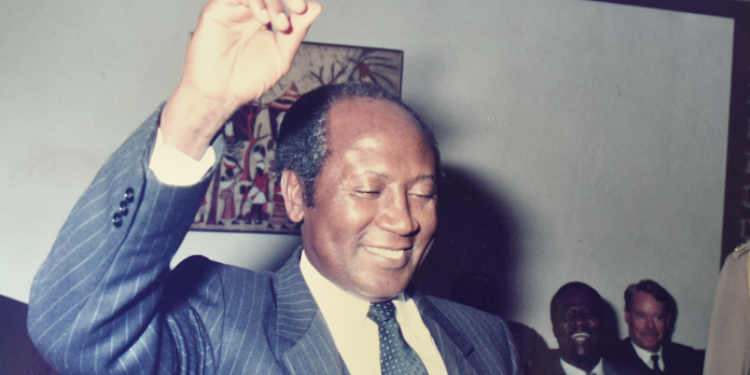
Photo of the late Foreign Affairs Minister Robert Ouko. PHOTO/The Kenya Forum
Years later, a parliamentary select committee concluded that Ouko was abducted and murdered in a plot involving powerful individuals within the state. Despite multiple investigations, including inquests and renewed probes, no one has ever been successfully prosecuted. More than three decades later, Ouko’s murder remains one of Kenya’s most enduring political mysteries.
Wagalla Massacre (1984)
Another dark chapter was the 1984 Wagalla Massacre in Wajir County.
In February 1984, security forces launched an operation ostensibly aimed at disarming members of the Degodia clan following clan-based conflicts. Thousands of ethnic Somali men were rounded up and detained at the Wagalla Airstrip. Survivors later recounted being held in the scorching sun for days without food or water, subjected to beatings, torture, and inhumane treatment.
Human rights groups estimate that hundreds, possibly over 1,000, civilians died, though official figures have long been disputed.
For years, the government denied the scale of the killings. It was only decades later, during hearings by the Truth, Justice and Reconciliation Commission (TJRC), that the massacre was formally acknowledged as a gross human rights violation.
Despite the acknowledgment, no senior officials have been held accountable.
Nyayo House and Nyati House Torture Chambers
During the same era, Nyayo House and Nyati House in Nairobi became synonymous with torture. Political dissidents, pro-democracy activists, and suspected coup plotters were detained in underground cells where they were beaten, waterboarded, deprived of sleep, and, in some cases, killed.
Also Read: Government Makes Changes To Makau Mutua-Led Panel On Compensation For Protest And Riot Victims
Beyond these incidents, several high-profile deaths during Moi’s regime fueled public suspicion:
Alexander Muge, the Anglican Bishop of Eldoret, died on August 14, 1990, in a road crash near Kipkaren while returning from Busia, despite prior threats warning him not to visit the area. A vocal critic of President Moi’s government, Muge had publicly defied warnings from Labour Minister Peter Okondo.
Although an official inquest ruled the crash an accident and jailed the truck driver, suspicion persisted among church leaders and civil society.
In 2012, former intelligence officer James Lando Khwatenge told the TJRC that Muge had allegedly been assassinated in a covert police operation dubbed “Operation Shika Msumari,” with the crash staged to conceal the killing. No one has been held accountable.
Masinde Muliro’s Death (1992)
Masinde Muliro died on August 14, 1992, after collapsing at Jomo Kenyatta International Airport shortly after returning from London, where he had attended a fundraising mission for the opposition party Forum for the Restoration of Democracy (FORD). At the time, Muliro was the party’s vice chairman and a prominent critic of Moi’s government.
His family doctor, Arthur Obel, declared cardiac arrest as the cause of death without conducting an autopsy, raising suspicion among opposition leaders, including Jaramogi Oginga Odinga, who called for investigations. Despite lingering questions, his death was officially attributed to a heart attack.
Fredrick Masinde (1994)
Fredrick Masinde, a FORD-Kenya politician, died on June 27, 1994, from injuries sustained in a road accident along Ngong Road in Nairobi while campaigning in the Mathare by-election.
He had successfully challenged earlier election results and was declared the winner while hospitalized, but died shortly afterward and was posthumously named Member of Parliament.
His death occurred during a tense political period following the reintroduction of multiparty politics. Family members and former intelligence officer James Khwatenge alleged that the crash was a staged assassination meant to eliminate a political threat.
Compensation Debate
Despite multiple commissions and reports — including the Truth, Justice and Reconciliation Commission and the National Dialogue Committee — implementation of reforms has remained slow.
Interior Cabinet Secretary Kipchumba Murkomen told the Senate on February 25, 2026, that there is currently no legal framework requiring the government to compensate victims of general crime.
For many families, justice remains elusive, as victims of police brutality continue to await compensation from the state.
Follow our WhatsApp channel for instant news updates
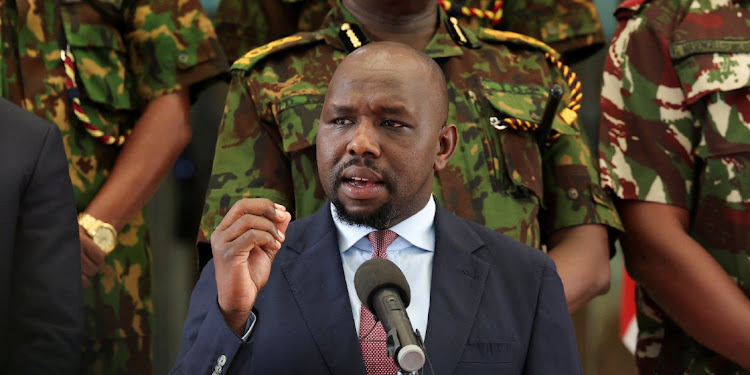
Kipchumba Murkomen speaking at a past event. PHOTO/Kipchumba X