
Why You Should Never Start a Car After Flooding
Share

As the flood waters recede, many motorists are left with the disconcerting spectacle of seeing cars half-submerged in the waters.
The measures taken after the car has been retrieved from the flood waters are crucial to determining the fate of the car.
Flooding is rapidly becoming a common phenomenon in many urban centers due to severe weather changes and poor drainage systems.
Cars are at great risk of suffering severe mechanical, electrical, and internal damage due to the flooding waters.
Being cautious and undertaking the right measures are crucial to mitigating the severity of the destruction.
The most crucial advice given by car experts and technicians on what to do after the car has been retrieved from the flood waters is to avoid starting the engine.
Starting the engine of the car after it has been submerged in the water may result in severe internal engine destruction due to the flooding waters.
Risk of Severe Engine Damage
If you try to start a flooded car, you may end up with a situation called hydrolock.
This is where water enters the engine’s cylinders and thus fails to allow the pistons to function as expected.
However, the first thing that comes to mind when you find your car has flooded is to test whether it is still running.
Unfortunately, if you try to do so, you may end up destroying some of the car’s parts that could otherwise be fixed.
Water may seep into some critical parts of the car, including the engine, fuel system, and transmission system.
The car’s electrical system is also highly susceptible to damage following water exposure.
A car may be fitted with more than 50 different electronic sensors and control modules that can easily get damaged if they get exposed to water.
Even if they are still functioning as expected immediately after the flooding, they may corrode and thus fail at a later time.
Also Read: Police Confirm 23 Dead in Nairobi Floods, List Affected Estates and Roads
Safety and Documentation Come First
It is highly recommended that before approaching a flooded vehicle, it is best to ensure that the area is clear and safe. There could be hidden dangers in the area.
After ensuring that it is safe, it is best to document the damage by photographing and video recording the damage sustained by the vehicle, including the area where the floodwater reached on the vehicle.
It is best to disconnect the battery of the vehicle if it is safe to do so, to avoid any potential fire from electrical shorts in the vehicle’s system.
Towing and Professional Inspection
Instead of driving the vehicle, it is advisable to tow the car to a safe location or a repair shop.
Driving the vehicle can exacerbate the problem or affect the braking system.
In most cases, the first thing to be done during the inspection of the vehicle is to check the engine oil or transmission fluid for any contamination.
If the fluid or the oil seems milky or discolored, it means that water got into the system.
When inspecting the interior of the vehicle, it is important to dry the interior as soon as possible to avoid the buildup of mold.
This can be done by opening the doors and windows of the vehicle or by removing the floor mats.
Also Read: Ministry of Health Sends Warning Amid Deadly Floods
When a Car May Be a Total Loss
The level of water involvement is a factor to consider when determining whether a car can be saved or not.
If the dashboard of the car has been exposed to water, the car could be a total loss due to possible electrical issues.
Saltwater flooding could also cause more problems, especially due to the high rate of corrosion of the electrical wiring and other metallic components of the car.
At this time, the car would require urgent cleaning to avoid further deterioration.
In the end, car owners are encouraged to seek advice from car technicians before driving a car that has been involved in a flood to avoid costly mistakes and potential loss of the car.
It would require a thorough check of the engine, transmission, and braking system to determine whether the car can be saved.
With the rise of severe weather patterns, car owners are encouraged to take the right steps to save their cars from costly mistakes and potential loss.
Follow our WhatsApp channel for instant news updates
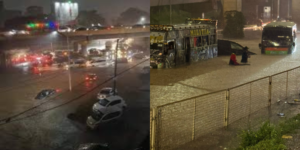
A photo of floods on parts of Nairobi on March 6, 2026. PHOTO/UGC.