Explained: What it Takes to Impeach a Sitting President in Kenya
Share
The Constitution of Kenya outlines a detailed and step-by-step process for impeaching a sitting President, considering the gravity of the decision to reverse a popular mandate.
The process of impeaching the President is, as provided under the Constitution, mainly under Article 145.
The entire process is detailed and aims to provide a legal and political safeguard to ensure the removal of the President only under tested and particular conditions.
The process of impeaching the President in Kenya is complex and involves all members of Parliament, including the National Assembly and the Senate.
It also involves high voting requirements. The process is complex and detailed, considering the gravity of the decision to remove the President.
The process is not haphazard or random; it is based on particular constitutional infringements and involves procedural fairness, including the right of the President to be heard during investigations and trial-like proceedings in the Senate.
Impeachment: Constitutional Basis
Impeachment is authorized by the Kenyan Constitution, which refers to three types of impeachable behavior: a “gross violation” of the Constitution (or any other law), competent evidence that the President has committed a crime (under either federal or international law), and “gross misconduct.”
The motion to impeach a sitting President must be sponsored by at least one-third of the total number of members in the National Assembly, as per Article 145, which states that, “A member of the national assembly may make a motion to impeach, if the member has been sponsored by a minimum of one-third of the total number of members.”
By requiring a minimum number of sponsors for impeachment motions to be initiated in the National Assembly, the Constitution helps ensure accountability for any serious charges against a President before allowing frivolous or politically based sabotage motions to move forward.
The National Assembly as a Gatekeeper
The National Assembly serves as the first gatekeeper in the impeachment process when a motion is tabled; at least two-thirds of the members must support the motion for it to proceed.
If two-thirds of the members approve of the motion, the Speaker of the National Assembly must notify the Senate within 48 hours of the decision.
During this period, the President may continue to perform official duties under the Constitution.
At this point, it is determined if the allegations against the President are sufficient to have enough legal and political merit to allow a full trial in the Senate.
Also Read: MP to Table Motion on Use of Kikuyu Language in Parliament
Senate Investigations and Trial
Once the situation is sent to the Senate, the committee will investigate as if it were adjudicating.
The Senate has seven days in which to convene to hear the charges against an official; either the entire body will sit to hear testimony, or they can appoint an 11-member special committee to conduct the investigation.
The committee is required to report back within ten days on whether the allegations are substantiated.
The President is entitled to appear and be represented during this process, reinforcing the principle of a fair hearing.
If the committee finds no merit in the allegations, the process ends.
However, if the charges are substantiated, the Senate proceeds to a vote after allowing the President to respond.
Also Read: Blow to Ruto as Lobby Group Challenges National Infrastructure Fund in Court
Final Voting and Impeachment
Two-thirds of the Senators must vote to impeach an incumbent before that President is removed from office.
These requirements ensure that impeachment is rare and that there is a broad agreement amongst Parliament Members.
Article 146 provides that the Deputy President will be appointed as a replacement when the President is removed to maintain stability in government.
Checks and Balances in Action
Kenya’s impeachment procedure is an example of a system that is created with checks and balances throughout the process.
Each step of the process must evaluate the legal standing and political legitimacy of an allegation against the President including an investigation into the National Assembly and an appeal to the Senate.
Follow our WhatsApp channel for instant news updates
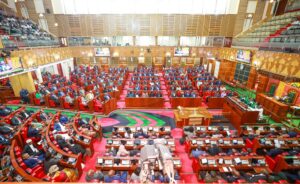
A past session of the National Assembly. PHOTO/Parliament.
You Might also Like