KNCHR Explains Delay in Reaching Victims of Police Brutality as Compensation Plan Progresses
Share
The Kenya National Commission on Human Rights (KNCHR) has explained why it has not been able to reach all victims of police brutality, citing budget constraints even as efforts to develop a national compensation framework continue.
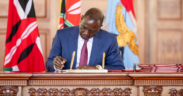
In a statement dated Wednesday, April 1, 2026, the Commission said it is currently working on a framework for compensation and reparations for victims of human rights violations following a directive by William Samoei Ruto.
“The KNCHR has not been able to undertake country-wide outreach as was envisaged and expected by the public due to lack of budgetary allocation,” read part of the notice.
KNCHR Says Budget Issues Slowing Support to Victims
The directive, issued through a gazette notice in March 2026, requires KNCHR to submit a comprehensive report within 60 days.
KNCHR noted that it has already developed a roadmap and a working document to guide consultations with key stakeholders, including victims, government agencies, civil society groups and other interest groups.
Also Read: KNCHR Calls on Protest Victims to File Claims for Compensation
The consultations are expected to guide the development of a draft reparations framework, which will later be subjected to public participation.
Commission Reveals 1224 Cases of Human Rights Violations Have Been Recorded
At the same time, the Commission revealed that it has begun compiling a list of victims of human rights violations. So far, 1,224 cases have been recorded and are currently undergoing verification based on established eligibility criteria.
The cases span a wide range of violations, including extrajudicial killings, torture, abductions and enforced disappearances, evictions, sexual and gender-based violence, as well as loss of property and livelihoods.
Also Read: Ruto Reestablishes Panel of Experts on Protest Victims’ Compensation, Moves It to His Office
However, KNCHR admitted it has not conducted nationwide outreach as expected due to a lack of adequate funding. The Commission has urged the National Treasury to release funds allocated by Parliament to enable it to fully execute its mandate.
Despite the challenges, KNCHR has called on victims of human rights violations, including those affected during protests and demonstrations, to come forward and submit supporting documents such as medical reports, police records and witness statements for verification.
The Commission said it will remain open on April 3, 2026, despite the public holiday, to allow more victims to present their cases at its head office and regional offices.
“The Commission shall remain open on Friday 3rd April despite being a public holiday to give room to Kenyans who may want to present their reports at its Head Office or Regional Offices,” said the Commission.
Follow our WhatsApp channel for instant news updates
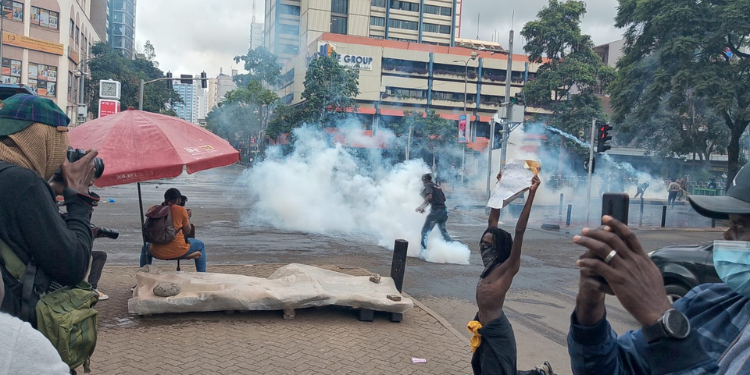
Anti-finance bill protests in Nairobi CBD in June 2024. PHOTO/ Edwin Hinda.