
IMF and World Bank Act as Global Energy Prices Surge Amid Middle East Conflict
Share

The International Monetary Fund (IMF) and the World Bank Group have moved to coordinate a global response as energy prices continue to rise due to the ongoing conflict in the Middle East.
In a joint statement released on Wednesday, April 1, 2026, the institutions, alongside the International Energy Agency (IEA), announced the formation of a coordination group aimed at addressing the economic and energy market disruptions triggered by the war.
The organizations warned that the conflict has significantly affected global energy markets, leading to one of the biggest supply shortages in recent history.
IMF and World Bank Step In as Energy Costs Climb Worldwide
The disruptions have already pushed up the cost of oil, gas and fertilisers, raising concerns over inflation and food security, particularly in energy-importing countries.
According to the statement, the effects are being felt unevenly across the world, with low-income nations facing the greatest pressure due to limited fiscal space and rising debt levels.
Also Read: Fuel Panic Hits Shell Stations as Shortages Bite Despite Govt Assurances
The institutions said that global markets are unstable, currencies in emerging economies are getting weaker, and supply chain problems are making the crisis worse.
“The impact is substantial, global, and highly asymmetric. Global supply chains, including helium, phosphate, aluminum, and other commodities, are affected, as is tourism due to flight disruptions at key Gulf hubs,” the statement read.
What Action the Global Lenders Have Taken to Mitigate the Crisis
To ensure a coordinated response, the global lenders jointly agreed to form a group that will focus on:
- Assessing the severity of impacts across countries and regions through coordinated data sharing on energy markets and prices, trade flows, fiscal and balance of payments pressures, inflation trends, export restrictions of key commodities, and supply chain disruptions.
- Coordinating a response mechanism that may include targeted policy advice, assessment of potential financing needs and the provision of financial support (including concessional financing), as well as the use of risk mitigation tools where appropriate.
- Mobilising relevant stakeholders, including other multilateral, regional, and bilateral partners, to deliver coordinated and efficient support to countries in need.
Also Read: Ruto & IMF Taken to Court Over Privatization of Kenya Pipeline Company
The IMF and World Bank also indicated they would work with other international partners to mobilise resources and deliver timely support, especially to vulnerable economies.
They further warned that continued uncertainty could lead to tighter monetary policies globally, potentially slowing economic growth.
The goal of this joint effort is to protect global financial stability, improve energy security, and help countries deal with the economic impact of the conflict.
The development comes at a time when many countries are already grappling with high living costs, with the surge in energy and commodity prices expected to further strain households and businesses worldwide.
Follow our WhatsApp channel for instant news updates
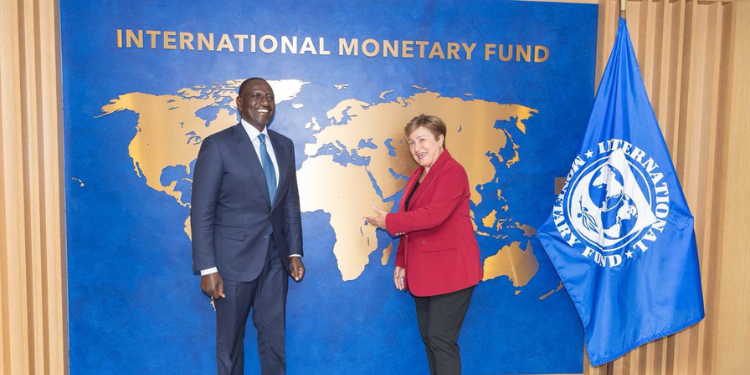
President William Ruto during a meeting with the International Monetary Fund (IMF) Managing Director Kristalina Georgieva in Washington, D.C, USA in December 2025. PHOTO/PCS.