
Court Slaps Chinese Suspect with Ksh1 Million Fine in Rare Ant Trafficking Case
Share

The Kenya Wildlife Service (KWS) has announced a major court ruling in a wildlife trafficking case involving the illegal smuggling of ants.
The case, filed under CF E052/2026 at the JKIA Law Courts, centered on Messor cephalotes, a lesser-known but ecologically important species.
Authorities reported that Zhang Kquen, a Chinese national, faced conviction after court proceedings.
The court fined him KSh 1,000,000. If he fails to pay, he will serve one year in prison, with an additional year added. The ruling signals Kenya’s firm approach to tackling wildlife crime, even for smaller species.
“This ruling underscores the seriousness with which Kenyan courts treat wildlife crimes, including the illegal trafficking of lesser-known but ecologically critical species such as ants,” KWS stated.
Moreover, KWS stressed the ecological value of Messor cephalotes. The ants play a key role in soil aeration, seed dispersal, and nutrient cycling. Without them, ecosystems risk imbalance. As a result, authorities continue to push for stronger protection of such species.
Also Read: KWS Issues Warning After Residents Kill Hyena and Flee With Meat
Rising Threat of Invertebrate Trafficking
At the same time, KWS raised concern over the growing illegal trade in invertebrates. Traffickers now target these species due to rising global demand. Although many people overlook them, they remain vital to biodiversity.
“The case highlights the growing concern over the illegal trade in invertebrates, which, though often overlooked, is increasingly targeted by traffickers due to rising global demand,” the statement added.
Also Read: KWS Clarifies Relocation of Nairobi Animal Orphanage and Forest Destruction Claims
Commitment to Wildlife Protection
In addition, KWS praised the judiciary and partner agencies for their role in the investigation. The agency also reaffirmed its commitment to enforcing wildlife laws.
“The Service reiterates its zero-tolerance stance on wildlife crime in all its forms and remains vigilant in monitoring, preventing, and prosecuting offenders involved in illegal wildlife trade,” KWS said.
Finally, KWS urged the public to stay alert and report any suspicious wildlife activities. The agency emphasized that public support remains key in protecting Kenya’s biodiversity.
Follow our WhatsApp channel for instant news updates
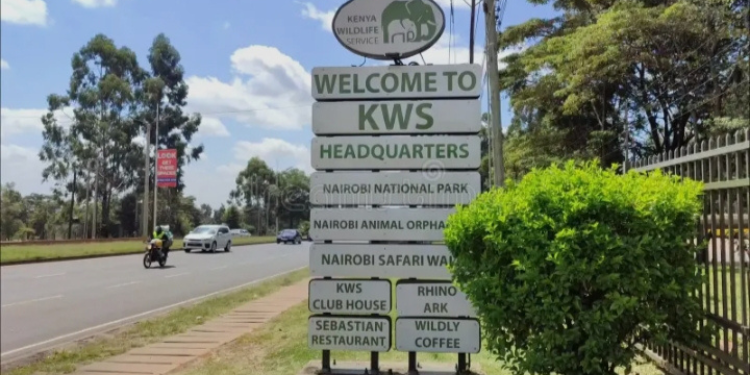
The image shows the entrance to KWS Headquarters
PHOTO/Nation