Iran Reopens Strait of Hormuz Amid Ceasefire Deal
Share
The government of Iran has come out with an official statement stating that it will lift its restrictions imposed earlier on its maritime routes.
The country has stated that the Strait of Hormuz is completely open for navigation throughout the period of the ceasefire in Lebanon.
In a statement attributed to Iranian Foreign Minister Seyed Abbas Araghchi, Tehran confirmed that the decision was coordinated internally and aligned with broader regional developments.
“In line with the ceasefire in Lebanon, the passage for all commercial vessels through Strait of Hormuz is declared completely open for the remaining period of ceasefire, on the coordinated route as already announced by Ports and Maritime Organisation of the Islamic Rep. of Iran,” Araghchi said.
The announcement was made against the backdrop of increased international focus on the security of the maritime trade routes in the Gulf, where past disturbances had led to increases in the prices of oil as well as those of insurance for ships.
Strait of Hormuz Opened Up
This strategically important passage connects the Persian Gulf with the rest of the world through its access to international waters and acts as a route for shipping a considerable portion of the oil produced by the international community.
Also Read:Will Iran Play in the US-Hosted World Cup? FIFA President Clarifies Position Amid Tensions
The Iranian statement about the passage being “fully open” would certainly help ease tensions and calm markets.
Almost immediately following the announcement by Iran, former United States President Donald J. Trump congratulated the country.
“Iran has just announced that the Strait Of Hormuz is fully open and ready for full passage. Thank you!”
Closure of Strait of Hormuz: Reasons and Consequences for Global Economy
First, closure of the Strait of Hormuz was prompted by ongoing tensions between Iran, the United States, and Israel, along with threats to oil production facilities.
Shipping insurance companies refused to underwrite and tankers ceased to sail through the strait, because of fears of missile strikes, drone attacks, and warships’ actions despite any official announcement.
Also Read:Trump Escalates Pressure on Iran With Threat of Expanded Maritime Blockade
Second, the Strait of Hormuz is the main shipping route that accounts for around 20-25% of global oil and LNG shipments.
Consequently, its closing led to serious interruptions in the export of oil products for the producing countries in the region including Iraq and Kuwait.
Third, the consequences were dire for both regional and global economies.
Supply deficiencies exceeding 20 million barrels of oil per day resulted in price hikes and inflation risks.
The cost of marine transportation went up dramatically, ships were left without destinations, and shortage was observed among importers, notably in Asian countries.
Follow our WhatsApp channel for instant news updates
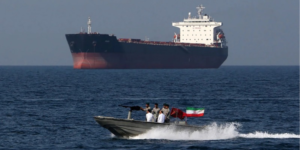
A small Iranian Naval patrol boat cruises past an oil tanker in the Strait of Hormuz canal. PHOTO/ Bloomberg