Strait of Hormuz Disruption Sends Brief Oil Price Spikes, Long-Term Effects Emerging
Share
Recent turbulence in the global oil market has once again highlighted how geopolitical tensions around the Strait of Hormuz directly affect energy pricing.
When signs of disruption emerge, markets quickly react by driving up crude oil prices almost immediately. However, these reactions do not reflect the full impact, which unfolds over a longer period.
In the short term, markets respond to perceived risk rather than actual supply shortages. Prices rise due to increased uncertainty, while later stabilization may suggest the shock has passed.
This can be misleading, as it reflects market sentiment rather than a true recovery.
The Strait of Hormuz remains one of the most critical regions for global energy trade. On average, about one-fifth of the world’s liquid fuel consumption passes through it daily, making it a key chokepoint in global energy security.
Rapid Response to the Oil Shock vs Adjustment
When an oil shock occurs, the immediate response involves a quick rise in price due to speculative trading and risk premium.
Nonetheless, this process is temporary because the supply chain will soon normalize, thereby bringing down headline prices.
It is only until later that the real adjustment takes place.
The supply chain does not return to normal at once.
Insurance costs for oil tankers remain high, other shipping routes take longer, and the refineries become more cautious when buying their raw materials.
Also Read:Why Kenya is Ranked Africa’s Most Competitive Economy
Cycles of Inventory and Supply Chain Disruption
The oil industry functions on various layers of inventory storage, transportation, and refining processes.
In cases of disruptions, the inventory is drawn upon to ensure steady supply levels.
This results in a lagged tightening process even when production levels stabilize.
Studies by the International Energy Agency (IEA) have demonstrated time and again that the recovery period following a shock event is usually characterized by a lengthy buildup of inventory levels and normalization of refinery throughput levels.
Further Consequences for the Economy
The price of oil is not just an exchangeable good but is integral to all parts of the economy.
The price of diesel has a knock-on effect on transportation, aviation fuel affects ticket prices, and the price of petroleum affects plastics, farming, and production industries.
With the increased cost of energy, margins will be squeezed, and individuals will reduce their spending.
This leads to a gradual increase in inflation across several sectors.
Also Read: Populism Without Production: Why Ruto’s Gimmicks Can’t Build an Economy
Delayed Effects and Historical Trends
From historical disruptions in crucial oil transit networks, it becomes apparent that there is always a pattern involving immediate volatility and subsequent stability, and finally, follow-on costs.
The impact that follows is usually more impactful on the economy compared to the shock.
Despite rapid resumption of supply, issues related to building confidence back up, renegotiation of contracts, and adjustments in logistics take time, causing the market tightness to last longer than perceived.
Why Timing Trumps the Spike
It is common practice in the markets to concentrate too much attention on the initial impact, the spike in prices and risk in headlines.
Yet the critical point comes later when the impact is felt by companies, consumers, and governments because of increased costs.
The problem with the spike is not just its existence but also the timing of the prolonged period of disequilibrium that accompanies the spike in energy prices against tight credit or lack of growth.
Follow our WhatsApp channel for instant news updates
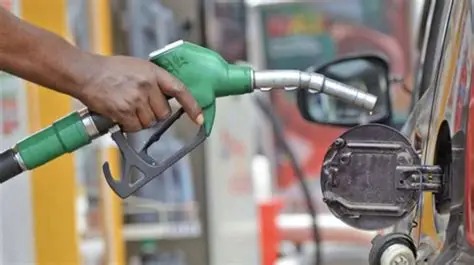
Fuel pump at a petrol station in Kenya. PHOTO/NTV.
You Might also Like