

Why Kenyan Brands Must Shift from Reactive PR to Proactive Trust-Building
Share


By Mary Njoki, Founder and CEO, Glass House PR
In today’s hyper-connected Kenya, where a single tweet, review, or viral video can shape national sentiment in hours, trust has become the most valuable currency any brand can possess.
It is more enduring than advertising budgets, more influential than market share, and more powerful than even the most creative campaigns.
Despite this reality, many Kenyan companies still treat trust as an afterthought, something to be managed only after a crisis rather than intentionally built every day.
The Glass House Brand Trust Report 2025 reveals a defining truth. One in three companies (33.3%) in Kenya has faced a trust crisis in the last five years. Even more revealing is how they respond.
When trust breaks down, most organizations rush into damage control, improving customer service or fixing product quality in an attempt to win back public confidence.
These reactions are fundamentally reactive. By the time a brand reaches this point, the public narrative is already shaped, and consumer confidence has already dipped. Trust, once damaged, becomes costly, time-consuming, and emotionally draining to restore.
How Companies Rebuild Trust
According to the report, 73.7% of companies attempt to rebuild trust by enhancing customer service, while 68.4% focus on improving product quality.
These steps are necessary but insufficient because they deal with symptoms rather than root causes.
As a country of innovators, entrepreneurs, and corporate leaders, we cannot afford a culture where companies reflect only after a crisis erupts. The future demands a new corporate discipline: proactive trust-building.
This shift is urgent because the Kenyan consumer has changed. The majority of respondents in the survey are young, digitally savvy, highly informed, and driven by peer recommendations rather than traditional advertising.
They expect transparency, responsiveness, and consistency. They demand accountability. And when they do not get it, their dissatisfaction is public and instantaneous.
Shifting from Traditional PR
Traditional PR once served as the protective shield around brands, stepping in when reputations were threatened.
But in 2025 and beyond, PR cannot simply be protective; it must be predictive. Its role is to ensure brands hear concerns before those concerns become headlines. Trust is no longer built through crisis management but through everyday behaviour.
Just like health, trust is strengthened through regular habits. Neglect it for a year, and no crisis workout will bring it back to full strength.
Yet 18.2% of companies surveyed never assess trust, and only 27.3% monitor it monthly. So why do brands treat trust, arguably their most valuable asset, any differently?
Companies that track trust consistently are not merely safeguarding their reputations, but building resilience. They understand their audiences better. They identify issues early. They innovate based on real insight. They avoid the apology tours, crisis press conferences, and emergency PR fixes that drain resources and goodwill.
In a market where trust is shaped by lived experience and peer influence, proactive trust-building is no longer optional. It is existential.
Also Read: Opinion: A Just Transition Is a Talent Transition
This proactive approach begins with constant listening. Trust grows when companies take time to hear their customers before responding. If brands pay attention, customer service interactions, social media conversations, and online reviews are early-warning systems.
With 81.1% of businesses already using customer service as a feedback mechanism, there is tremendous untapped potential to transform these touchpoints into strategic strengths, rather than treating them purely as complaint channels.
Listening
Listening must be coupled with radical transparency.
In a market where consumers distrust anything vague or overly polished, openness becomes a competitive advantage.
Being upfront about pricing, acknowledging mistakes before they escalate, and communicating delays honestly builds credibility no marketing campaign can manufacture.
Transparency turns brands into trusted partners rather than distant corporations.
Discipline of Regular Trust Audits
The final piece is the discipline of regular trust audits. These should not be annual checkboxes but monthly reflections.
Monitoring public sentiment, tracking complaints, evaluating customer experiences, and upholding ethical standards helps organizations spot risks early.
This proactive rhythm strengthens trust continuously rather than patching it when it is already broken.
Also Read: Why Embedded Finance is the Missing Link for Kenyan Marketplaces
Kenyan Brands
Kenya is a nation of builders – entrepreneurs, creatives, innovators, and problem-solvers. Our brands carry cultural meaning and global potential.
But if Kenyan companies are to lead regionally and compete globally, trust must be the foundation they stand on.
Trust is more than reputation. More than good customer service. More than polished PR. It is a renewable asset that is grown through discipline, safeguarded through consistency, and strengthened through transparency. Kenyan consumers want to trust. They are ready to trust. The question now is: Will our brands give them a reason to?
Follow our WhatsApp Channel and WhatsApp Community for instant news updates
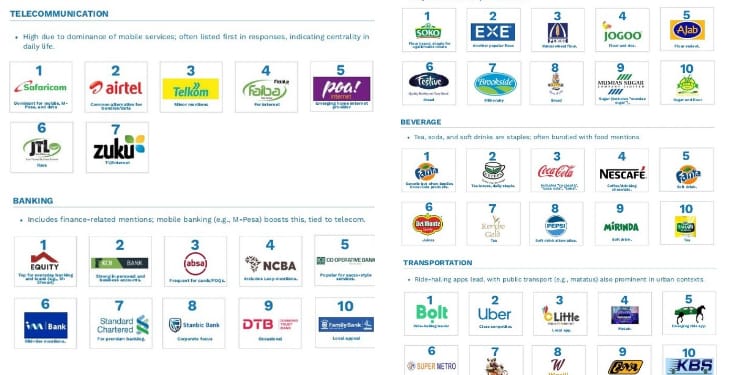
A section of the The Glass House Brand Trust Report 2025. PHOTO/FILE.