KWS Issues Warning After Postmortem Finds Plastic Container in Whale’s Intestine
Share
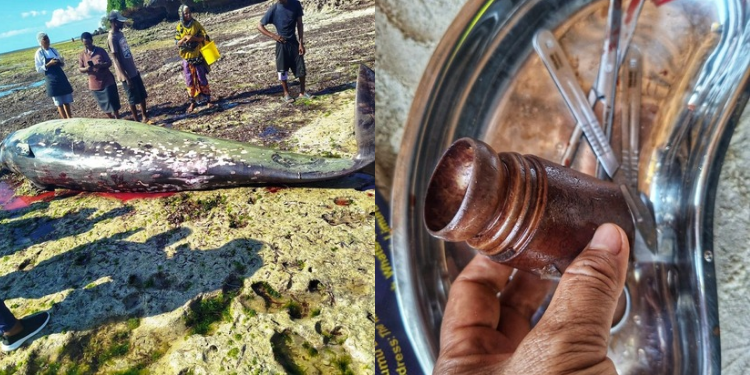
As the year comes to an end, a heartbreaking environmental tragedy continues to spark concern after a whale was found dead a few weeks ago at Leopard Beach in Kwale County.
The discovery was a shock to both conservationists and the beach goers, highlighting the growing threat of marine pollution along Kenya’s coastline.
A postmortem examination by Kenya Wildlife Service (KWS) Veterinarian Dr. Asuka Takita revealed the terrible cause behind the whale’s death.
As per the results, “a plastic container was trapped in its intestine,” which proves that the marine mammal died as a result of ingesting human waste.
Human Pollution to Blame
Conservation authorities were clear that the whale’s death was not accidental.
“This gentle giant did not die by chance; it died as a result of human pollution.”
The incident highlights the catastrophic impact of plastic pollution, which continues to infiltrate the marine ecosystems and threatens marine life.
Also Read: KWS Clarifies Claims That Ritz-Carlton Blocks Wildebeest Migration
Plastic Waste: A Silent Killer in the Ocean
Plastic waste can persist in the ocean for years, drifting across vast distances and settling into critical marine habitats.
As it accumulates, it poses fatal risks to marine life that mistake it for food.
“Plastic waste in the ocean persists for years, floating and sinking in the marine ecosystems where it harms and kills marine life.”
The demise of the whale is a stark reminder that the pollution developed on land is most times carried to the sea, the results of which are irreversible.
Also Read: Thousands of Kenyans Suffer as KWS Delays KSh3.5 Billion Wildlife Compensation
Call for Responsibility in the New Year
In a bid to ensure that the country is geared towards the New Year, conservationists are calling on the people to come up and keep the environment safe.
“As we look into the New Year, let us choose responsibility.”
KWS is urging Kenyans to change their habits and contribute to the protection of marine life.
“Stop littering. Protect our oceans.”
Follow our WhatsApp Channel and WhatsApp Community for instant news updates

Professor Erustus Kanga the Director General of KWS