

Why Some Countries Celebrate New Year Twice
Share

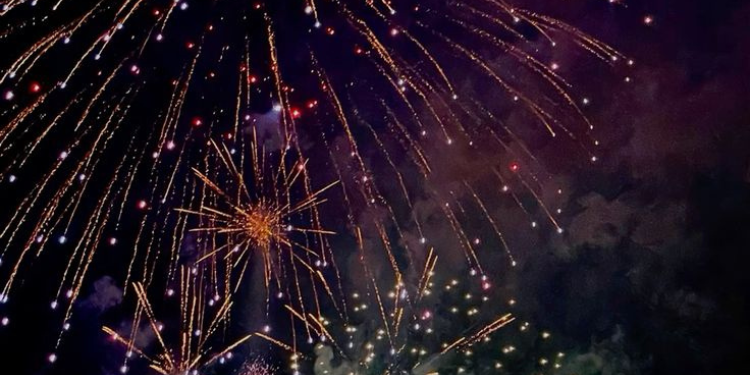
In many parts of the world, the New Year is celebrated once-on January 1st.
On the other hand, in a number of countries, individuals celebrate the New Year twice.
This is a distinct tradition that is not based on confusion, but on history, religion, and calendar system differences.
The main reason some countries celebrate the New Year twice is the fact that there are two major calendars:
1. The Gregorian calendar, which is used in the current world for civil and international purposes.
2. Julian calendar: an older system still used by some Orthodox Christian Churches for religious holidays.
The Julian calendar lags behind the Gregorian Calendar by 13 days, which means the dates do not align.
Transition from the Julian to the Gregorian Calendar
The Gregorian calendar was adopted in many countries centuries ago to improve the accuracy of time and season tracking.
However, not all countries made the switch simultaneously.
For example:
The Gregorian calendar was officially adopted in Russia and several Eastern European countries in the early 20th century.
Although this changed, the religious institutions, particularly the Orthodox churches, still used the Julian calendar.
This brought about a scenario where official life followed one calendar while religious and traditional life followed another.
Also Read: How Different Countries Celebrate Christmas and New Year
The Birth of the “Old New Year”
Due to the 13-day difference between the two calendars, January 1, the Julian calendar would be January 14 Gregorian calendar.
This date became known as the ‘Old New Year.”
As a result, people in countries like Russia, Serbia, Ukraine, Belarus, Georgia, and parts of the Balkans started celebrating:
January 1 – the official New Year (Gregorian calendar).
January 14 – the Old New Year (Julian calendar).
Religious and Cultural Influence
In the Orthodox Christian tradition, such great holidays as Christmas or New Year were traditionally connected with the Julian calendar.
When the government changed calendars, many people continued to follow religious customs.
Moreover, some fasting seasons coincided with the official New Year, making celebrations difficult.
The Old New Year, falling after these fasting periods, allowed families to be celebrated more freely.
The Old New Year is no longer a public holiday nowadays.
It is rather a cultural and family celebration. They could join to have a meal, give small gifts or just celebrate the end of the festive season.
It is also a symbolic time to many to get down with holiday decorations and resume normal lives.
Countries That Commonly Celebrate the New Year Twice
The countries and regions where this tradition exists include:
- Russia
- Ukraine
- Serbia
- Montenegro
- North Macedonia
- Georgia
- Armenia
- Parts of Switzerland and Eastern Europe
Also Read: 2026 New Year’s Eve: Top Spots to Watch Fireworks in Kenya
The practice of celebrating the New Year twice is an indication of the fact that history still influences the current traditions.
It demonstrates the way societies are accommodating change without losing cultural and religious identity.
For some, it is about faith, while for others, it is an additional reason to rejoice.
In any case, the custom of a second New Year is a very interesting insight into the fact that even time can be celebrated differently in different countries.
Follow our WhatsApp Channel and WhatsApp Community for Instant News Updates

An image of a Christmas tree, which symbolizes Christmas tradition. PHOTO/Courtesy.