An Education System That Manufactures Failure: A National Indictment of KCSE Outcomes
Share
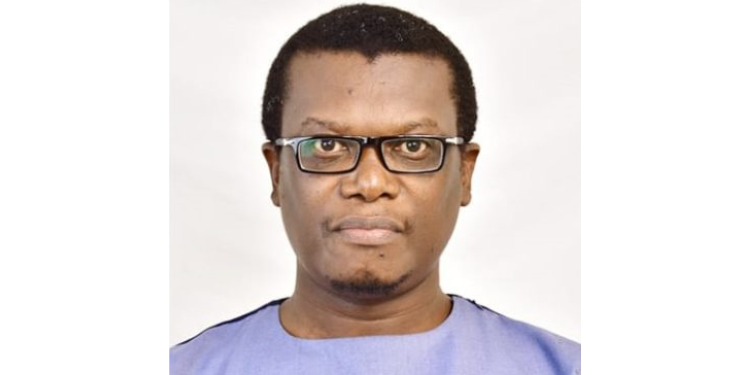
By Dr. Luchetu Likaka – Researcher and Political Analyst
The KCSE results before us are not merely an academic outcome; they are a profound moral and policy failure.
When the majority of candidates cluster around D, D- and E grades, while excellence remains the privilege of a small minority, it becomes intellectually dishonest to continue blaming learners.
An education system that consistently produces “failures” in bulk is not rigorous; it is fundamentally misaligned with its own purpose.
Education should expand human potential, not ration opportunity through predictable exclusion.
At the heart of the problem lies an examination regime designed to sort rather than to educate.
The KCSE has evolved into a high-stakes elimination tool whose primary function is ranking scarcity in university spaces, not measuring competence or understanding.
By design, it must create winners and losers.
In such a system, failure is not an accident; it is a structural requirement.
Learners are therefore condemned not because they cannot learn, but because the system demands that many must fall for a few to rise.
Pedagogy compounds this failure.
Our classrooms prioritize rote memorization and exam drilling over critical thinking, creativity, and problem-solving.
Teaching is reduced to prediction and rehearsal, not exploration and mastery.
Learners who do not thrive under memory-based pressure are labeled weak, yet the system never attempts to engage their strengths.
We reward short-term recall and punish deep understanding, producing certificates instead of competence.
Structural Inequality and Predetermined KCSE Outcomes
Inequality further entrenches the crisis.
Candidates from national and well-resourced schools sit the same examination as those from underfunded rural and informal-settlement schools, but they do not learn under the same conditions.
Chronic teacher shortages, overcrowded classrooms, lack of laboratories, libraries, and digital tools ensure that outcomes are largely predetermined.
An exam that ignores such disparities cannot claim fairness, only convenience.
Also Read: Why Religion and Churches Must Be Regulated: When the Shepherds Devour the Flock
A Narrow Definition of Intelligence in Kenya’s Education System
Equally damaging is the narrow definition of intelligence that the system enforces.
Academic abstraction is treated as the sole measure of human worth, while technical skill, creativity, innovation, entrepreneurship, and artistic talent are systematically devalued.
Learners gifted with their hands, vision, or practical reasoning are branded failures because they do not conform to theoretical examination formats.
In doing so, the system wastes talent it desperately needs for national development.
The Lifelong Consequences of a Single High-Stakes Examination
The cruelty of the model is sealed by its finality. One examination, taken in adolescence, is allowed to permanently define life chances.
A poor performance at eighteen becomes a social sentence, restricting access to higher education, employment, and dignity.
No serious society should permit a single academic moment to determine a citizen’s lifetime prospects.
Also Read: Your KCSE Grade Does Not Define Your Future-Here’s Why
Rethinking KCSE: The Case for Competency-Based Assessment Reform
The remedy demands courage, not cosmetic reform.
Kenya must dismantle the tyranny of the single high-stakes examination and adopt continuous, competency-based assessment that values progress, application, and skill.
Learning conditions must be equalized through deliberate investment in teachers and infrastructure.
Only then can education fulfill its true purpose: empowering citizens, not manufacturing failure.
Follow our WhatsApp Channel and WhatsApp Community for instant news updates

Education CS Julius Ogambo sitting in a classroom. PHOTO/NA