Most Beautiful Places To Visit In China
Share
The geographical vastness of China, along with its rich cultural history, has some of the prettiest sites across the globe.
China has attractions that have been listed by UNESCO for their natural value, with some of its ancient sites carefully restored to form beautiful cities.
The beautiful sites of China have been well explored in tourism literature on higher-level research by organizations such as UNESCO, China Academy of Social Sciences, or the World Tourism Organization (UNWTO).
These destinations are not celebrated through rumors, but through sustained scholarly, environmental, and historical evaluation.
The attractiveness of this country is embedded in its contrasts.
Mountain ranges defined through geological processes over a period of million years stand alongside metropolitan skylines characterizing accelerated modernization.
The architecture of past imperialism is presented alongside vibrant living cultures and traditions that continue to influence these regions and communities to this day.
Natural landscapes such as karst river systems, sandstone pillar forests, and alpine valleys are studied for their ecological uniqueness, while cultural landmarks like imperial palaces and fortified towns are preserved as material records of governance, art, and social organization over successive dynasties.
Natural Wonders, Geographical, and Ecological Factors
Jiuzhaigou Valley in Sichuan Province is a UNESCO World Heritage site famous globally for its hydrological systems that generate lakes of varied colors as a result of mineral deposits, algae, and sunlight interaction.
Case studies related to environmental studies indicate Jiuzhaigou Valley as an example of successful highland biodiversity conservation in China’s western regions.
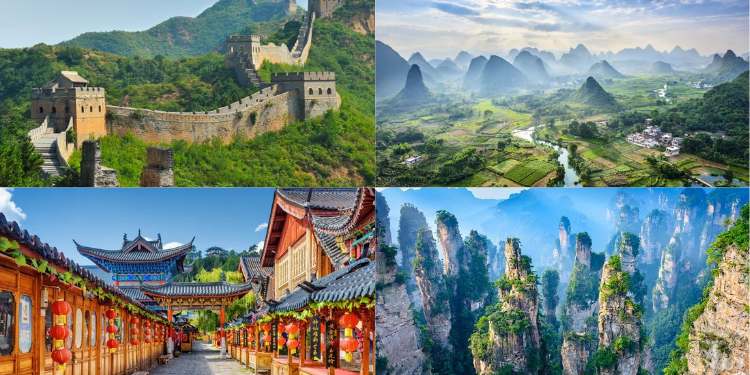
The karst area that has attracted research around the world, situated between Guilin and Yangshuo in the province of Guangxi, is the Li River, where there are typical examples of karst features that are often referred to in geomorphological studies regarding limestones.
China’s Zhangjiajie National Forest Park is recognized for its quartz-sandstone pillars eroded by natural forces over a period of time.
When combined with other natural attractions in the area, it forms the Wulingyuan Scenic Area, listed by UNESCO for its natural significance.
The sites in Yunnan province include Lijiang and Tiger Leaping Gorge, which feature a combination of natural and cultural heritage.
Tiger Leaping Gorge is one of the world’s ten deepest river canyons and has been widely studied in terms of tectonic activities in relation to the Yangtze River system; on the other hand, Lijiang Old Town is also another scenic vibe.
Also Read: European Troop Deployment to Greenland Puts Trump on Notice
Historic and Cultural Landscapes of Imperial China
The Forbidden City in Beijing, now the Palace Museum, is the largest preserved palace complex in the world.
Academic architectural studies recognize it as a definitive example of Ming and Qing dynasty planning, symbolism, and imperial power expression.
A part of the Great Wall in northern China, Jinshanling is a highly prized segment of the Structure among historians in particular, because of the original Ming Wall that still stands there.
In comparison to some better-maintained parts of the Structure, Jinshanling provides valuable insights to scholars and tourists alike about regular military engineering and border protection concepts.
Pingyao Ancient City in Shanxi, a UNESCO site, is one of the best-preserved examples of a traditional Han Chinese urban center.
It is widely cited in research studies in economic history for its importance in early Chinese banking systems.
Hunan Province’s Fenghuang Ancient Town is examined in connection with its ethnically rich heritage, which is characterized by Miao and Tujia cultures.
This is evident in its wooden structure on stilts and river layout.
Also Read: Why Trump Wants Greenland: Strategic Location, Minerals, and Military Value
Contemporary Urban Spectacle and Seasonal Events
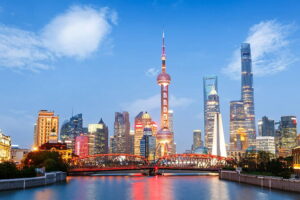
Pudong and the Bund in Shanghai offer a glimpse into how China has expanded to become a worldwide economic power.
Urban studies frequently cite the Bund as a living archive of colonial-era architecture juxtaposed with Pudong’s modern skyline.
In the northern region of China, the Harbin Snow and Ice Festival is globally recorded as the largest ice sculpture festival in the world.
Follow our WhatsApp channel for instant news updates
Skyline of The Capital City of China Beijing. PHOTO/ File