Cabbage Among Goods Whose Prices Increased in January
Share
The rate of consumer price growth in Kenya as of January 2026 shows a large variation in results, with some basic commodities registering high price growth despite the reduction in inflation in the country
The latest inflation highlights, published by the Kenya National Bureau of Statistics (KNBS) and cited in a report by the Central Bank of Kenya, overall inflation in Kenya declined to 4.4 percent in January, a marginal decline from the 4.5 percent registered in December 2025.
The statistics show that overall inflation in the country declined, but there are significant variations in the price movements of individual categories of goods.
The core inflation rate, which is used to determine the stability of goods in the market, was 2.2 percent, while some of the frequently consumed goods recorded price gains in January.
Non-core inflation, which includes food and energy prices, increased sharply to 10.3 percent.
KNBS observes that inflation can be defined as the change in price levels between January 2026 and January 2025.
Food items accounted for the most visible price increases, with vegetables and staples leading the surge.
Rising Food Prices Fuel Inflation Pressures
Among the core food products, beef with bone showed the highest price rise of 8.2 percent, making it one of the most hit sources of protein.
Sugar prices also rose by 7.9 percent, while sifted maize flour prices went up by 7.1 percent, putting more pressure on basic household food expenses.
These prices are in contrast to the marginal changes seen in other basic food products such as cooking oil (salad), which rose by 0.6 percent, and fresh-packed cow milk and non-aromatic white rice, which recorded a 0.4 percent rise.
Also Read: Why 3 Billion Adults Are Still Missing from the Global Financial System
The steeper price rises were, however, seen in the non-core food products.
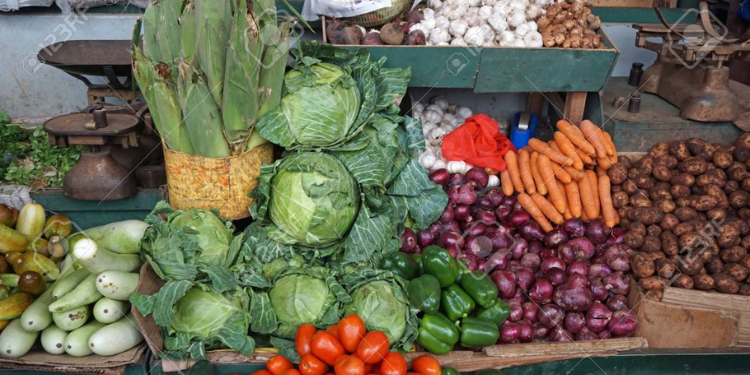
Cabbage prices went up by 35.5 percent, the highest among all products listed, due to low supply during the season.
Onions followed close with a 16.5 percent price increase, while tomatoes showed a 9.6 percent rise, pushing up the costs of preparing basic meals.
Energy and Utility Costs Display Varied Trends
Energy and utility costs also registered an increase, though at a slower pace, similar to that of food prices.
Electricity tariffs for those taking 50 kilowatts registered an increase of 2.5 percent, while those taking 200 kilowatts registered a relatively slower increase of 0.2 percent.
Gas and liquefied petroleum gas (LPG) registered an increase of 0.8 percent, which is a welcome relief to those depending on gas as a cooking alternative.
Also Read: Co-operative Bank Revises Loan Interest Rates as New Pricing Model Takes Effect
What the Data Means for Households
Though the overall inflation rate is a welcome sign of improved macroeconomic stability, many households are still under pressure due to food prices.
KNBS also points out that the core basket accounts for 81.1 percent of the overall consumer price index, thus highlighting that stability in core consumer prices is keeping overall inflation in check.
Follow our WhatsApp channel for instant news updates
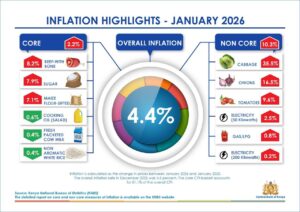
A Chart Showing Some Of The Commodities Whose Prices Saw a Surge and Plunge. PHOTO/ KNBS