Kenya Met Warns of Uneven Rainfall, Floods and Dry Spells Ahead of Long Rains
Share
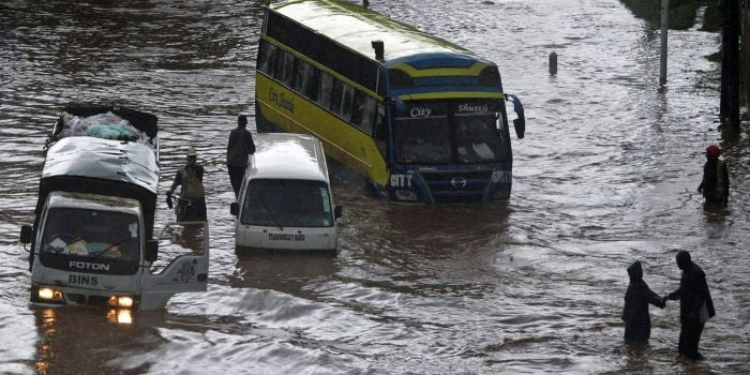
The Kenya Meteorological Department (KMD) has issued an advisory ahead of the March–April–May (MAM) 2026 long rainy season, warning of uneven rainfall distribution, possible flooding in some areas, and rising temperatures across the country.
In its seasonal outlook, Kenya Met said the forecast is intended to support anticipatory action, preparedness, and climate-informed decision-making.
In a statement dated Thursday, February 4, 2026, the department advised the public and sectoral stakeholders to plan accordingly, particularly in the following areas:
- Agriculture and food security
- Water resources
- Health
- Energy
- Transport and infrastructure
- Disaster risk management
- Urban and community planning
“The Kenya Meteorological Department has officially released the March–April–May (MAM) 2026 Long Rains Seasonal Climate Outlook following a national co-production process under the 12th National Climate Outlook Forum (NCOF-12) held in Nairobi,” the statement read.
Kenya Met Issues Weather Outlook for the Long Rainy Season
According to the Acting Director of Meteorological Services, Edward Muriuki, the season is projected to have generally poor to fair temporal and spatial rainfall distribution, with intermittent dry spells. However, isolated heavy rainfall events may occur in some areas.
Kenya Met forecasts near- to above-average rainfall over the following regions:
Lake Victoria Basin
Highlands West of the Rift Valley
Highlands East of the Rift Valley, including Nairobi
Rift Valley
North-western Kenya
Some areas within these regions may experience isolated heavy rainfall events, increasing the risk of localized flooding and landslides.
Near-average to below-average rainfall is expected over the Arid and Semi-Arid Lands (ASALs), including:
South-eastern lowlands
North-eastern Kenya
Parts of north-western Kenya
The department cautioned that rainfall in these areas may be poorly distributed, with intermittent dry spells that could negatively affect agriculture, pasture, and water availability.
Also Read: Kenya Met Predicts Mostly Sunny Conditions, With Rainfall in Isolated Areas
The Coastal region, including Mombasa, Kilifi, Kwale, Lamu, and the coastal parts of Tana River County, is expected to receive below-average rainfall during the season. However, Kenya Met noted that isolated heavy rainfall events may still occur, especially later in the season. Peak rainfall at the Coast is expected in May, later than most other regions.
Kenya Met also warned that warmer-than-average temperatures are expected across the entire country. This is likely to increase heat-related risks, particularly in ASAL regions, coastal areas, and major urban centres.
Detailed Weather Outlook from March to May
In the Highlands West of the Rift Valley, Lake Victoria Basin, and the Rift Valley, rainfall is expected to be near-average to above-average, with occasional heavy rainfall events in several areas. Counties in these regions include Nandi, Kakamega, Vihiga, Bungoma, Siaya, Busia, Baringo, Nakuru, Trans Nzoia, Uasin Gishu, Elgeyo-Marakwet, West Pokot, Kisii, Nyamira, Kericho, Bomet, Kisumu, Homa Bay, Migori, and Narok.
In north-western Kenya, covering Turkana and Samburu counties, rainfall is also likely to be near-average to above-average, with occasional heavy rainfall in a few areas.
For the Highlands East of the Rift Valley, including Nairobi and surrounding counties such as Nyandarua, Laikipia, Nyeri, Kirinyaga, Murang’a, Kiambu, Meru, Embu, and Tharaka-Nithi, rainfall is forecast to be near-average to above-average, with occasional heavy rainfall events.
Also Read: Kenya Met Sets Heat Wave Thresholds for Nairobi, Kisumu, and Mombasa
In north-eastern Kenya, comprising Marsabit, Mandera, Wajir, Garissa, and Isiolo counties, rainfall is expected to be near-average to below-average, with isolated heavy rainfall in a few areas.
The south-eastern lowlands, including Machakos, Kitui, Makueni, Kajiado, Taita-Taveta, and inland parts of Tana River County, are also likely to experience near-average to below-average rainfall.
Meanwhile, the Coast region, covering Mombasa, Kilifi, Kwale, Lamu, and coastal parts of Tana River County, is expected to record below-average rainfall, although occasional heavy rainfall events may still occur.
Kenya Met cautioned that intraseasonal drivers such as tropical cyclones and the Madden-Julian Oscillation (MJO) are only predictable at shorter lead times and could significantly influence the season’s outcome. The department urged the public to stay updated with subsequent forecasts and advisories.
Follow our WhatsApp channel for Instant News Updates

Kenya Met Boss Edward Muriuki speaking at past event. PHOTO/KMD.