
Row Erupts as Transporters Resist Forced Cargo Rail Plan to Naivasha
Share
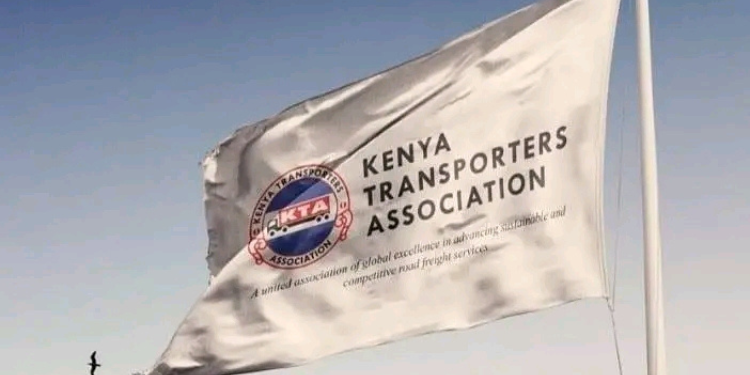
The Kenya Transporters Association (KTA) has made a statement against any attempt to bring back the forced movement of freight by rail to the Naivasha ICD, calling it an illegal policy, anti-market in nature, and completely unacceptable.
In a statement on February 10, 2026, KTA renewed worries that government authorities would require shippers to divert their freight through Naivasha for decongestion purposes at Mombasa Port.
In its address to senior government officials, including the President, county governors along the Northern Corridor, and heads of key transport agencies, KTA recalled that President William Ruto, “formally and unequivocally terminated the policy of forced rail haulage of cargo at the commencement of his first term in office.”
The association noted that this decision was a binding public commitment aimed at restoring market freedom and economic rationality within Kenya’s logistics sector.
KTA said the wider business community and road transporters “acknowledged and appreciated this decisive action,” describing the policy reversal as critical to reviving livelihoods and economic activity along the Northern Corridor.
Claims of Renewed Pressure on Importers
The association raised alarm over reports suggesting that the Commissioner General of the Kenya Revenue Authority (KRA) intends to compel importers, “particularly those serving other countries,” to use the Naivasha ICD.
According to KTA, these claims are being justified by citing congestion at the Port of Mombasa, the “19% utilisation of the Naivasha ICD,” and alleged cost savings.
KTA warned that any such move would amount to a return to coercive state control.
“Any policy that forces an importer to use a prescribed mode of transport or to pay predetermined tariffs is anti-market, unconstitutional, and illegal,” the statement read, adding that, “the choice of clearance point and mode of transport rests solely with the cargo owner.”
Also Read:Del Monte Loses Ksh 1.76 Billion Tax Battle Against KRA
Economic Impact Along the Northern Corridor
The association emphasized that the Northern Corridor is, “an economic system, not merely a road,” sustaining logistics, trade, industrial, and service ecosystems across ten counties.
It recalled that forced rail haulage previously “removed cargo from the Mombasa logistics ecosystem,” and, “collapsed road-based supply chains across ten counties.”
According to KTA, the consequences were severe, with towns such as Mombasa experiencing “significant economic decline, job losses, and business closures.”
The association added that since the cessation of forced rail haulage, “economic activity and livelihoods along the Northern Corridor have demonstrably begun to recover.”
Legal and Constitutional Concerns
KTA reiterated that it is not opposed to the Standard Gauge Railway (SGR) or rail transport itself.
However, it firmly opposes “coercion, price-fixing, and state-mandated allocation of cargo.”
The group reminded authorities that it previously challenged forced rail haulage in court and won, warning that any renewed attempt would violate constitutional provisions and existing court precedent.
“The current 19% utilisation of the Naivasha ICD is not a problem to be corrected through coercion; it is evidence of a structurally flawed project,” KTA said, arguing that market rejection cannot justify regulatory force.
Also Read: Ruto and KRA Launch New Reforms at the Port of Mombasa – What It Means
Warning of Resistance and Legal Action
While acknowledging congestion challenges at the Port of Mombasa, KTA said these issues are operational, not modal, arising from “poor planning, vessel scheduling failures, and challenges in empty-container evacuation.”
It stressed that forced diversion of cargo to Naivasha would not resolve these failures.
KTA concluded by warning that “forced railage without the cargo owner’s consent would likely trigger judicial intervention and renewed protests across the corridor counties,” reaffirming its commitment to vigorously oppose any violation of free-market principles and constitutional rights.
Follow our WhatsApp channel for instant news updates
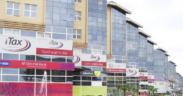
The image shows the exterior of KRA office building
PHOTO/KRA/File