Cabinet Approves Changes to Public Service Payroll
Share
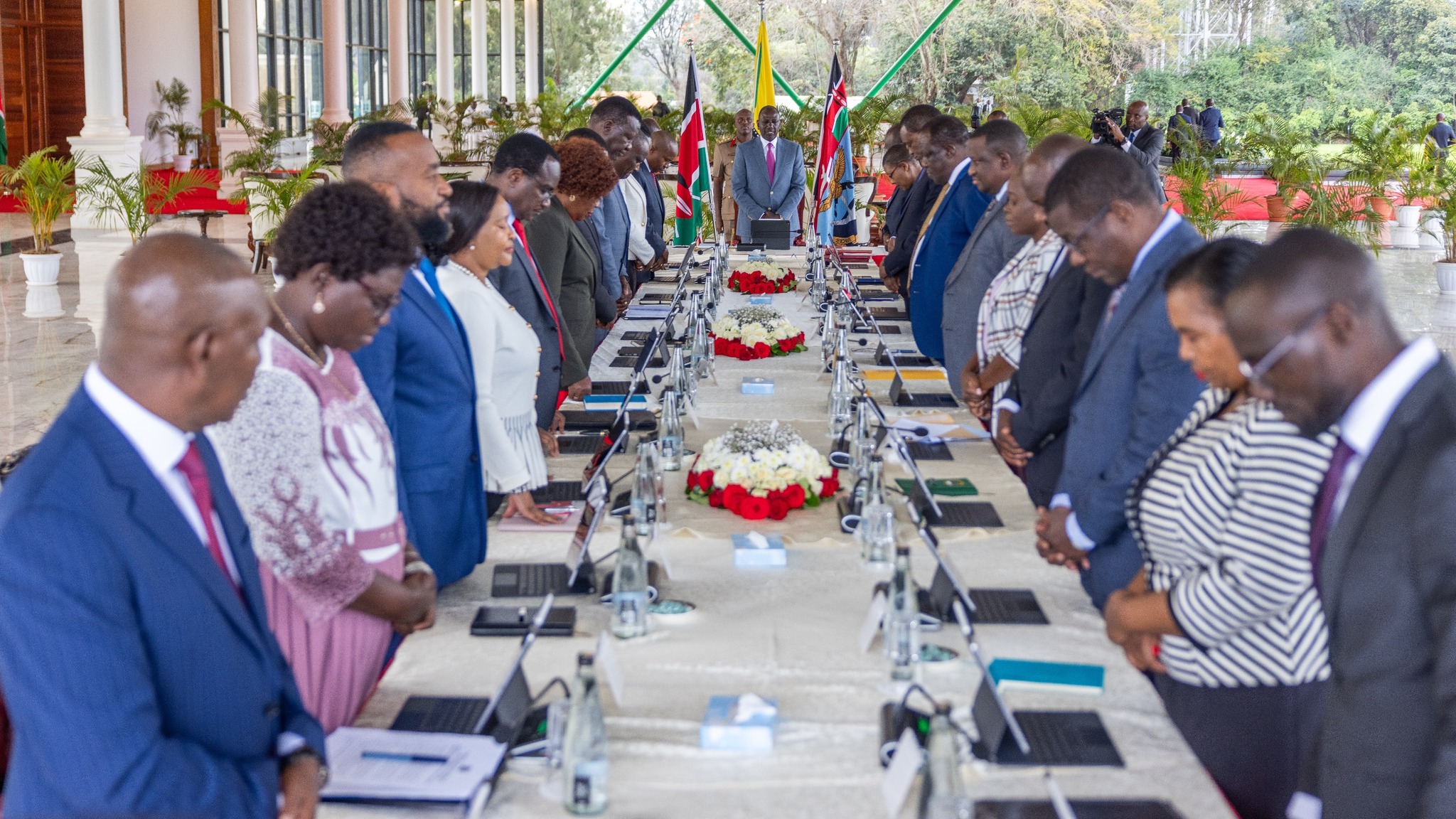
The Cabinet has sanctioned far-reaching payroll reforms aimed at cleaning up persistent integrity gaps in the government’s wage system and enforcing consistent application of statutory deductions across all public institutions.
The decision was reached during a Cabinet sitting at State House, Nairobi, on Tuesday, following the outcome of a special audit for the 2024/2025 financial year that exposed deep-seated governance and operational weaknesses within the Government Human Resource Information System–Kenya (HRIS-K).
HRIS-K is a central, web-based platform designed to consolidate human resource management, payroll processing and data integrity for the entire public sector, covering national and county governments as well as state corporations.
Under the new resolutions, the Cabinet directed that HRIS-K must undergo mandatory security certification by March 11, alongside the rollout of forensic data analytics to support disciplinary and legal action. The reforms will also see the full integration of a statutory deductions module into the system.
Govt Changes to Payroll
The government further ordered the strict enforcement of deductions at source, a move expected to ensure uniform and automatic remittance of taxes and levies across ministries, agencies and parastatals.
Also read: Ruto Announces Cash Injection to Restore Nairobi’s Cleanliness
The audit uncovered extensive payroll irregularities, including flawed identity records, tax compliance lapses and inconsistencies in bank account details. These issues were cited as a major reason why nearly 300 state corporations failed to fully transition to HRIS-K.
Auditors raised particular alarm over the conduct of 720 system editors who modified more than 4.7 million payroll entries without proper audit logs, with some staff found to have altered their own payroll data.
The report also highlighted serious cybersecurity gaps, noting inadequate system safeguards, weak disaster-recovery mechanisms and expired ICT licences, all of which were flagged as significant threats to public funds.
Unauthorised Payments and Inflated Salary Arrears
Further findings pointed to unauthorised payments and inflated salary arrears, reinforcing the need for an urgent overhaul of payroll governance structures.
Also Read: Gachagua blasts Wajir Govt Over Ksh 200 Billion & Development Paradox; as Ramadan Approaches
To enforce accountability, Principal Secretaries, accounting officers and heads of state agencies have been tasked with supervising implementation of the reforms, submitting verified payroll data, fully cooperating with audits and taking personal responsibility for any discrepancies.
As part of the response, the government will establish dedicated Payroll Audit Units (PAUs) and roll out critical ICT upgrades to strengthen controls, protect public resources and enhance transparency.
The reforms build on a draft policy considered in 2024 under the Public Service Transformation Strategy (2024–2029), which proposes the assignment of Unified Payroll Numbers (UPNs) to all civil servants to improve oversight and accountability.
Under the proposed framework, UPNs would be linked to the Integrated Population Registration System (IPRS) and the Kenya Revenue Authority (KRA) databases, effectively phasing out manual payroll processes.
Follow our WhatsApp channel for instant news updates

President William Ruto Met Italy’s Minister for Universities and Research Anna Maria Bernini at State House, Nairobi on February 9, 2025. PHOTO/PCS.