When The Drum Changes Its Beat: The Slow Unraveling of ODM’s Soul.
Share
By Dr. Luchetu Likaka – Researcher and Political Analyst
If you have walked the Kenyan political journey long enough, you will know that “a house divided against itself cannot stand,” and ODM today appears to be learning that proverb the hard way.
What has been chipping away at the party is not a single storm, but a slow leak from within. As the African saying goes, “When there is no enemy within, the enemies outside cannot hurt you.” Yet internal contradictions, mixed signals, and strategic ambiguity have steadily eroded the clarity that once defined the Orange movement.
The so-called broad-based arrangements with political competitors unsettled many loyal supporters. ODM was historically anchored on resistance and reform; therefore, entering cooperative frameworks with ideological rivals felt, to some, like “watering down the soup after promising a feast.”
Was ODM Struggles Traded for Accomodation
Supporters who had endured tear gas, court battles, and electoral disappointments in the name of principle suddenly found themselves asking whether the struggle had been traded for accommodation. In politics, perception is reality, and “when the shepherd starts dining with the wolf, the sheep grow anxious.”
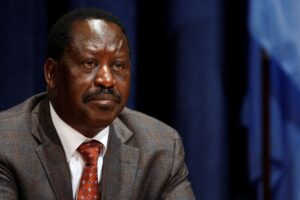
The passing of Baba marked not only a personal and national loss, but also the end of a defining political era, creating a profound psychological turning point for the party and its supporters. For decades, Raila Odinga was not merely a party leader; he was the glue, the rallying cry, and the moral compass of ODM.
Also Read: Edwin Sifuna Fired as ODM Secretary-General
As the proverb says, “When the big tree falls, the birds scatter.” Whether through transition, fatigue, or strategic recalibration, the gradual fading of his central command has left a vacuum that competing ambitions now seek to fill. For many supporters, this felt like the end of an era and perhaps the end of ODM as they knew it.
Pre-Election Agreement With UDA
The declaration of a pre-election agreement with UDA further deepened the confusion. ODM’s identity was forged in opposition politics; alignment with its longstanding rival appeared to blur ideological lines.
“You cannot serve two masters,” the saying goes, and grassroots supporters struggled to reconcile resistance rhetoric with cooperative practice. Political pragmatism may justify such moves, but the base often values consistency over convenience.
Also Read: ODM Politician Removed from Party Position
Removal of Edwin Sifuna as SG
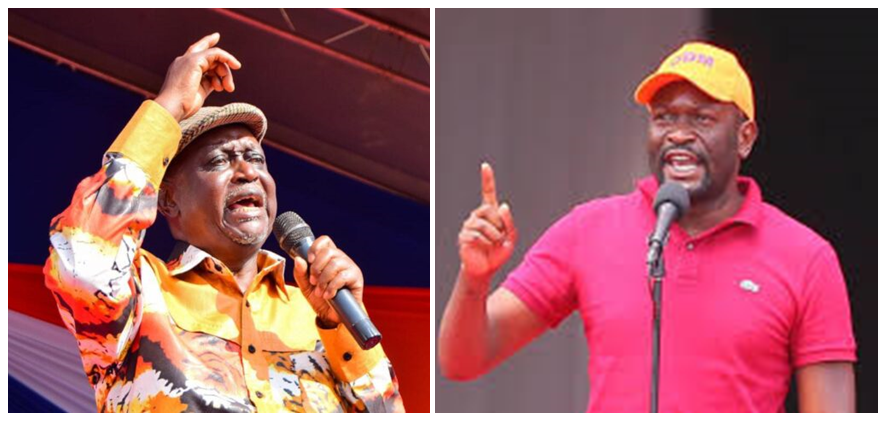
The firing of Edwin Sifuna following his Citizen TV appearance reinforced perceptions of shrinking internal tolerance.
Sifuna had positioned himself as a bold, articulate defender of party orthodoxy. Removing him, especially in proximity to public commentary, projected an image that dissent, even strategic dissent might not be welcome.
Yet, “the drum that sounds too loudly may attract the stick.” Whether this was discipline or suppression depends on one’s vantage point, but symbolically it suggested tightening control in a season of uncertainty.
ODM Linda Mwananchi
Ironically, the groundbreaking Busia rally under the banner of ODM Linda Mwananchi demonstrated that the grassroots flame is not entirely extinguished. The turnout signaled that while elite negotiations may shift, the ordinary supporter still yearns for the original promise of people-centered politics.
As the proverb reminds us, “No matter how long the night, the dawn will break.” The question is whether that dawn will revive ODM in its old image or usher in a fundamentally transformed political vehicle.
In the end, parties do not collapse in a day. “A pot breaks where it is weakest.” ODM’s current turbulence reflects accumulated strains—ideological drift, leadership transition, strategic alliances, and internal discipline battles.
Whether this moment marks reinvention or decline will depend on whether the party rediscovers its founding narrative or continues to trade clarity for convenience.
Follow our WhatsApp channel for instant news updates
Raila Amolo Odinga
PHOTO/NRB/X