Red Tape, Rising Costs: Why the Tobacco Bill Risks Harming Retailers and Consumers
Share

By Wambui Mbarire, RETRAK CEO
Kenya has witnessed an unprecedented surge in laws and regulations over the past year. While many are well-intentioned, the cumulative effect on business, particularly retail, has been disruptive.
At the core of this challenge is a persistent belief that tighter regulation is always the most effective response to complex social problems.
In an economy being reshaped by technology and innovation, this mindset risks doing more harm than good by relying on outdated regulatory approaches that fail to reflect market realities.
The Tobacco Control Act dates to 2007 and is now being amended to address changes in the nicotine market. For many formal retailers, newer and reduced-risk nicotine products, such as vapes and nicotine pouches, have become a legitimate and growing product line.
However, the proposed amendments introduce additional licensing requirements, higher compliance costs, and new layers of bureaucracy that disproportionately burden retailers. If implemented as currently drafted, the Bill risks pushing compliant businesses out of the market altogether.
Retailers fully agree with lawmakers on one critical issue: protecting children from accessing nicotine products is non-negotiable.
However, the Bill falls short in addressing a serious and persistent risk, the rapid growth of illicit markets driven by overly complex and costly compliance requirements. When regulation becomes excessively restrictive, legitimate businesses suffer while illegal traders thrive.
Revenues decline, tax compliance weakens, and products are pushed underground, where there are no age checks, no accountability, and no consumer safeguards.
Illicit trade is not a theoretical concern. It has long been linked to organized crime and, in some cases, the financing of terrorism. By contrast, formal retailers have every incentive to comply with the law and enforce age restrictions.
Pushing products out of regulated retail environments does not protect children, it exposes them to greater risk.
The Bill is also problematic because it is not innovation neutral. Reduced risk and novel nicotine products are treated with the same punitive lens as combustible cigarettes, despite increasing global evidence that they present different risk profiles. This represents a missed opportunity for harm reduction. If regulated intelligently, these products could offer adult smokers viable alternatives and contribute meaningfully to reducing smoking rates in Kenya.
Also Read: British American Tobacco Kenya Announces Leadership Changes
Retailers are particularly concerned about the proposed licensing provisions, which would require manufacturers and importers to obtain approval from the Cabinet Secretary for Health. This adds red tape, increases costs, and introduces uncertainty and delays in getting products to market. In addition, county governments would be empowered to impose separate licenses and levies, duplicating existing regulatory frameworks. Small shops, informal traders, and low-margin businesses will bear the greatest burden, while even large supermarkets will be forced to obtain additional county-level licenses solely for tobacco and nicotine products.
The Bill further proposes broad restrictions on advertising and a blanket ban on online sales. This approach fails to distinguish between active marketing and simple product listings that indicate availability.
Retailers are ready and willing to work with government to implement safeguards such as robust age-verification systems, mystery shopping, and compliance monitoring to ensure digital channels do not enable underage access.
Also Read: Stakeholders Raise Alarm Over Proposed Tobacco Control Amendment Bill
Kenya does not need to choose between public health and legitimate business.
What is required is balanced, evidence-based regulation that protects minors, supports compliant retailers, encourages harm-reduction, and preserves tax revenues, without driving consumers into illicit markets.
Retailers stand ready to engage constructively with lawmakers and the Ministry of Health to get this right. The cost of getting it wrong will be borne not just by businesses, but by consumers, communities, and the country at large.
Follow our WhatsApp channel for instant news updates
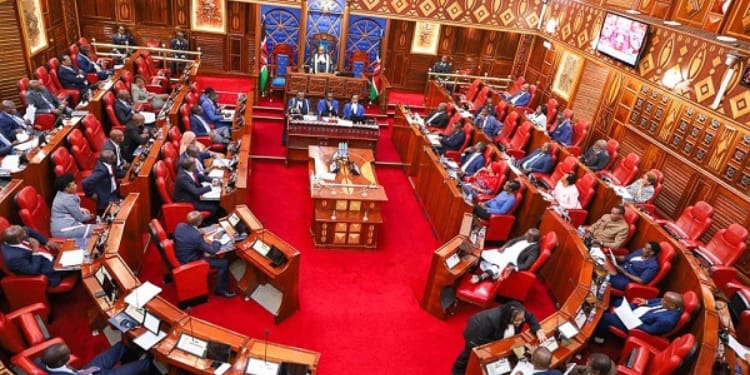
A past session of the Senate. PHOTO/Parliament.