
Iran Signals Willingness to Compromise in Nuclear Deal Talks
Share
Iran has indicated it is prepared to consider concessions in its nuclear negotiations with the United States, provided Washington demonstrates seriousness about lifting sanctions that have crippled the country’s economy.
In an interview in Tehran, Deputy Foreign Minister Majid Takht-Ravanchi said the responsibility now rests with Washington, insisting the diplomatic process could advance swiftly if the United States shifts its posture.
“The ball was in America’s court to prove that they want to do a deal,” he said, adding, “If they are sincere, I’m sure we will be on the road to an agreement.”
His remarks come amid renewed indirect engagement between the two sides, following a first round of discussions earlier this month in Oman and ahead of a second session scheduled in Geneva.
Both sides have cautiously described the talks as constructive.
Sanctions Relief at Core of Dispute
Takht-Ravanchi reiterated that Tehran’s willingness to discuss curbs on its nuclear activities is directly tied to sanctions relief.
“We are ready to discuss this and other issues related to our programme if they are ready to talk about sanctions,” he said, declining to clarify whether Iran expects a full lifting or phased easing of penalties.
Iran has floated the possibility of diluting uranium enriched to 60% purity, a level close to weapons-grade, in what officials describe as a sign of flexibility.
Western governments view the stockpile, estimated at over 400 kilograms, as a proliferation risk.
However, when asked whether Iran would again export enriched material abroad, as it did under the 2015 accord, Takht-Ravanchi responded that, “it was too early to say what will happen in the course of negotiations.”
Russia, which previously accepted large quantities of low-enriched uranium under the earlier framework, has reportedly signalled readiness to do so again.
Also Read: Trump Administration Orders US Citizens to Leave Iran Immediately
Enrichment and Red Lines
Tehran remains firm that its right to uranium enrichment is non-negotiable under the Nuclear Non-Proliferation Treaty.
Takht-Ravanchi stated that, “the issue of zero enrichment is not an issue anymore and as far as Iran is concerned, it is not on the table anymore.”
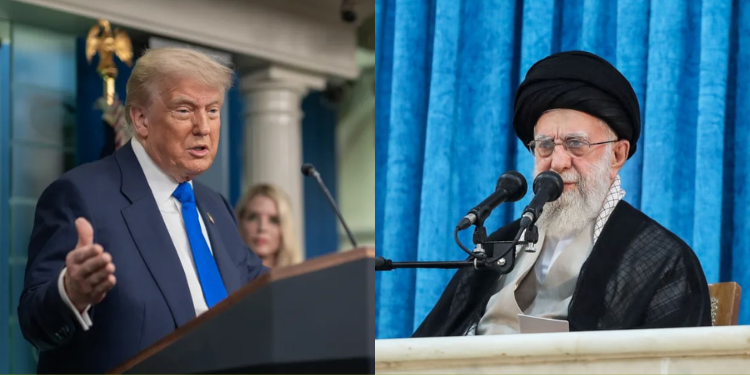
His position contrasts sharply with recent comments by U.S. President Donald Trump, who reiterated, “We don’t want any enrichment.”
Iran also insists the scope of negotiations must remain confined to nuclear matters.
“Our understanding is that they have come to the conclusion that if you want to have a deal, you have to focus on the nuclear issue,” Takht-Ravanchi said, rejecting attempts to fold ballistic missile capabilities or regional alliances into the talks.
“When we were attacked by Israelis and Americans, our missiles came to our rescue, so how can we accept depriving ourselves of our defensive capabilities?” he stressed.
Also Read: Why Trump Posted Racist Meme Targeting Obama and Michelle
Military Pressure and Regional Stakes
Diplomacy is unfolding under heightened military tension.
President Trump has warned of possible strikes if negotiations collapse, while U.S. forces have reinforced their regional presence.
Iran has previously warned that American bases could become targets in the event of conflict.
Takht-Ravanchi cautioned that another war would be “traumatic, bad for everybody, everybody will suffer, particularly those who have initiated this aggression.”
He added: “If we feel this is an existential threat, we will respond accordingly.”
Despite sharp rhetoric, he acknowledged that private diplomatic messages conveyed through Oman suggest Washington prefers a peaceful outcome.
“We are hearing that they are interested in negotiations,” he said.
“They have said it publicly; they have said it in private conversations,” Takht-Ravanchi added.
Regional actors, including Oman and Qatar, continue to mediate, with Iranian officials claiming there is a broad consensus against war.
“We see an almost unanimous agreement in the region against war,” Takht-Ravanchi said.
While scepticism remains over whether a breakthrough is achievable, Tehran says it will enter the Geneva talks prepared to engage.
“We will do our best but the other side also has to prove that they are also sincere,” he said.
Follow our WhatsApp channel for instant news updates
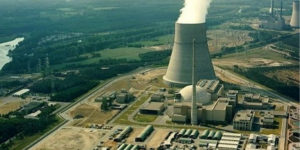
Iran’s Nuclear Power Plant. PHOTO/ File