

Ruto Condemns Attacks on Gulf Countries as Middle East Tensions Escalate
Share

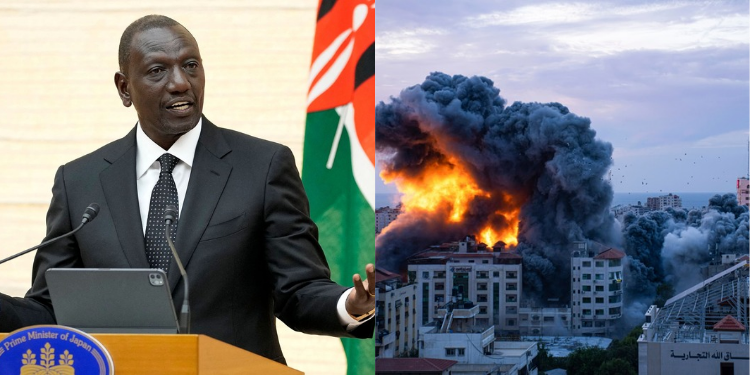
Kenya’s President William Ruto has condemned the recent attacks on various nations in the Gulf and stated that the rising number of attacks on Gulf countries is a serious threat to global security due to the ongoing conflict in the Middle East.
In a statement issued amid escalating hostilities in the region, Ruto said Kenya was alarmed by strikes directed at several countries, calling for restraint and urgent diplomatic engagement to prevent further deterioration.
“Kenya strongly condemns the strikes on the UAE, Qatar, Saudi Arabia, Iraq, Oman, Kuwait, Jordan and Bahrain in the evolving conflict in the Middle East,” Ruto said, listing the affected states in his appeal for calm.
“It is evident that the regionalisation of this conflict poses a grave threat to international peace and security. At this defining and perilous moment in global history, longstanding multilateral institutions remain indispensable frameworks for the resolution of the current crisis in the Middle East. Kenya calls for urgent multi-stakeholder engagement towards de-escalation,” he added.
Escalating Regional Tensions
The remarks by the President have come at a time when the hostilities have escalated, with several Gulf nations now involved, causing fears that a wider regional war is looming.
The involvement of more than one nation has raised fears that it might destabilize the world and interfere with international trade routes.
Mr. Ruto recognized the importance of international institutions in the resolution of conflicts, saying they remain “indispensable frameworks” at a time when diplomatic efforts seem strained.
Traditionally, Kenya has had a policy of being a champion of internationalism, and it has often been a proponent of the resolution of conflicts through peaceful channels, like the UN.
The latest remarks by the President have been made at a time when the Middle East conflict is heightened.
Also Read: Panic Grips Markets as Oil Prices Surge Overnight on Israel-Iran War Fears
Social Media Backlash and Accusations
However, the President’s statement has sparked sharp reactions online, with some critics accusing him of selective diplomacy.
One X user, @Now_Listen1, wrote: “Funny how African leaders suddenly find their voice when it’s the Middle East… But when Rwanda and its AFC/M23 proxies destabilize the DRC and regionalize conflict in Africa, silence becomes the policy. Selective outrage is not diplomacy, it’s hypocrisy. And let’s be honest: failing to also condemn the role of the US and Israel in escalating tensions weakens any moral stance.”
Another user, Kipkemboi Arap Tarus, expressed support for Iran and condemned Kenya’s position in strongly worded remarks: “Kasongo, Kenya strongly supports the rightful strike on the Zionist puppet regime by Iran. We are furious that those Arab sellout countries were not completely flattened. It is just you standing with the genocidal Zionist entity. You do not represent the face of Kenya. You represent your family and the bloodthirsty cronies who murdered innocent Gen Z protesters in cold blood. You should be ashamed for refusing to condemn the cowardly assassination of the Supreme Leader of the Muslim world, Imam Ali Khamenei, a symbol of resistance to many. You could never fill his shoes. Go Iran. Long live Iran. Long live the Axis of Resistance.”
A separate post by @EihabAD accused the Kenyan government of inconsistency in its foreign policy stance, stating: “You never condemned the rape, genocide and crimes against humanity committed by your best friend Hemedti against the people of Sudan, not even once! You actually facilitated the transportation of weapons to them from the UAE and issued them Kenyan passports!”
The accusations highlight growing domestic scrutiny of Kenya’s foreign policy posture, particularly on conflicts beyond its borders.
Also Read: Govt Issues Way Forward for Kenyans in Diaspora Amid Israel-Iran Tensions
Diplomatic Balancing Act
Despite the backlash, the government has not made any further clarifications beyond the initial statement made by the President.
However, it is worth noting that Kenya has diplomatic and economic relations with some of the Middle Eastern nations cited in Ruto’s speech.
As the situation remains tense, Kenya’s position can only be seen as an attempt to strike a diplomatic balance while urging the world to de-escalate the situation.
How effective this approach is in calming the backlash remains to be seen, but the situation is an indication of the challenges being experienced by nations in the increasingly polarized world.
Follow our WhatsApp channel for instant news updates
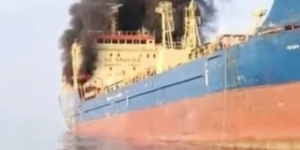
Damaged oil tanker in Gulf waters due to Middle East conflict
PHOTO/File