Turning Global Turbulence into Opportunity: How Africa Can Benefit from Shifting Energy and Trade Dynamics
Share
By Peter Ongera
Global conflicts often reshape economic relationships, supply chains, and geopolitical alliances.
The ongoing instability in the Middle East—long a critical hub for global energy supply, has once again highlighted the vulnerability of international markets to regional crises.
For Africa, however, such disruptions may also present an opportunity.
With strategic planning and coordinated action, African countries can leverage their abundant natural resources, strengthen regional trade, and position the continent as a more influential player in the global economy.
Africa is home to vast reserves of oil, gas, and critical minerals that are increasingly important in a world transitioning toward cleaner energy and more diversified supply chains.
If African governments adopt forward-looking policies and invest in infrastructure and value addition, the continent could transform global market volatility into long-term economic gains.
One of the most immediate opportunities lies in energy exports.
Many countries in Europe and elsewhere have been seeking to diversify their energy sources in recent years.
The search intensified following the Russian invasion of Ukraine in 2022, which disrupted global energy markets and prompted European nations to reduce reliance on Russian oil and gas.
Continued tensions in the Middle East further underscore the need for alternative suppliers.
Expanding Africa’s Role in Global Energy Supply
Several African countries are well positioned to help meet this demand.
Major producers such as Nigeria and Angola have long exported crude oil to international markets.
Meanwhile, countries like Mozambique and Senegal are emerging as important players in liquefied natural gas (LNG) production.
With appropriate investments in exploration, production, and export infrastructure, African energy producers could increase supply and strengthen their role in global energy markets.
Yet Africa’s most transformative opportunity may lie not only in fossil fuels but also in the minerals driving the global energy transition.
As countries invest in electric vehicles, renewable energy systems, and battery storage technologies, demand for minerals such as cobalt, lithium, and graphite has surged.
Moving Up the Value Chain in Critical Minerals
Africa holds some of the largest reserves of these critical minerals.
The Democratic Republic of the Congo alone produces the majority of the world’s cobalt, a key component in many rechargeable batteries.
Other countries, including Zimbabwe, Namibia, and South Africa, possess significant deposits of lithium, platinum group metals, and other strategic resources.
Historically, however, Africa has exported these minerals largely in raw form, capturing only a small share of the value created along the supply chain.
Processing, refining, and manufacturing often take place in other regions, where the final products, from batteries to electric vehicles, generate far greater economic returns.
This pattern represents a missed opportunity for African economies.
By investing in local processing facilities and manufacturing capacity, African countries could retain more value from their resources, create skilled jobs, and stimulate industrial development.
Such an approach would also reduce the continent’s vulnerability to fluctuations in commodity prices, which have long contributed to economic instability in resource-dependent economies.
Also Read: Suvira Africa Demands Immediate AfCFTA Reforms to Empower African Entrepreneurs
Deepening Intra-African Trade and Integration
In addition to strengthening its role in global markets, Africa must also deepen economic integration within the continent.
The launch of the African Continental Free Trade Area (AfCFTA) represents one of the most ambitious economic initiatives in Africa’s modern history.
Once fully implemented, AfCFTA will create a single market of more than 1.3 billion people, potentially transforming intra-African trade.
Currently, trade among African countries accounts for only a small proportion of the continent’s total commerce compared with regions such as Europe or Asia.
Many African nations still rely heavily on imports from outside the continent for manufactured goods, fuel products, and industrial inputs.
Strengthening regional trade networks would reduce this dependency while stimulating local industries.
Improved infrastructure will be essential for this vision to succeed.
Efficient transport corridors, modern ports, reliable energy systems, and digital connectivity are all critical for enabling cross-border trade and investment.
Governments, regional organizations, and development partners will need to work together to address these gaps.
Diversifying Markets and Strengthening Partnerships
Diversifying export markets is another important strategy.
While Europe remains a major destination for African energy and mineral exports, rapidly growing economies in Asia offer significant opportunities as well.
Countries such as China and India continue to expand their industrial capacity and demand for energy and raw materials.
Building stronger trade partnerships with Asian economies could help African exporters reduce reliance on a narrow group of buyers while increasing bargaining power in international markets.
At the same time, African governments should ensure that such partnerships support local development goals, including technology transfer, skills development, and industrialization.
However, capturing these opportunities will not happen automatically.
Africa faces persistent challenges that could limit its ability to capitalize on shifting global dynamics.
These include political instability in some regions, regulatory uncertainty, corruption, and inadequate infrastructure.
Addressing these issues will require stronger governance, transparent regulatory frameworks, and sustained investment in education and workforce development.
Environmental considerations must also remain central to Africa’s development strategy.
Expanding fossil fuel production may provide short-term economic benefits, but it should be balanced with investments in renewable energy and sustainable resource management.
Africa has enormous potential in solar, wind, and geothermal power, which could help meet domestic energy needs while supporting climate goals.
Also Read: Zelensky Offers Drone Defense Aid to Middle East
Positioning Africa in a Reconfigured Global Economy
The broader lesson is that global crises often reshape economic systems in unpredictable ways.
For Africa, the challenge is not merely to react to these changes but to anticipate them and position itself strategically.
By strengthening regional cooperation, investing in value-added industries, and diversifying trade relationships, the continent can move beyond its traditional role as a supplier of raw materials.
The world is entering a period of significant economic and geopolitical transformation.
Supply chains are being reconfigured, energy systems are evolving, and emerging markets are gaining influence.
Africa, with its youthful population, abundant natural resources, and growing regional integration, has the potential to play a much larger role in shaping this new global landscape.
If African leaders seize the moment, through thoughtful policy, regional collaboration, and long-term investment, the continent could transform global instability into a catalyst for sustainable economic growth.
Follow our WhatsApp channel for instant news updates
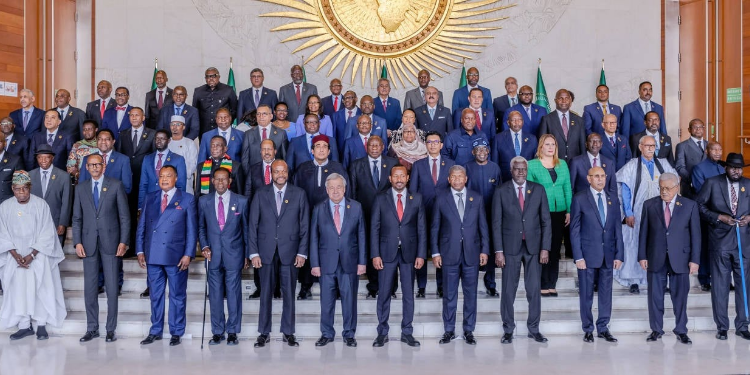
Africa head of states during a past AU Summit. PHOTO/AU.