
JKIA Set for Major Expansion as Govt Announces New Multibillion Terminal and Airport City Plan
Share

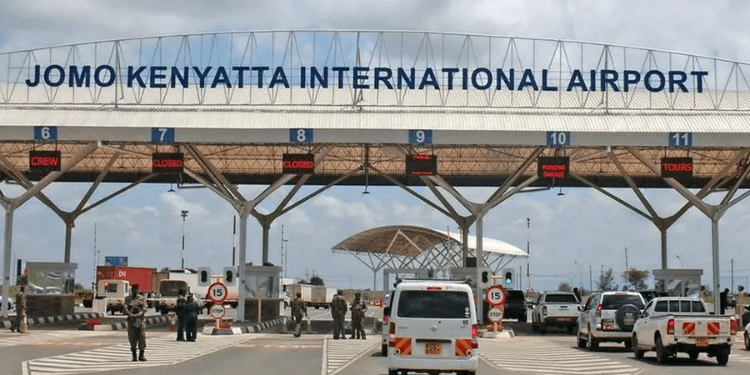
The government has announced a major expansion plan for Jomo Kenyatta International Airport (JKIA) aimed at easing congestion and positioning the facility to handle surging passenger and cargo traffic over the next two decades.
In a media brief issued on Tuesday, March 3, 2026, Roads and Transport Cabinet Secretary Davis Chirchir said the project follows the completion of an Integrated Master Plan and Feasibility Study by the Kenya Airports Authority (KAA) in February 2026.
“In response to these significant challenges, the Kenya Airports Authority (KAA) initiated the preparation of an Integrated Master Plan and Feasibility Study for JKIA, which was concluded in February 2026. The study identified a phased development approach,” read part of the statement.
The study found that JKIA is operating beyond its intended capacity. In 2025, the airport handled 8.93 million passengers, exceeding its designed annual capacity of 7.5 million. Passenger numbers are projected to rise to 22.31 million by 2045, reflecting an average annual growth rate of 4.6 %.
Without intervention, the ministry warned, congestion across runway systems, terminal facilities, apron areas and access roads could undermine operational efficiency, safety margins and the airport’s competitiveness as a regional hub.
Details of New Terminal and Infrastructure Upgrades within JKIA
The expansion will be implemented in phases, beginning with upgrades to existing infrastructure to address immediate capacity constraints.
Key short-term measures include the upgrading of the current runway, construction of rapid exit taxiways to improve landing efficiency, and development of a partial parallel taxiway to enhance aircraft circulation.
Also Read: KAA Responds to Claims Linking Adani Group to JKIA Project
The project will also involve reconfiguration and selective expansion of passenger terminal facilities, alongside digital modernisation of check-in, security screening, immigration and baggage handling systems to improve service delivery.
To tackle landside congestion, the government plans to upgrade access roads and optimise parking facilities to improve traffic flow and accessibility.
In the long term, KAA will construct a new passenger terminal with capacity to handle an additional 10 million passengers annually, with provisions for future expansion.
Further works will include expanded taxiways and apron areas, upgrades to air traffic control systems, improvements to firefighting stations, and enhancements to cargo, maintenance, fuel and utility infrastructure.
Airport City and Special Economic Zone
Beyond aviation infrastructure, the plan includes the development of an Airport City and a Special Economic Zone (SEZ) around JKIA.
According to the ministry, the SEZ will target high-value and export-oriented industries such as air cargo logistics, agro-processing, pharmaceuticals, e-commerce fulfilment and light manufacturing, leveraging JKIA’s role as Kenya’s primary cargo gateway.
Also Read: KAA Issues Update on Flight Operations at JKIA & Other Airports
The Airport City component will accommodate business parks, corporate offices, hotels, convention facilities and aviation support services, creating an integrated economic zone anchored around the airport.
The government said the development is expected to generate employment, attract domestic and foreign investment, diversify revenue streams and strengthen Kenya’s position as a leading aviation and trade hub in East Africa.
The ministry added that the project aligns with the objectives of Kenya Vision 2030 and pledged transparent implementation as the expansion moves forward.
Follow our WhatsApp channel for instant news updates

Transport Cabinet Secretary Davis Chirchir, with other officials, on March 3, 2026, at JKIA. PHOTO/File