

Power Crunch Forces Bangladesh to Close Universities and Cut Electricity Use
Share

Bangladesh’s government has ordered all public and private universities to close from Monday, March 9, bringing forward the Eid al‑Fitr holidays and imposing additional austerity measures to conserve electricity and fuel as the country struggles with a deepening energy crisis linked to the ongoing conflict in the Middle East.
Officials said the early closure decision applies nationwide and is intended to significantly reduce electricity consumption on university campuses, which typically use large amounts of power for residential halls, classrooms, laboratories and air conditioning.
Authorities also noted the measure is expected to ease traffic congestion, subsequently cutting fuel usage.
“We are doing everything we can to reduce consumption and ensure stability in power, fuel and import supplies,” a senior energy ministry official said.
Government and private schools were already closed for the Islamic holy month of Ramadan, meaning most educational institutions in the country will remain shuttered during this period.
Energy Crisis Tied to Global Market Disruptions
The shutdown comes amid growing fuel and gas shortages in Bangladesh, which relies on imports for 95% of its energy needs.
Also Read: Tehran and Haifa Targeted in Major Oil Facility Strikes Amid Israel‑Iran War
Supply disruptions in global energy markets caused by the Middle East conflict have contributed to rising prices and uncertainty.
Bangladesh has imposed daily limits on fuel sales to counter panic buying and stockpiling, while severe gas shortages have forced operations to be stopped at four of the country’s five state‑run fertiliser factories so that available gas can be redirected to power plants to prevent widespread outages.
In addition to university closures, the government has also instructed foreign‑curriculum (English‑medium) schools and private coaching centres to suspend operations during the period to limit electricity use.
Education authorities have been told to implement detailed 11‑point energy‑saving guidelines on campuses and in offices, including:
- Avoiding electric lights during the daytime, where possible
- Reducing electricity use by more than half
- Keeping air conditioners set at 25°C or higher
- Switching off unnecessary lights, fans, and electronic equipment
- Limiting vehicle use and decorative lighting
Additional Government Energy Steps and Public Impact
Alongside these closures, Bangladesh has been negotiating emergency energy imports and navigating volatile global LNG markets.
The country has resorted to buying LNG on the spot market at sharply higher prices and is seeking additional cargoes to bridge supply gaps.
Also Read: Football World Mourns as Former Harambee Stars Coach Engin Firat Dies
In a related move, authorities have cancelled any national Independence Day illumination displays this year as part of energy‑saving austerity measures.
Home Minister Salahuddin Ahmed said the decision was made “considering the current situation and to prevent any fuel crisis.”
Public Messaging and Government Assurances
While the government has taken these emergency steps, officials have also sought to reassure citizens about the energy situation.
Energy authorities have stated that Bangladesh has fuel stocks and incoming shipments to meet needs, and have urged the public to avoid panic buying.
Universities will remain closed until the dates specified in their academic calendars for the Eid al-Fitr holidays, with essential emergency services maintained on a limited basis.
The government continues to monitor developments and may adjust policies if energy pressures intensify further.
Follow our WhatsApp channel for instant news updates
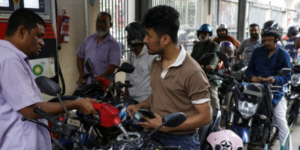
Motorists refueling during rationing
PHOTO/Reuters