China Draws Red Line: No Foreign Strikes on Iran’s New Supreme Leader
Share
China has issued a firm diplomatic warning rejecting any foreign strikes on the newly appointed Supreme Leader of Iran, signaling what officials describe as a red line in an intensifying Middle East conflict sparked by U.S. and Israeli military operations.
Beijing’s statement, delivered on March 9 by Foreign Ministry spokesman Guo Jiakun, underscores China’s broader push for de‑escalation amid global fears that the confrontation could spiral into a wider regional war.
The backdrop to China’s declaration is an unprecedented escalation in hostilities between Iran and a U.S.–Israel coalition that, according to multiple international reports, killed Iran’s long‑time leader Ayatollah Ali Khamenei in late February.
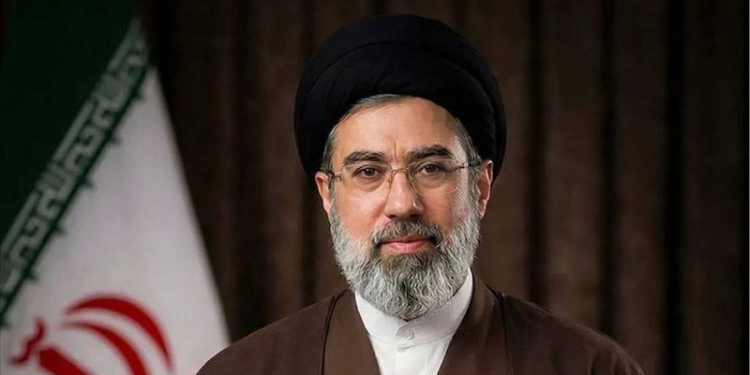
Iran’s clerical Assembly of Experts swiftly appointed his son, Mojtaba Khamenei, as the new Supreme Leader in an unexpected hereditary succession that has drawn rebukes and threats from some Western capitals.
At a press briefing in Beijing, Guo stressed that Iran’s decision to appoint Mojtaba Khamenei “was based on its constitution” and reinforced that China “opposes interference in other countries’ internal affairs under any pretext,” urging respect for Iran’s sovereignty, security, and territorial integrity.
China’s official stance comes as reports indicate that the Israeli military has reportedly threatened to target any successor to the late Ali Khamenei, a position that Beijing’s foreign ministry now opposes.
China’s comments also reflect growing global unease over the conflict’s broader implications for international law, energy markets, and civilian safety.
Beijing’s Broader Position on the Middle East Conflict
Long before the succession crisis unfolded, China had already condemned the U.S.–Israeli campaign that killed Iran’s Supreme Leader and other senior officials, characterizing the strikes as a violation of international norms.
In early March, China’s Foreign Ministry called for an immediate halt to military operations and urged all parties to return to diplomacy and negotiation.
The Chinese government, through the country’s Foreign Minister Wang Yi, has reaffirmed that “force provides no solution” and that the use of armed conflict will only “deepen hatred and breed new crises.”
China has highlighted that the sovereignty and territorial integrity of all countries in the world, especially in the Gulf, must be respected.
In separate phone calls with various leaders in the Gulf and the world, China’s Foreign Minister Wang Yi has outlined China’s opposition to the unilateral use of military strikes and the need for dialogue as the only way of settling differences.
Also Read: Tehran and Haifa Targeted in Major Oil Facility Strikes Amid Israel‑Iran War
Implications for Regional Stability and Global Diplomacy
China’s red‑line declaration has significant implications for the already volatile Middle East theatre.
Tensions between Tehran and the US/Israeli military forces have led to retaliatory missile/drone strikes across various nations.
This has, in turn, affected the region’s energy sector, resulting in an increase in oil prices.
It has been suggested that if the situation worsens, even strikes against Iran’s new supreme leader might accelerate the region’s instability, further destabilizing the fragile world order.
Moreover, China’s stance in relation to Iran is not only relevant to the region.
Being the largest consumer of Iran’s oil, China has a strategic interest in the stability of the region.
Also Read: Govt Sets Record Straight on Use of Fuel Levy if Israel–Iran Tensions Persist
China has set a red line in diplomacy in relation to Iran.
This is intended to ensure that it maintains positive relations with Iran while at the same time dissuading it from engaging in activities that violate international laws.
Although China has issued stern warnings against Iran, it has not offered military assistance to Iran.
Mediation, sovereignty, and diplomacy are primarily where their attention has been focused.
However, it is still unclear how China’s stance will affect the situation in Iran.
Whether China’s stance will temper the actions of the US/Israeli military forces is still to be seen.
Follow our WhatsApp channel for instant news updates
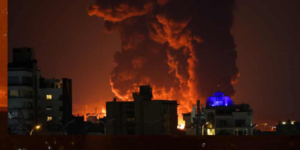
Plumes of smoke rises over Tehran after explosions were reported in Tehran Iran
PHOTO/Getty Images