CS Lee Kinyanjui Breaks Silence Amid Calls for His Resignation Over Ksh 4.8 Billion Fuel Scandal
Share
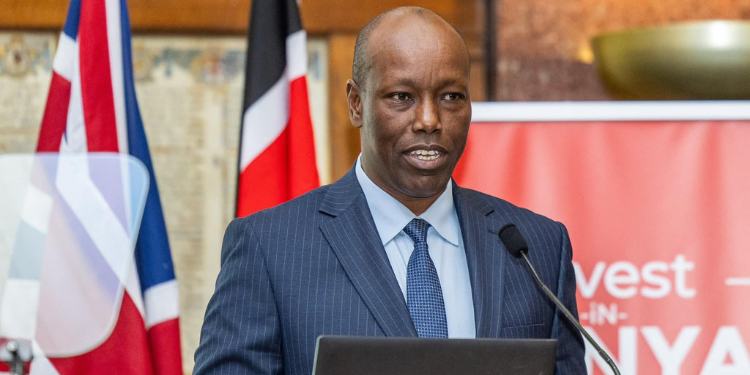
The pressure is increasing on the Trade Cabinet Secretary (CS) Lee Kinyanjui following revelations pointing to a scandal involving some senior government officials in relation to a fuel importation deal worth Ksh 4.8 billion, which is under investigation.
After arrests of top executives from the energy sector due to the deal, the matter has moved to high-level policy decisions by the government.
It is alleged that the deal was executed to help bring poor-quality fuel into the Kenyan market, all done in the name of avoiding any disruption of fuel supplies due to the geopolitical turmoil in the Middle East.
According to the suspicions held by the authorities, the deal could have helped individuals who had close ties in government to circumvent the existing regulations.
This came after the release of internal emails concerning the importation of fuel, thus directing the investigations towards senior policymakers.
According to a senior officer investigating the matter, “It is clear now that the Cabinet secretaries will have to explain the whole situation. This is not anymore about the lower-level officials. This should focus on decisions made at the top policy level, hence the need for the documents.”
Leaked Documents Put Spotlight on Top Level Executives
According to sources, the leaked documents, now in the possession of the investigators, indicate a systematic arrangement between the key ministries involved that facilitated the importation of the fuel into the country.
Observers feel that the documents can have a major bearing on the investigation process going forward.
“The documents have been proven genuine, and from now on the probe will take another direction. The CSs will have to come clean about their involvement and knowledge of the failed deal,” commented an energy expert who was aware of the probe.
The timing of the entire episode is equally significant, given the recent shake-ups being experienced in the oil industry, especially in relation to the privatization of the Kenya Pipeline Company (KPC).
DCI Investigates Case Beyond Boarders
The Directorate of Criminal Investigation (DCI) has expanded the probe by collecting statements from various government officials and stakeholders involved in the deal.
According to the DCI, the agency is coordinating with foreign partners to find out the background and conformity of the imported fuel.
“The executives of the local branch of Oryx Energies company, whose shareholders include a Swiss national, have also been invited to make statements before our officers. Our detectives are actively coordinating with the relevant authorities from other nations through the Mutual Legal Assistance programme to get to the bottom of this matter.”
According to the DCI, this case could attract criminal investigations on economic sabotage among other cases of wrongdoing.
Also Read: Alarm Over Cancer-Linked Chemicals in Fuel as Petroleum PS, EPRA & KPC Bosses Resign
Kinyanjui Defends His Involvement
Amid mounting pressure to step down, CS Kinyanjui has defended himself by arguing that everything he did was legal and strictly procedural.
During an interview with Nation Newspaper, Kinyanjui stated, “Mohamed Liban, the Principal Secretary, and Joe Sang, the MD of Kenya Pipeline Company, wrote me requesting permission for the waiver, and I did only what was legally required of me. That’s all.”
Kinyanjui argued that he only communicated the requirements that should have been fulfilled for the waiver to come into effect.
“All I did was to stipulate the requirements for doing it. If you are going to do this, these are the things that must be met and the tests that must be conducted. I also advised that the importer must indemnify Kenya Bureau of Standards in case of any unforeseen circumstances that may arise due to the waiver. Nothing more than that,” he said.
Kinyanjui explained that he never got a report on whether the set requirements were met.
Energy Ministry Responds as Pressure Builds
Energy Cabinet Secretary Opiyo Wandayi has also weighed in, warning against attempts to exploit the ongoing fuel crisis for profit.
In a statement, he said, “The Ministry of Energy reaffirms that there will be no tolerance for cartels, profiteers or extortionists seeking to exploit the uncertainty arising from the conflict in the Middle East for personal gain at the expense of the public.”
President William Ruto has echoed similar sentiments, vowing decisive action against those implicated.
Addressing a public gathering, he declared, “We will dismantle all the cartels. Those cartels invading the petroleum industry will face the full force of the law, and there will be no escape route.”
Also Read: Top Energy Officials Detained as Fuel Supply Scandals Rock East Africa
Issues Surrounding Waivers and Quality Assurance Procedures
In the heart of the debate is the issuance of waivers on critical fuel quality tests in order to hasten the importation process as a preventive measure against the possibility of fuel shortages.
Such a move allowed the entry of nonconforming products into the market.
In one of the letters connected to the approval, there were stringent terms attached, which read, “Waiver is hereby granted on the petroleum products, is subjected to destination inspection to make sure that they conform to all standards and that the Ministry of Energy, shall also make sure that the shipment conforms completely.”
Other conditions were also listed, among them the indemnity clause.
“The consignee shall also provide a written undertaking that Methyl Tertiary Butyl Ether (MTBE) oxygenates are not present in the product and that he/she indemnifies the Kenya Bureau of Standards (Kebs).”
Supply Concerns and Market Impact
Officials initially justified the waiver requests by citing disruptions in global oil supply chains.
In earlier correspondence, it was noted, “As you are aware the ongoing conflict in the Gulf region has affected marine traffic flow, especially those that have to pass through the Strait of Hormuz.”
The same communication warned of potential shortages, adding, “Failure or a delay to receive any of the cargoes will lead to a supply shortfall and expose the country to disruptions.”
Follow our WhatsApp channel for instant news updates

Image of a fuel pump. PHOTO/File.