IEBC Reforms Ahead of 2027: Restoring Credibility or Redrawing Kenya’s Political Battleground?
Share
By Dr Luchetu Likaka
As Kenya edges toward the 2027 General Election, the Independent Electoral and Boundaries Commission (IEBC) has placed a bold reform agenda on the table one that seeks to restore institutional credibility while redefining the rules of political competition.
On paper, the proposals respond to long-standing electoral weaknesses.
In practice, they open up a deeper contest over power, trust, and inclusion in Kenya’s democracy.
At one level, these reforms reflect an institution trying to correct its past.
Questions around electoral integrity, enforcement gaps, and public confidence have lingered since previous election cycles.
By tightening nomination criteria, expanding diaspora participation, and seeking prosecutorial authority, IEBC is signaling a shift from passive referee to assertive regulator.
That shift is significant and not without consequences.
Nomination Rules and Representation
The proposal to anchor nominations to voter registration geography speaks directly to concerns about accountability and representation.
It attempts to end the perception that party lists are tools of patronage, used to reward loyalty rather than reflect genuine constituency interests.
That’s a legitimate problem worth fixing.
But there’s a trade-off here, and it’s not minor. Kenyan politics operates in a complex space where identity, expertise, and national cohesion intersect.
Over-localizing eligibility risks narrowing the talent pool and weakening the very diversity that party lists were designed to protect.
Technocrats, policy experts, and diaspora professionals, many of whom play a critical role in governance, could find themselves edged out, not because they lack value, but because they lack the “right” voter registration.
That’s not just an administrative adjustment; it’s a political filter.
Also Read: Escalating Rivalries And The Risk Of Political Destabilisation
Prosecutorial Powers and Constitutional Concerns
More contentious still is IEBC’s push to reclaim prosecutorial powers over electoral offences. The argument for efficiency is compelling.
Delays and weak enforcement under the current arrangement with the ODPP have eroded deterrence, allowing electoral malpractice to persist with minimal consequence.
A commission that can investigate and prosecute could close that gap.
However, concentrating investigative and prosecutorial authority within the same body raises legitimate constitutional concerns.
Elections in Kenya are already high-stakes, often zero-sum contests. In that environment, even the perception of bias can be as damaging as bias itself.
Giving IEBC expanded coercive powers without equally strong oversight mechanisms risks politicizing enforcement and undermining the very trust the reforms seek to rebuild.
Also Read: Treason or Political Miscalculation? How Charging John Methu Could Strengthen Opposition
Legitimacy, Trust, and the Political Stakes
This is where the real fault line lies. These reforms are not just technical adjustments; they are political instruments.
They will shape who gets into office, how disputes are handled, and who feels included or excluded from the democratic process.
That makes them inherently contested.
If IEBC is to succeed, the focus cannot be on control alone. It must be on legitimacy.
That means building a broad political consensus, strengthening checks and balances, and ensuring that reforms enhance, not restrict, democratic participation.
Transparency in implementation, clarity in legal safeguards, and genuine public engagement will be critical.
Kenya does not just need a stronger electoral commission; it needs a trusted one.
Without trust, even the most well-designed reforms will struggle to hold.
With it, however, these proposals could mark a turning point, moving the country closer to elections that are not only credible, but also broadly accepted.
The question, then, is not whether reform is necessary. It clearly is.
The real question is whether these particular reforms will unify the political landscape or deepen the fractures they are meant to heal.
Follow our WhatsApp channel for instant news updates
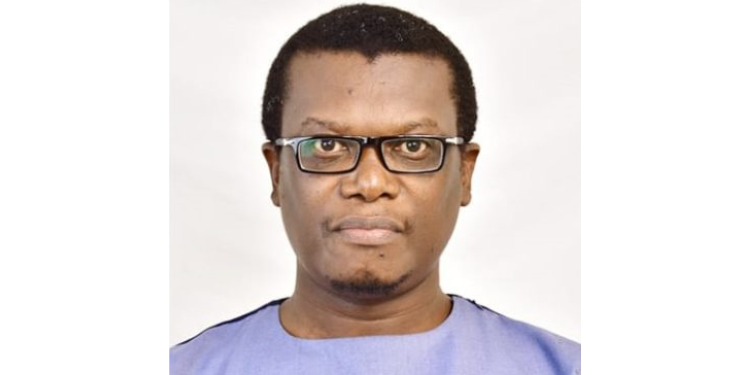
Dr. Luchetu Likaka PhD is a Distinguished Consultant Criminologist and Sociologist, Boasting over 15 years of Experience in the Field. PHOTO/ Luchetu Likaka