

High Court Clears NTSA Crackdown on Modified PSVs Nationwide
Share

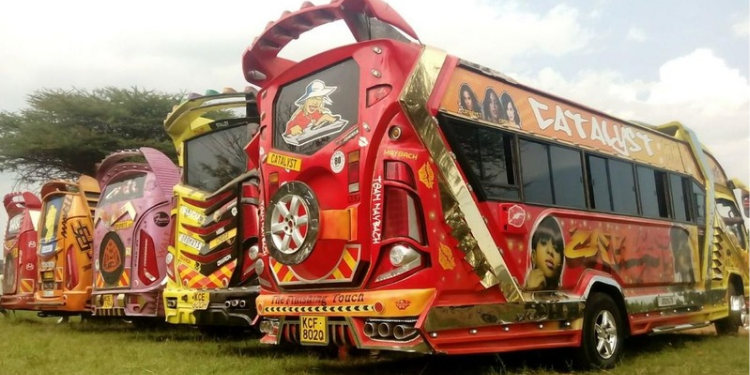
The High Court has sanctioned the NTSA to implement its crackdown campaign against Public Service Vehicles (PSVs) fitted with graffiti, decorated with artistic works and window tinting, known as “nganyas.”
High Court’s decision clears away any legal hurdles that stood in the way of the implementation of the NTSA’s directive against vehicle modifications.
The decision, delivered on Wednesday, April 29, comes after the court dismissed a petition that had challenged an earlier enforcement notice issued by the transport regulator.
Ruling now paves the way for strict compliance measures across the country’s matatu sector.
Justice Bahati Mwamuye, while rendering the judgment, affirmed that NTSA acted within its statutory authority when it directed PSV operators to remove decorative artwork and non-standard visual modifications from their vehicles.
“The directive was lawful and properly anchored on public safety considerations,” the court stated.
Ruling in Favor of NTSA Operating Within Its Authority
This matter arises from the instruction by NTSA in May 2025 where all PSVs adorned with graffiti and other artistic decorations are to be brought back to standardized bodywork since such adornments were not sanctioned under the transport laws.
NTSA argued that the widespread use of elaborate artwork on matatus interfered with regulatory compliance and enforcement.
According to the authority, identifying vehicle ownership, including Sacco branding and operational details, had become increasingly difficult.
“The Authority has observed widespread non-compliance with these regulatory provisions, especially among commuter PSVs. A notable number of vehicles have been modified through the application of graffiti and other unauthorised artistic enhancements,” NTSA stated in its submissions.
The authority further noted that some of the designs obstructed visibility of mandatory markings, including the continuous yellow line used to distinguish licensed public service vehicles from private transport.
Also Read:NTSA Issues Update on Fatal Mai Mahiu–Narok Road Crash
Challenge on Public Participation and Rejection of Cultural Defense
As far as the petitioners challenging the directive are concerned, NTSA did not carry out proper public participation prior to making the directive.
They also claimed that matatu graffiti is a well-rooted cultural practice in Kenya’s urban culture.
Furthermore, the court was informed that the graffiti business in matatus generates income for a lot of youths who are responsible for designing, painting, and branding the vehicles.
However, the court rejected this defense and dismissed the challenge that was earlier made by allowing the PSVs that were seized to be released.
Also Read:NTSA Sets New Requirements for Licensing Driving Schools
Shift Towards Standardisation in Public Transport
All PSV operators are now required to immediately remove graffiti, decorative designs, and modifications that obscure original paintwork or statutory markings as enforcement begins in earnest.
The decision is as a setback for the vibrant “nganya” culture, which has long defined Nairobi’s matatu scene as both a transport system and a form of urban art.
Vehicles operating along major routes such as Rongai, Embakasi, and Umoja are among those expected to be most affected, including fleets associated with prominent operators such as those linked to George Ruto.
Follow our WhatsApp channel for instant news updates
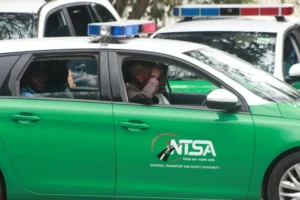
NTSA Vehicle. PHOTO/ NTSA