Trump Announces US Operation to Rescue Stranded Ships in Strait of Hormuz
Share
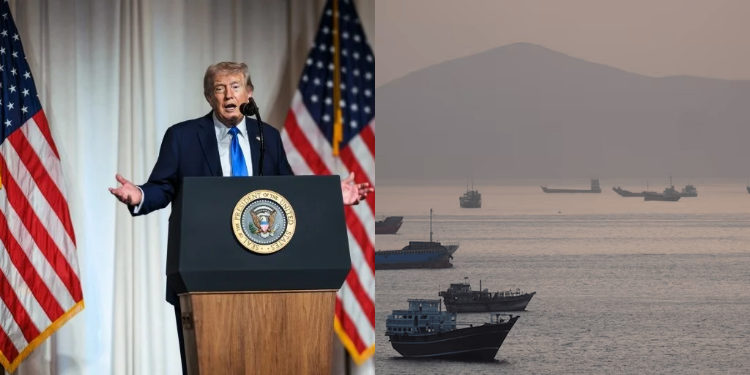
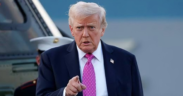
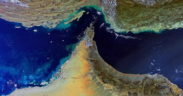
U.S President Donald Trump has announced a new U.S.-led operation aimed at helping commercial vessels stranded in the Strait of Hormuz amid escalating conflict involving the United States, Israel, and Iran.
The initiative comes as dozens of ships and thousands of seafarers remain stuck in the Gulf region due to restricted maritime access and ongoing security concerns.
Trump said several countries had appealed to Washington for assistance as their ships struggled to move through the critical shipping route.
In a statement posted on Truth Social, Trump confirmed that the United States would actively assist in guiding ships out of the restricted waters.
“For the good of Iran, the Middle East, and the United States, we have told these Countries that we will guide their Ships safely out of these restricted Waterways, so that they can freely and ably get on with their business,” he wrote.
He added that the operation would begin under what he referred to as “Project Freedom”, scheduled to start Monday morning, May 4, 2026, in the Middle East time zone.
Trump also issued a warning regarding interference with the mission: “The U.S. would respond forcefully if Iran interfered with the operation in the Strait of Hormuz.”
Reports of Tanker Strikes Raise Tensions
The announcement came shortly after maritime monitoring agencies reported renewed incidents in the region.
The United Kingdom Maritime Trade Operations (UKMTO) agency confirmed that a tanker had been struck by unknown projectiles in the Strait of Hormuz.
The vessel was located approximately 78 nautical miles north of Fujairah in the United Arab Emirates. Authorities confirmed that all crew members were safe, though the exact nature of the attack remains unclear.
Massive Military Support Mobilized
U.S. Central Command (CENTCOM) confirmed it would support the operation with significant military resources, including approximately 15,000 personnel, more than 100 aircraft across land and sea, as well as naval vessels and drones.
“Our support for this defensive mission is essential to regional security and the global economy as we also maintain the naval blockade,” said Admiral Brad Cooper, CENTCOM Commander.
Also Read: Trump’s Govt to Support Kenya’s 2026–2030 Health Plan
Thousands of Seafarers and Ships Affected
According to the International Maritime Organization, hundreds of ships and as many as 20,000 seafarers have been unable to transit the Strait of Hormuz during the ongoing conflict.
Many vessels are reportedly running low on essential supplies, including food.
Iran has been accused of blocking nearly all shipping traffic through the strait for over two months, a development that has significantly disrupted global energy supply chains and driven up fuel prices.
Trump Diplomatic Talks and Ongoing Tensions
Trump also suggested that diplomatic discussions with Iran were continuing, despite the heightened military activity.
He said negotiators were engaged in “very positive discussions with the Country of Iran,” adding that he remained optimistic about potential outcomes.
However, he also expressed skepticism about progress, stating that Iran had “not yet paid a big enough price” for recent actions, which he warned could limit the chances of a breakthrough.
Also Read: 3 Dead as WHO Confirms Suspected Hantavirus Outbreak on Atlantic Cruise Ship
Fuel Prices and Global Economic Impact
The closure of the Strait of Hormuz has had a significant impact on global energy markets. Oil prices have surged to multi-year highs, with transportation costs and fuel prices rising sharply in multiple regions.
U.S. Transportation Secretary Sean Duffy said relief could come quickly once maritime access is restored.
“From all the briefings that I’ve had, once the Strait opens, you’ll see prices come down immediately,” Duffy said in an interview.
“And again, there’s going to be a tail to that. It’s going to take time to get back to where we were before this conflict began, but you’re going to see, I think, immediate relief once the Strait opens,” he added.
Follow our WhatsApp channel for instant news updates

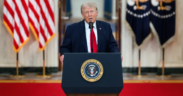
US President Donald Trump, while addressing the public about the Iran war. PHOTO/White House