

Hantavirus Outbreak: Symptoms, Clinical Concerns and Prevention Measures
Share

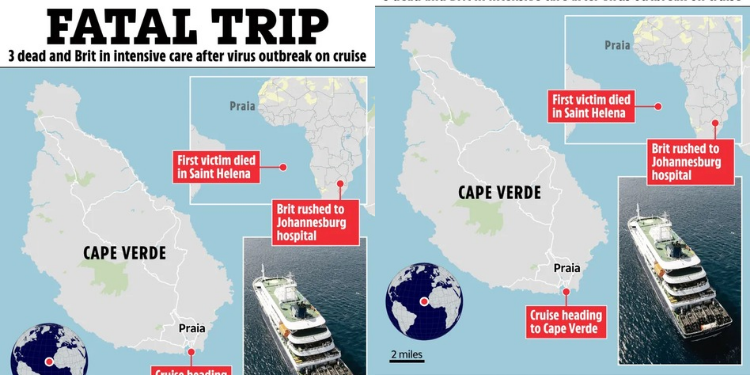
A public health alert has been raised in connection with the outbreak of hantavirus among travelers aboard a cruise liner in the Atlantic Ocean, despite the rising global efforts in educating the masses about the risks involved in hantavirus infection.
According to health officials, including the World Health Organization, there have been reports of three deaths and some others being under observation following a suspected outbreak.
The hantavirus outbreak was reported on the MV Hondius, which is a Dutch-managed expedition cruise ship that had been making its way from South America to Cape Verde.
The virus infected at least six passengers on board, one confirmed hantavirus case, and five others who are suspected of having been infected with the virus.
Of these, one person remains under intensive care in South Africa while the other two are candidates for an urgent evacuation.
Further investigation into the matter is ongoing; meanwhile, there have been increased efforts in raising awareness about the dangerous virus through health information materials from organizations like the U.S. Army.
Exposure Risks and Transmission
Health experts warn that hantavirus is primarily transmitted through contact with infected rodent urine, droppings, or saliva, particularly when these particles become airborne.
According to public health guidance, “people are exposed to hantavirus disease through aerosolized urine, saliva, or droppings from infected rodents.”
The advisory further cautions that even routine cleaning activities can be dangerous.
“This means that simply sweeping out a dirty shed or crawling around in dusty areas frequented by rodents could put you in contact with the disease,” the notice states.
WHO Response and Ongoing Investigation
The World Health Organization described the situation as a rapidly evolving health emergency.
“Of the six affected individuals, three have died, and one is currently in intensive care in South Africa,” the agency confirmed.
WHO added that laboratory testing and epidemiological investigations are ongoing.
“Detailed laboratory testing and genetic sequencing are underway to confirm the virus origin and transmission patterns,” it said.
The agency is also coordinating evacuation and response efforts.
“WHO is facilitating coordination between member states and the ship’s operators for medical evacuation of two symptomatic passengers,” it noted.
Prevention and Advice for Public Health
Health guidelines advise that prevention is the best strategy against contracting hantavirus.
Some of the preventive measures suggested by health agencies are keeping rodents from entering homes, sealing entry points, and maintaining cleanliness.
“Keep rodents away from your home and garage, clean up spilled food, and seal holes that could allow them into your home,” the guidance states.
People are also urged to avoid disturbing dusty, enclosed areas such as sheds, barns, and attics that may harbor rodent nests.
“Avoid disturbing dusty sheds, barns, attics, and other confined spaces that may have rodent nests,” the advisory warns.
Precautions for Cleaning and Safety Measures
It is essential to take precautions while cleaning the contaminated zones to prevent inhalation of contaminants in the air.
“Air out the area before cleaning, wear a dust mask, and moisten dusty surfaces with water before sweeping them out to avoid aerosolization,” the public notice advises.
Also Read:3 Dead as WHO Confirms Suspected Hantavirus Outbreak on Atlantic Cruise Ship
Symptoms and Clinical Concerns
Hantavirus infection often begins with non-specific symptoms, making early detection challenging.
According to health authorities, “the symptoms of hantavirus disease are non-specific and typically are marked by a sudden onset of fever and flu-like symptoms.”
These may include muscle aches, stomach pain, and vomiting.
In severe cases, the disease can escalate rapidly.
“However, in some individuals, severe disease can cause kidney failure,” the advisory states.
Also Read: Boost for Kenya’s Health Sector as South Korea Pledges Billions for Maternal Care and Vaccines
Alarm Sounds for Cruise Ship Incidents
The case on board the MV Hondius has brought to light the risks posed by late detection.
The first casualty was a 70-year-old passenger who suffered from fever, headache, abdominal pain, and diarrhea leading to his death at St Helena.
His 69-year-old wife later fell ill and died after being evacuated to a hospital in Johannesburg. A third patient remains in intensive care.
Hantavirus carries a mortality rate of up to 40 percent in severe cases, according to global health agencies.
Follow our WhatsApp channel for instant news updates
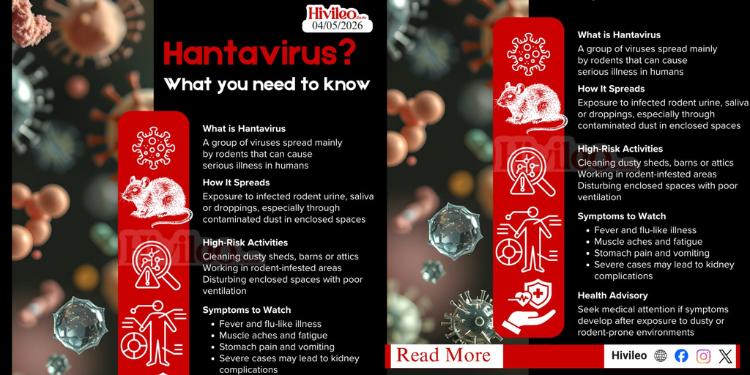
An infographic showing what you need to know about Hantavirus by Hivileo. PHOTO/Hivileo.