Will Finance Bill 2026 Make Bottled Water Expensive? Mbadi Clarifies
Share
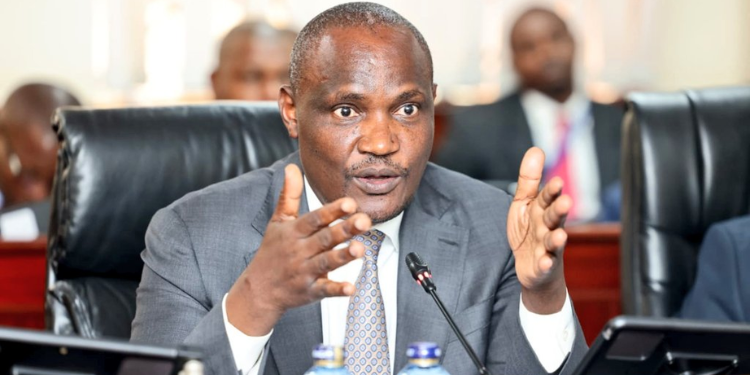
National Treasury Cabinet Secretary (CS) John Mbadi has dismissed claims that the proposed Finance Bill 2026 will make bottled water more expensive, insisting instead that the government is removing taxes to lower prices and encourage investment in the sector.
Speaking while defending the proposed tax measures and revenue projections, Mbadi termed reports suggesting bottled water prices would rise as “wild allegations,” arguing that critics had either failed to read the bill or were deliberately spreading misinformation about its contents.
“Someone made a very wild allegation that we are going to make bottled water expensive. Yet we are doing the opposite. I don’t know whether some people read this bill or create their own,” Mbadi said.
Mbadi maintained that the government’s intention is to ease the tax burden on bottled water manufacturers by eliminating excise duty, which he said was no longer justified because bottled water should not be treated as a luxury commodity.
“We are removing excess duty on bottled water because bottled water is no longer a luxury. And we are making it cheaper. And we are encouraging that people can get into that business, make bottled water,” he stated.
Mbadi Defends Tax Changes
Mbadi questioned how critics concluded that the Finance Bill would raise bottled water prices despite the proposed removal of taxes on the commodity.
“How do we make it expensive by removing tax from it? So the bill that is making bottled water expensive is not my bill. It is either your bill or it is a bill created by some other ghost somewhere. Mine is making bottled water cheaper,” he added.
He also outlined how the government intends to meet its revenue targets without introducing excessive taxation measures that could burden ordinary Kenyans and businesses.
According to Mbadi, one of the key interventions under consideration is a tax amnesty programme expected to generate approximately Ksh 30 billion in additional revenue during the financial year.
“First, there is the bit that we are expecting to give some tax amnesty in the course of the year. That should give us about 30 billion in revenue,” he explained.
He further noted that the government had introduced several administrative tax reforms aimed at improving compliance and efficiency within the revenue collection system.
“And then we have also made some adjustments here and there, especially on tax administrative procedures. That should give us that yield,” Mbadi said.
Revenue Projections Revised Downwards
The CS revealed that the government had revised its revenue projections downward due to emerging global and domestic economic challenges that are expected to affect collections.
“With that, we should be good in terms of our projections. However, I also want to point out that we have revised our projection downwards. If you looked at the numbers that we are now putting across, we have a new projection,” he stated.
Mbadi attributed the adjustments to external economic shocks that have affected the country’s fiscal outlook and widened the projected budget deficit.
“Clearly, we can see there is an external shock that is going to affect us. And that is why the budget deficit has risen to 5.3% from the earlier projected 4.7%. It’s not out of nothing. The expenditure has not really risen much,” he said.
He explained that while government expenditure had largely remained within earlier estimates submitted to Parliament through the Budget Policy Statement, declining revenues had created pressure on the national budget.
“The revenue has come down. And that is why the deficit has gone a little high,” Mbadi explained.
Also Read: Mbadi Addresses Concerns Over Phone Prices in Finance Bill 2026
Debt Burden and Spending Constraints
Mbadi admitted that Kenya’s shrinking borrowing space had made fiscal management increasingly difficult, especially due to the rising debt servicing burden.
“The revenue has come down. Chances are that because the borrowing space is shrinking, and you can see we are spending so much money in terms of debt service. I would not want to go that route to borrow more,” he stated.
He emphasized that the government was attempting to operate within available resources, though he acknowledged that cutting expenditure had become increasingly difficult due to mandatory spending obligations.
“We would want to try as much as possible to live within our means. And that would call for some adjustment in expenditure,” he said.
He disclosed that Kenya currently spends about Ksh 1.5 trillion on debt servicing and nearly another Ksh 1 trillion on salaries, leaving limited fiscal room for development spending and budget cuts.
“First, there is the Ksh 1.5 trillion going to debt service. And then you have another almost a trillion going to salaries, right? So that’s already Ksh 2.5 trillion,” Mbadi explained.
The CS added that counties receive nearly Ksh 500 billion when conditional grants are included, while critical sectors such as education, security, healthcare, and agriculture continue to demand massive allocations.
“We have the health sector, primary health care alone, we are putting Ksh 18 billion into it. Emergency, chronic, and critical illnesses, another Ksh 4 billion,” he stated.
Also Read: Mbadi Speaks on PAYE Rates and Time for Filing KRA Returns
KRA Reforms and Mandatory Tax Filing
Mbadi stressed that the government’s best option for improving fiscal stability remains increasing revenue collection without raising taxes.
“Therefore, the Kenya Revenue Authority must perform. That’s why we are putting a lot of reforms there, so that the only avenue we have, the only space, revenue,” he said.
He noted that the government is increasingly relying on automation and technology deployment to improve tax administration and reduce loopholes in revenue collection.
“We are really trying to make sure that we automate most of our processes. And you can see there is a big change in terms of automation and deploying technology,” he stated.
Mbadi also defended mandatory filing of tax returns for all Kenyans with Personal Identification Numbers (PINs), saying the law requires every eligible taxpayer to comply regardless of employment status.
“But in terms of who should file returns, anyone who qualifies to be a taxpayer, when you have a PIN, personal identification number, you must file a return,” he said.
He argued that even students earning income through part-time jobs are legally obligated to pay taxes where applicable.
“How would someone know you don’t have income? Even if students get income from part-time jobs, they generate money. I mean, if you generate income, you should pay part of that income as tax. Because that is the law,” Mbadi said.
The Treasury CS warned that making tax return filing optional could weaken compliance levels and undermine government revenue collection efforts.
“But if you make filing returns optional, then you run the risk of no one filing the returns at all,” he concluded.
Follow our WhatsApp channel for instant news updates
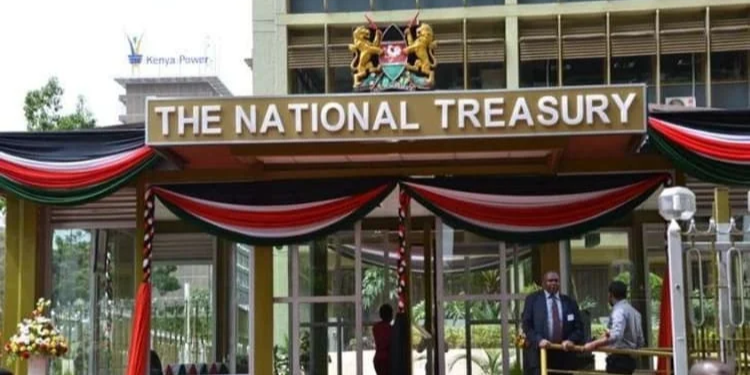
National Treasury Office Building in Nairobi. PHOTO/Nation