

Counties Set for Bigger Slice as Senate Proposes 49% Fuel Levy Allocation
Share
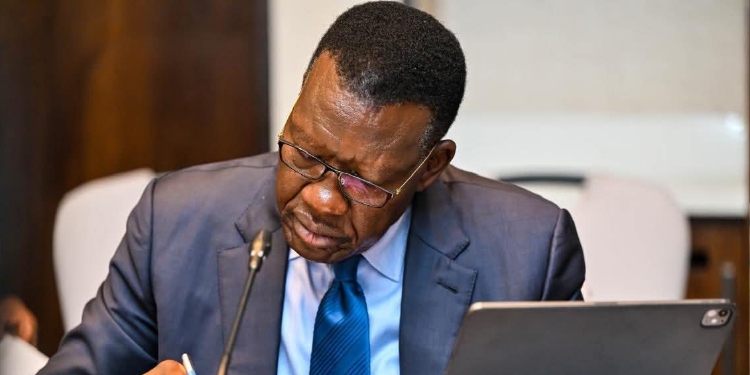
A debate has emerged over the sharing of the Road Maintenance Levy Fund (RMLF) after the Senate Standing Committee on Roads, Transportation and Housing proposed that county governments receive 49 per cent of the fuel levy under the Roads Act (Amendment) Bill, 2025.
The proposal came up on Friday, May 8, 2026, during a stakeholder retreat at Four Points by Sheraton in Machakos County. At the same time, the Ministry of Roads and Transport presented a competing formula that allocates only 15 per cent to counties.
“All the functions that were being performed by KeRRA and a larger part of KURA are now functions of the County Governments therefore the resources should follow the functions,” the Committee proposed.
Meanwhile, the Committee continues to conduct public participation on the Bill. It has already received submissions from the Ministry of Roads and Transport, the Council of Governors and the Commission on Revenue Allocation.
Key Issues in Fuel Levy Allocation
After reviewing the memoranda, senators identified three key issues. These included:
- How to share the fuel levy
- How to structure the sharing formula
- How to classify roads.
Also Read: Senate Committee Proposes Reforms to County Revenue Management Systems
Under the proposal, the National Government would receive 51 per cent of the fuel levy, while counties would get 49 per cent.
In addition, the Committee proposed how to split the national share. Kenya National Highways Authority (KeNHA) would receive 38 per cent, Kenya Urban Roads Authority (KURA) 4 per cent, the Kenya Roads Board 2 per cent, Kenya Wildlife Service 1 per cent and the Department of Roads and Committee on Roads 6 per cent.
On the county side, County Rural Roads would receive 32 per cent, County Urban Roads 10 per cent and Roads Committees 7 per cent.
“The Committee will be moving consequential amendment to the RMLF Act to reflect these changes,” Chairman Eddy Oketch stated.
Senate, Ministry Clash Over Allocation Formula
However, the proposal has sparked a standoff with the Ministry of Roads and Transport. Cabinet Secretary Davis Chirchir defended a different model based on traffic volumes, road condition, network type and asset value.
He argued that although county roads make up about 76 per cent of the network by length, national trunk roads carry most of the traffic. As a result, they require higher maintenance costs.
“The Ministry recommends that County Governments be expressly recognised as beneficiaries of the RMLF,” the Cabinet Secretary Davis Chirchir stated, while proposing an allocation of 84.98 per cent to national roads and 15.02 per cent to counties.
Also Read: Senate Debates New Bill to Set Clear Rules and Timelines for Referendums in Kenya
Dispute Over Road Classification
At the same time, the Ministry proposed a detailed classification system. It grouped national roads under Classes S, A, B and C and county roads under Classes D, E, F and G.
However, the Senate Committee rejected this structure. It argued that the model is too complex.
“The Committee resolved that the current classification of roads as proposed by the ministry is too complicated and therefore there is a need to come up with a simpler way of classifying roads that takes into consideration usage rather than location,” the Committee stated.
Legal Backdrop and Implications
Meanwhile, the debate unfolds against a key court ruling. In June 2025, the High Court ruled in Issa Elanyi Chemao & Others v National Assembly & Others that counties must benefit from the Road Maintenance Levy Fund.
However, the Court of Appeal later suspended the ruling for 12 months. This gave Parliament time to align the law with the Constitution.
Ultimately, the Roads Act (Amendment) Bill, 2025 could reshape how the country manages, classifies and funds roads once Parliament concludes its deliberations.
Follow our WhatsApp channel for instant news updates
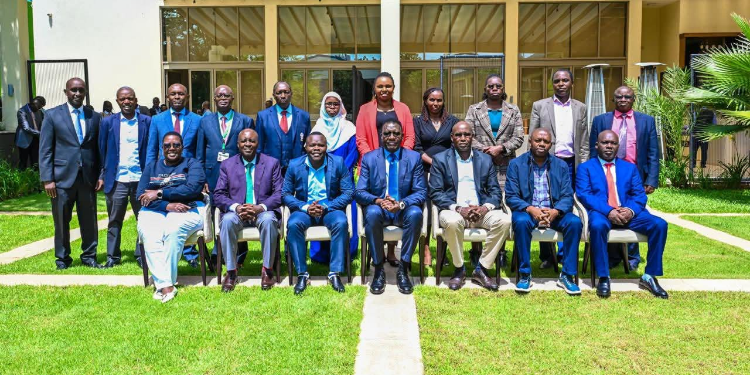
Cabinet Secretary Davis Chirchir with members of the Senate Standing Committee on Roads, Transportation and Housing during a stakeholder retreat in Machakos to discuss the Roads Act (Amendment) Bill, 2025 on May 8, 2026. PHOTO/ Parliament of Kenya FB