Kenya Inflation Rises to 6.8% as Food, Transport Costs Climb
Share
Kenya’s annual inflation rate rose to 6.8% in September 2026, driven mainly by higher prices of food, transport, and other household costs. The latest data from the Kenya National Bureau of Statistics (KNBS) shows that inflation increased from 6.6 % in August, marking the third consecutive monthly increase after the rate stood at 6.5% in July.
KNBS said the general price level in September 2026 was 6.8% higher than in September 2025. The Consumer Price Index (CPI) also increased from 155.85 in August to 156.47 in September, resulting in a monthly inflation rate of 0.4%.
Food, Transport Lead Inflation Pressures
KNBS identified Food and Non-Alcoholic Beverages, Transport, and Housing, Water, Electricity, Gas and Other Fuels as the main divisions driving the annual increase.
“These three divisions together account for over 57 per cent of the total weight across the 13 major expenditure categories,” KNBS said in its September Consumer Price Index and Inflation Report released on Wednesday, September 30.
Food and non-alcoholic beverages recorded annual inflation of 9.5%, while transport recorded the highest annual inflation among the major divisions at 15.6%. Housing, water, electricity, gas and other fuels recorded annual inflation of 3.2%
Milk, Flour and Vegetables Become More Expensive
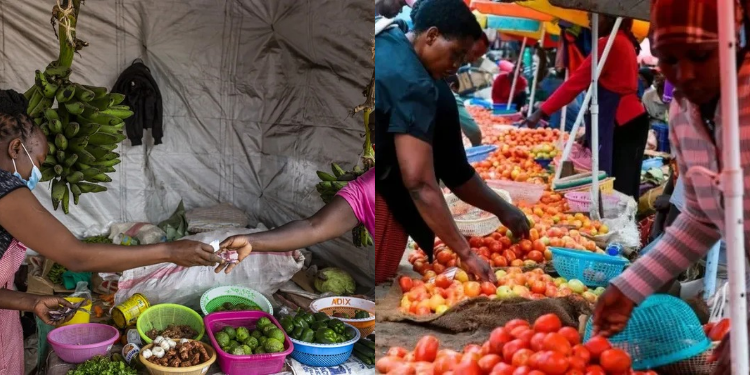
Food and non-alcoholic beverages increased by 0.9% between August and September. The price of white wheat flour rose by 4.5% while fresh unpacked cow milk increased by 5.8%. Fresh packeted cow milk rose by 6%.
The average price of a 500-millilitre packet of fresh milk increased from Ksh57.74 in August to Ksh61.23 in September. UHT long-life milk recorded an 8% monthly increase, with the average price of a 500-millilitre packet rising to Ksh61.64.
Cabbage prices increased by 6.2%, while Irish potatoes rose by 3.3%. Cooking oil increased by 0.7%. Over the 12 months to September, several food items recorded much higher increases.
Irish potatoes rose by 33.6%, kale or sukuma wiki by 32.5%, and cabbages by 25.8%. The KNBS data shows that food and non-alcoholic beverages alone contributed 2.8 percentage points to the overall 6.8% inflation rate.
Some Food Prices Decline
Not all food items became more expensive during the month. Tomato prices declined by 4.1%, while spinach fell by 2.1%. Sifted maize flour declined by 0.6% and sugar by 0.4%.
The movement in prices meant households experienced mixed changes in the cost of food, even as the overall food and non-alcoholic beverages category recorded an annual inflation rate of 9.5%.
Also Read:REVEALED: What’s Making Life More Expensive for Kenyans as Inflation Drops to 6.4%
Transport Costs Record Biggest Annual Increase
Transport recorded annual inflation of 15.6%, making it the highest among the three major divisions highlighted by KNBS. However, some transport costs declined between August and September.
Country bus and matatu fares for intertown travel fell by 1%, while city bus and matatu fares declined by 0.3%. International air travel moved in the opposite direction, with fares increasing by 8.1% during the month.
The average fare for the Isiolo-Nairobi country bus route fell from Ksh1,500 in August to Ksh1,200 in September. Transport contributed 1.6 percentage points to the overall 6.8% inflation rate.
Fuel Prices Remain Higher than Last Year
Despite some monthly declines in transport fares, fuel prices remained significantly higher than they were a year earlier. The national average price of diesel stood at Ksh219.04 per litre, representing a 26.9% increase from September 2025.
Petrol averaged Ksh214.95 per litre, up 15.8% over the same period. The annual increase in fuel prices formed part of the wider transport cost pressures recorded in the September inflation figures.
Also Read:Inside KCB Investment Bank’s Expansion Across East Africa’s Capital Markets
Electricity Prices Provide Some Relief
Households recorded some relief in electricity costs during the month. The average cost of 50 kilowatt-hours fell from Ksh1,289.47 in August to Ksh1,258.21 in September.
For households consuming 200 kilowatt-hours, the average cost declined from Ksh5,658.80 to Ksh5,533.76.
The September inflation highlights show that electricity prices were also lower compared with the same period in 2025, falling by 1.2% for 50 kilowatt-hours and 1.1% for 200 kilowatt-hours.
Gas and LPG prices declined by 0.2% during the month. However, the prices of other household fuels increased, with firewood rising by 1.8 per cent and charcoal by 1.6%.
Core Inflation Rises to 4%
The September figures also showed an increase in underlying price pressures. Core inflation, which excludes more volatile price movements, rose to 4% in September from 3.4% in August.
KNBS describes core inflation as a measure based on commodities whose prices are relatively less volatile.These include manufactured food products, health services, education services, and information and communication technology.
Meanwhile, non-core inflation stood at 14%. Core inflation contributed 4.2 percentage points to the overall 6.8% inflation rate, while non-core inflation contributed 2.6 percentage points.
Follow our WhatsApp channel for more updates

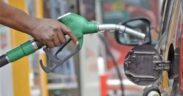
Photo of a petrol station in Nairobi. PHOTO/File