
Major Boost for Unilever as Nairobi Factory Gets Ksh 70 Million Solar System
Share

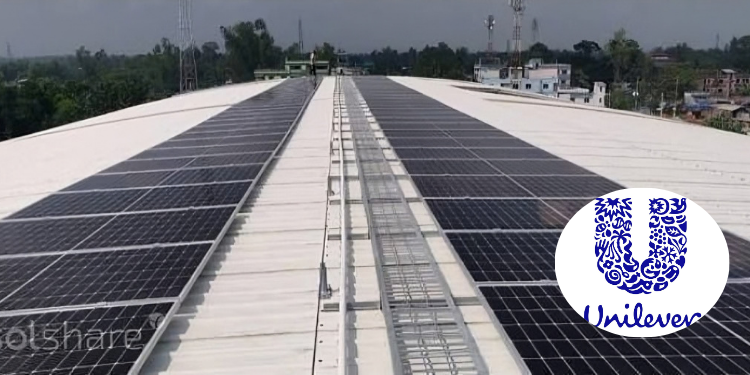
Unilever has invested Ksh 70 million in an 800kW solar installation at its Nairobi factory, in a move expected to supply about 30% of the plant’s electricity and cut annual energy costs by roughly Ksh 30 million.
The solar system became operational in June 2026 and forms part of Unilever’s efforts to increase renewable energy use, reduce reliance on conventional fuels and strengthen its manufacturing operations.
Meanwhile, the company also estimates that the factory has reduced its carbon emissions by about 40% against a 2023 baseline.
Speaking during the unveiling of the solar project at the factory, João F. Ribeiro, Unilever’s 1UL Supply Chain Head, said the investment would strengthen the company’s operations and reduce its reliance on conventional energy.
“Investments like this make our operations more resilient and more competitive while reducing our reliance on conventional energy,” Ribeiro said.
Unilever Expands Renewable Energy Use
Ribeiro also highlighted the importance of the Nairobi factory to Unilever’s wider manufacturing operations and climate goals.
“The Nairobi factory is an important part of our manufacturing footprint, and this project shows how local action can contribute to our wider climate ambitions,” he added.
Meanwhile, the investment builds on an earlier switch of the factory’s boilers from heavy fuel oil (HFO) to biomass, which Unilever said has contributed to the reduction in the plant’s carbon emissions.
Beyond cutting emissions, the solar project will give the factory more predictable energy costs while strengthening its manufacturing operations, according to the company.
Also Read: KETRACO Powers New 86km Transmission Line Linking Nanyuki and Rumuruti
Cost and Emissions
Unilever said the investment demonstrates how sustainability measures can support business performance by lowering operational emissions and managing energy costs.
For Kouassi, the project shows that the company can pursue environmental goals while improving its operations.
“This investment demonstrates that sustainability and strong business performance can advance together,” said Kouassi.
“By increasing renewable energy use at our Nairobi factory, we are reducing operational emissions, managing energy costs and strengthening the resilience of our supply chain,” he added.
As a result, the 800kW installation is expected to generate annual energy savings of about Ksh 30 million, adding to the financial benefits of the factory’s shift towards renewable energy.
Also Read: Kenya Power Reveals Why It Wants Wind and Solar Power Expansion Moderated
Next Phase
Looking ahead, Unilever said the next stage of the factory’s decarbonization programme will move hot-air generation from HFO to biomass-based fuels.
Through the planned shift, the company expects to further reduce the factory’s use of fossil fuels as it continues efforts to lower emissions across its operations.
At the same time, the investment comes as Kenya continues to expand renewable-energy capacity, with private-sector projects supporting the country’s clean-energy transition while improving the efficiency of local manufacturing.
The ceremony brought together Luck Ochieng, Managing Director for Unilever East Africa, Richard Bogita, Head of Supply Chain, East & West Africa; Elodie Kouassi, Head of Supply Chain, East Africa excluding Ethiopia; and members of Unilever’s Business Operations Leadership Team.
Follow our WhatsApp channel for instant news updates

Photo of Luck Ochieng, Managing Director, Unilever East Africa and João F. Ribeiro, Unilever’s 1UL Supply Chain Head, unveil the company’s new 800kW solar installation at its Nairobi factory/Unilever.